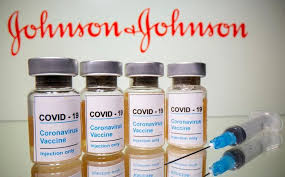
 It has been over two months since my last BLOG on COVID-19 vaccines. Since that time millions of people in several different countries have been vaccinated, new vaccines have been approved for use, and new virus variants have emerged. This blog is about the latest developments on the COVID-19 vaccine front.  Johnson & Johnson (J&J) Vaccine: The J&J vaccine was given Emergency Use Authorization by the F.D.A. on February 27, 2021. According to Johnson & Johnson’s press release, the vaccine was 72% effective at preventing moderate to severe COVID-19 infections in the U.S. (https://www.jnj.com/johnson-johnson-announces-single-shot-janssen-covid-19-vaccine-candidate-met-primary-endpoints-in-interim-analysis-of-its-phase-3-ensemble-trial). What this means is the vaccine prevented all illness, including mild symptoms, in 72% of the recipients of the vaccine. This may sound disappointing in comparison to the 94-95% efficacy of the Pfizer-BioNTech and Moderna vaccines, but it was highly effective at limiting serious disease. J&J’s vaccine was 85% effective overall at preventing serious illness across all regions that it studied (U.S., Argentina, Brazil, Chile, Columbia, Mexico, Peru, and South Africa). More importantly, the vaccine demonstrated complete protection against COVID-19 related hospitalizations and deaths, the true benchmarks of the success of this vaccine. The vaccine had an overall efficacy rate of 64% against the more virulent South African strain, but an 82% rate against serious illness. It is important to note that the J&J trials were conducted when more variants were circulating in the population than when the Pfizer-BioNTech and Moderna trials were being conducted. This could account for the reduced efficacy being reported in the U.S. and elsewhere. Here are the key attributes of this new vaccine:
The J&J vaccine is a breakthrough. It doesn’t need sophisticated freezers for transport and storage, making it accessible to remote and underserved areas, as well as in second and third world countries. The fact that it is effective after a single dose makes it a great choice when scheduling a second shot is problematic, such as in homeless populations, the homebound, migrant farm workers, and hard to reach populations around the world. If I was the vaccine czar, the J&J vaccine would be reserved for these vulnerable populations.  Pfizer-BioNTech Vaccine: On February 12, 2021, Pfizer-BioNTech announced that the U.S. government had exercised its option to purchase an additional 100 million doses of their vaccine. This brings the total number of doses to be supplied to the U.S. to 300 million, enough for 150 million people. Here are some recent developments:
 Moderna Vaccine: On February 11, 2021 Moderna announced that the U.S. government had agreed to purchase an additional 100 million doses of its vaccine. This brings the total confirmed order commitment to 300 million doses, enough to fully vaccinate 150 million Americans. Moderna is on track to deliver the first 100 million doses in the first quarter of 2021, the next 100 million in the second quarter, and the new order of 100 million doses by the end of July 2021. Even without any new vaccines becoming available, the U.S. now has enough contracted vaccines to cover all of its eligible citizens, and then some. Here are some recent developments:
 AstraZeneca/University of Oxford Vaccine: This vaccine was first approved for emergency use in the United Kingdom on December 30, 2020 for individuals 18 years of age and older. The vaccine requires a two-dose regimen, with an interval of between four and twelve weeks between doses. There has been some debate about the actual efficacy of the vaccine, with ranges from 62-82%. But clinical trials in the United Kingdom have shown the vaccine to be safe and highly effective at reducing hospitalizations and deaths. Because of the confusion over some of the reported data, the U.S. is conducting a trial of its own. Approval in the U.S. may still be a few months away. The vaccine can be transported and stored at normal refrigeration temperatures (36-46°F) for at least six months, making it a good candidate for use in 2nd and 3rd world countries. Here are some recent developments:
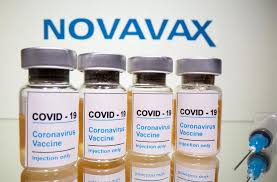 Novavax: On January 28, 2021, Novavax announced that its vaccine demonstrated 89% efficacy in a Phase 3 clinical trial conducted in the United Kingdom (https://ir.novavax.com/news-releases/news-release-details/novavax-covid-19-vaccine-demonstrates-893-efficacy-uk-phase-3). Preliminary studies suggest that it is very effective at preventing severe disease from the South African strain of COVID-19. Phase 3 clinical trials are underway in Mexico and the U.S. and should be concluded by the end of March. The vaccine requires two-doses, but doesn’t require the strict storage requirements of the Pfizer-BioNTech or Moderna vaccines. In September Novavax entered into an agreement with a major Indian vaccine manufacturer that could produce up to 2 billion doses per year. The U.S. has an agreement to purchase up to 110 million doses, with most of the remaining doses going to the COVAX Alliance. Look for this vaccine to be approved for use in the second half of 2021. There are currently 71 COVID-19 vaccines in clinical trials on humans, 20 of these have reached large scale Phase 3 trials around the world. In addition to the five vaccines that I detailed above, China has two vaccines it has approved for use, Russia has one vaccine, as does India.  Virus Variants: The longer the novel coronavirus circulates, the more people that become infected, giving the virus opportunities to mutate into more dangerous variants. Any new variant has the potential of being more contagious, result in more severe illness, and be resistant to currently available vaccines. This is why it is so important to speed up the rate of vaccinations and to continue safe practices, until herd immunity is reached. Widespread testing for COVID-19 is very important to monitor the development and spread of new variants. Here are some of the new variants which have recently been identified:
 Vaccine Equity: As of this writing approximately 240 million doses of vaccine have been administered around the world (https://www.cnn.com/interactive/2021/health/global-covid-vaccinations/). According to the United Nations, ten countries administered 75% of all vaccines, and 130 countries have yet to receive a single dose. The COVAX Alliance, led by the World Health Organization, is working with rich countries to provide vaccines to poor ones. But it is off to a slow start. COVAX delivered its first shipment of 600,000 doses of the AstraZeneca vaccine to Ghana on February 24, 2021. Ghana is one of 190 countries which have signed up to receive vaccines through the alliance. The COVAX Alliance currently has agreements with AstraZeneca and Novavax for COVID-19 vaccines, but the numbers are far short of what is needed. It is important to remember that no one is immune from COVID-19 until we are all immune.  What We Still Don’t Know: We are a year into this pandemic, vaccines have only been available in limited supply for about two months, and there are a lot of unanswered questions. Once vaccinated, are people still able to spread the virus? Once vaccinated, how long will immunity last? If you had COVID-19, how long does immunity last? When will herd immunity be reached? Well, this is the real question, and we all need to be patient.
As of today, about 14.6% of the U.S. population has received at least one shot of vaccine, and a tiny fraction of the world’s population has been vaccinated. It is important to get vaccinated when it is your turn, but it is also important to continue to wear your face mask, practice social distancing and continue using good hygiene. We can't afford to let our guard down now that there is light at the end of the tunnel. We won't know that herd immunity has been reached until new cases of COVID-19 infections are rare. The speed with which the various COVID-19 vaccines have been developed and gotten into peoples’ arms is truly remarkable. All of the vaccines currently available in the U.S. are highly effective at minimizing serious illness and death. Coronaviruses have been circulating within the human population for centuries, and the coronavirus that causes COVID-19 will be with us for a long time. The sooner that the majority of the world’s population becomes vaccinated, the sooner the pandemic will be over, and the quicker we will all return to a semblance of “normalcy”. If you enjoy reading this type of commentary please subscribe to my blog and tell a friend. You will receive an email notification when new blogs are posted. The email will come from the site’s email: armchairamerican1776 @gmail.com. Thanks, Armchair American
0 Comments
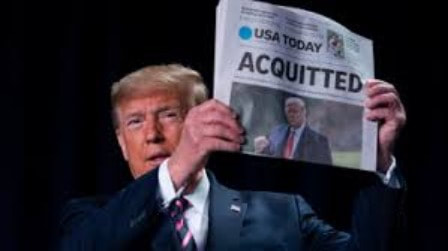
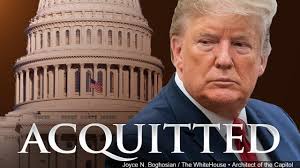 To no one’s surprise Donald Trump was acquitted on February 13, 2021 of the charge of “incitement of insurrection” at his second impeachment trial. Seven Republican Senators, along with all the Democrat Senators, voted to convict. But seventeen were needed. For a more detailed explanation of the 2nd impeachment of Donald Trump, please refer to my January 29, 2021 post "Is the Second Impeachment Trial of Donald Trump a Good Idea?" Here are my key takeaways from the impeachment trial: 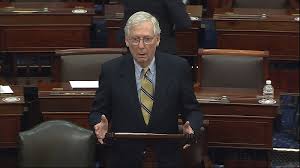 Political Gamesmanship: Mitch McConnell is no fan of Trump and he would love to rid the party of him. But he loves his position and his power even more. McConnell is first and foremost a party man, and he is focused on the 2022 mid-term elections with the goal of retaking the Senate and possibly the House. Like most of his Republican colleagues, McConnell went on record by voting that it is unconstitutional to impeach a president who is already out of office. This was a calculated move to provide his colleagues with political cover. By voting to acquit on constitutional grounds, a senator could satisfy Trump’s loyal supporters, and not turn off those Republican voters who were repulsed by Trump’s actions. This is exactly what McConnell did with his post-trial statement blasting Trump: “Former President Trump’s actions preceding the riot were a disgraceful, disgraceful dereliction of duty. There’s no question, none, that President Trump is practically and morally responsible for provoking the events of the day. No question about it. The people who stormed this building believed they were acting on the wishes and instructions of their president.” Wow, the House managers could have used McConnell to make their case against Trump. But alas, McConnell knew that there weren’t enough Republican votes to convict Trump, and he wasn’t about to jeopardize his standing in the party by voting with the opposition.  It's Still Donald Trump’s Party: State Republican parties were quick to censure Senate Republicans who voted to convict Trump. This follows the condemnation received by Republican House members in their home states for voting for impeachment. Even party stalwart Liz Cheney was censured by the GOP in her home state of Wyoming. In his unrepentant way, Donald Trump blasted the trial as another phase of the greatest witch hunt in history. In a statement released shortly after being acquitted he said, “Our historic, patriotic and beautiful movement to Make America Great Again has only just begun”. This doesn’t sound like a guy who is going to fade into the background, and Republican politicians who ignore him, do so at their own peril. 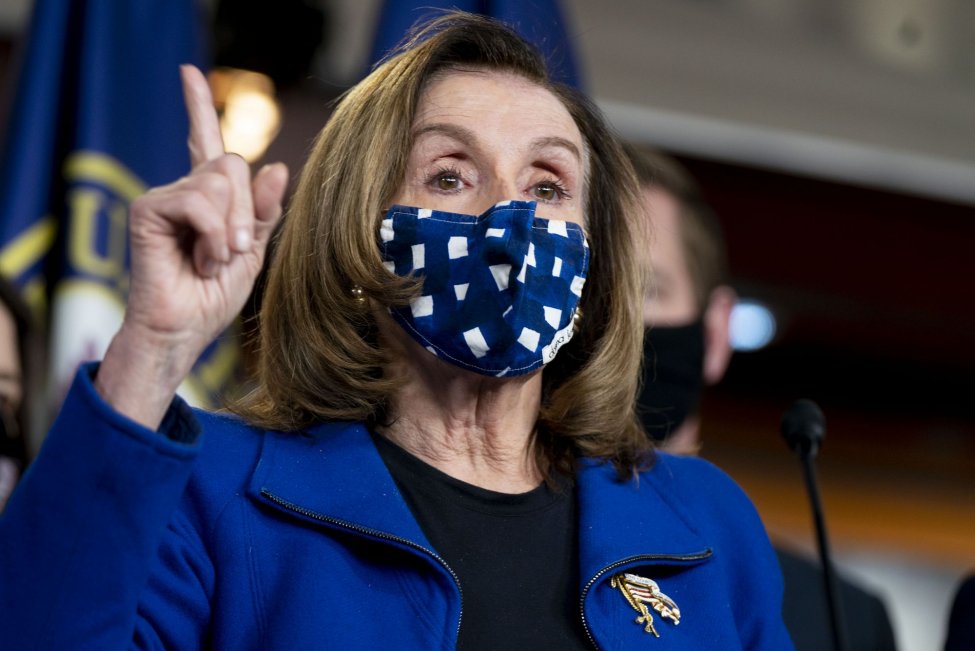 Many Unanswered Questions Remain: Unfortunately, the trial did not provide the truth and accountability that Chuck Schumer had hoped for. In the words of one of the House Managers, Joaquin Castro, “There’s a lot we don’t know yet about what happened that day”. Most of the evidence presented was based on news reports and social media postings. But not to worry. Yesterday Speaker Nancy Pelosi announced that Congress will establish an independent commission to investigate the attack on the Capitol. I doubt that the investigation will turn up anything that will put Donald Trump in criminal jeopardy. But the lapses in security at the Capitol need to be investigated, if for no other reason than to prevent another horrific incident like that on January 6, 2021. If you enjoy reading this type of commentary please subscribe to my blog and tell a friend. You will receive an email notification when new blogs are posted. The email will come from the site’s email: armchairamerican1776 @gmail.com.
Thanks, Armchair American  There has been a lot written in recent weeks about a few high-flying stocks, most notably GameStop. The wild stock price fluctuations have been driven by speculative trading on app-based trading platforms, particularly Robinhood. It is a fascinating tale involving hedge funds, chat rooms, day traders, investing nerds seeking revenge on Wall Street insiders, financial market turmoil and Congressional condemnation. Already there are book deals in the works and movie scripts being written. I will only scratch the surface of this drama by focusing on Robinhood and the danger of making the purchase of high-risk financial instruments as easy as ordering a cup of coffee on your smart phone.  GameStop: To understand the recent spotlight on Robinhood and the wild stock price fluctuations in GameStop (GME), a little background is necessary. GameStop is a brick-and-mortar business, located mostly in shopping malls, which mainly sells video games and gaming equipment. In recent years the business has been hit hard as shoppers have abandoned shopping malls and video gaming has moved online. Some Wall Street hedge funds have sought to benefit by GameStop’s plight by betting against its stock. They did this by selling the shares of the stock short, or shorting the stock. Shorting a stock is when an investor borrows shares and immediately sells them, hoping to buy them later at a lower price, return them to the lender and pocket the difference. The important thing to know here is that the hedge funds who shorted the stock make money when the stock price falls, and lose money when the stock price rises. At one point last fall, GameStop was the most heavily shorted stock on Wall Street. Then came along some other investors who thought that GameStop still had value, and started talking it up on internet chat rooms, claiming that all the short selling was overblown.  Reddit: ( https://www.reddit.com/): Reddit is a very popular website which is home to thousands of online communities with millions of followers. These communities or forums are known as “subreddits”. The subreddit at the center of all the drama is “WallStreetBets”, (https://www.reddit.com/r/wallstreetbets/). It was developed as a community for “people to talk about high-risk trades in an unapologetic way, and for people to make some short-term money with disposable income”, according to founder Jaime Rogozinski. Beginning last summer and accelerating into the fall, posts started appearing on the site laying out the case that GameStop was still a viable business and its stock price was undervalued. Subsequent posts began touting the added benefit of pushing up the price of GameStop shares to hurt the Wall Street hedge funds at their own game. It was a way of enacting revenge on Wall Street insiders who had never been punished for their role in the Great Recession. The price of GameStop shares began to rise as more and more people bought into this thesis.  So how does all this fit in with Robinhood and the legion of small investors on its platform? Many of the users of Robinhood were following the threads on WallStreetBets and wanted in on the action. Membership in WallStreetBets, as well as use of online trading platforms increased significantly as people were under COVID-19 lockdown restrictions. In recent months membership on WallStreetBets has surged to over 8.5 million.  Robinhood: This online trading platform was introduced in 2015 and offers commission-free trading in stocks, ETFs (exchange traded funds), stock options and cryptocurrencies (Bitcoin is the most notable). In addition to no trading fess, there are no minimum balance requirements to maintain an account. The lack of fees and user-friendly smart phone app has attracted a large following of young users. As of last May, Robinhood had over 13 million accounts. The average age of the account holder is 31, half of whom had no previous experience trading stocks. According to Robinhood’s website ( https://robinhood.com/us/en/), “We’re on a mission to democratize finance for all”. “At Robinhood, we believe the financial system should be built to work for everyone. That’s why we create products that let you start investing at your own pace, on your own terms”. Setting up an account on Robinhood is quick and easy, and it usually takes less than an hour to activate.  If Robinhood is Free to Use, How do They Make Money? Robinhood’s business model encourages lots of stock trades, which is how they make most of their money. Wall Street firms pay Robinhood to send their buy and sell orders to them. These “market maker” firms do the actual buying and selling of the stocks, and make money by finding better prices in the broader markets than what Robinhood customers paid. This is perfectly legal, but Robinhood needs large trading volumes on its platform to be sustainable. According to research firm Alphacution, ( https://alphacution.com/tag/robinhood/), in the first three months of 2020, Robinhood users traded nine times as many shares as E-Trade customers, and forty times as many shares as those holding accounts at Charles Schwab. During that same time period, Robinhood users traded eighty-eight times as many options contracts as did the average Charles Schwab customer.
For $5/month and an average minimum balance of $2000, you can establish a Robinhood Gold account. This account allows the user to purchase stocks on margin. This simply means that Robinhood will lend you money to purchase stocks, and charge you interest on the money. Purchasing stocks using borrowed money is very risky. It can magnify your losses as well as your gains.  Democratizing Finance Sounds Good. But is it? This all sounds great, and I am a huge proponent of opening up financial markets to the masses. But finance is much more than buying and selling stocks. I would argue that for most people, particularly inexperienced investors, buying and selling individual stocks is too risky and should play only a minor role, if any, in their investing and financial plans. First and foremost, Robinhood is a stock trading platform. It provides very little financial education, and has few safeguards in place to prevent the inexperienced investor from getting in way over their head. Robinhood doesn’t have a customer support phone number, so all correspondence is done via email. The platform provides no tools to develop a comprehensive financial plan, and it doesn’t support retirement accounts. This means that all trades done on the platform are subject to taxation. On Robinhood you cannot purchase mutual funds, bonds or CDs. The only options are very risky assets such as individual stocks, stock options and cryptocurrencies. Stock options are very risky financial derivatives which are reserved for the most experienced investors. But you can begin trading options on Robinhood after answering a few simple questions. Most financial planners would not consider what is taking place on Robinhood a sound investment strategy. It has more in common with gambling than investing. No one would consider the purchase of a lottery ticket, or placing a bet at the horse track as investing. I feel that for the inexperienced investor, Robinhood falls into this category. Robinhood has made it simple for inexperienced, mostly young “investors” to day trade highly speculative financial instruments, often with borrowed money. The large trading volumes on shares of GameStop, AMC, and other stocks promoted on WallStreetBets has really shined a light on the dangers of the platform in the hands of inexperience traders.  Robinhood Falters Under a Barrage of Trading Activity: In recent weeks trading activity on Robinhood has surged, propelled by shares of GameStop and a few other stocks pumped up by posts on WallStreetBets and other online forums. This forced Robinhood to post billions of additional dollars with the Depository Trust and Clearing Corporation, Wall Street’s central clearing hub. These funds are required to cover customers’ transactions while they wait for trades to settle. Robinhood scrambled to raise the necessary funds from private venture capital firms. On January 28, 2021, in order to preserve cash, Robinhood restricted the buying of shares of GameStop, AMC, and a few other highly volatile stocks. This resulted in an immediate uproar from users who saw this move as a betrayal of Robinhood’s mission. Afterall, nothing restricted the ability of hedge funds and other Wall Street money managers from freely trading in these stocks. Protestors picketed outside of Robinhood’s headquarters in Menlo Park, and calls for investigations were raised in the halls of Congress. Everyone from Alexandria Ocasio-Cortez to Ted Cruz cried foul at what they perceived as restrictions placed on small investors to the benefit of big institutional investors. On January 29, 2021 Robinhood lifted some of its restrictions, but trading was still limited in select stocks, and would be for the following week. 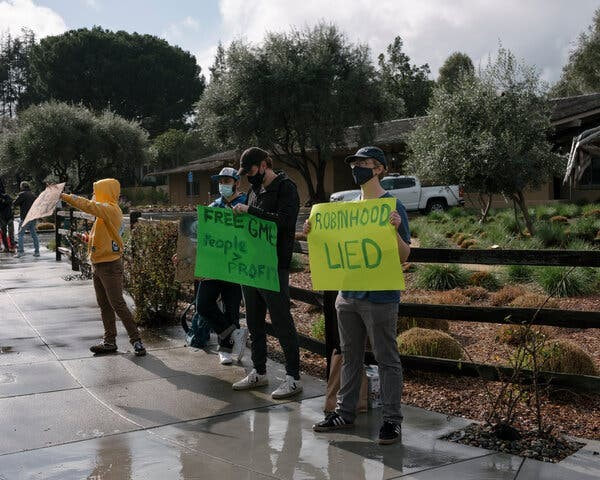 Will Congress go forward with its threats to investigate Robinhood, and will Robinhood regain the trust of its users? Stay tuned. The blog on Robinhood’s website has a running commentary with a detailed explanation of its decisions over the past few weeks, (https://blog.robinhood.com/).  For those of you who believe that Wall Street is rigged to the disadvantage of the small investor, I can’t argue the point. But for those who believe that Robinhood is the great equalizer, I am afraid that you have fallen for a slick and trendy narrative. Robinhood couldn’t exist without Wall Street and it derives a significant portion of its profits by dealing with Wall Street firms. WallStreetBets and other stock tip sites are not just the dominion of tech savvy traders on Robinhood. Hedge funds scour sites like WallStreetBets continuously for new investment ideas to exploit. Sure, there were a few hedge funds that lost billions betting against GameStop. So, who really profited? A few little guys for sure. But the vast majority of small investors on Robinhood and other trading apps lost a lot of money. As the price of GameStop shot up, propelled by furious buying on Robinhood, who do you think they were buying those shares from? Mostly hedge funds who caught on to the game early. One hedge fund, Senvest Management made over $700 million in GameStop shares alone. The original players on WallStreetBets made a killing going against the hedge funds by pumping up the price of GameStop stock. But the little guys who started to pile in during the final weeks of January will not have the same happy outcome.  The price of GameStop was $18.84/share at the start of January, and it peaked at $483/share on January 28, 2021. Then the price dropped precipitously over a handful of trading days, with the value of all outstanding shares of GameStop declining by over $29 billion dollars. The closing stock price today was $60/share.  Final Thoughts: GameStop and easy access to stock trading by novice investors is a cautionary tale. There is no easy path to quick riches on Wall Street, and the risks of high-volume stock trading certainly outweigh the potential gains. I fear that bad experiences by newbies on trading platforms like Robinhood may turn off a generation of young investors who equate sensible investing to flipping stocks. Investing and proper financial management is so much more than trading stocks and options. In one sense, Robinhood and similar trading apps are akin to having a gambling casino in your pocket. I am all for open access to financial markets. But more importantly, I am a strong advocate of comprehensive financial education so that people don’t fall victim to the latest and greatest “investing” tool. There are a lot of great websites dedicated to financial planning, education, and support for building a secure financial future. Robinhood is cheap to use, but it is bare bones, lacks any kind of educational support, and provides only a tiny sliver of what is needed for a comprehensive financial plan. So why use Robinhood when there are many other online investing options, backed up by big banks with decades of experience, all with minimal fees, or none at all? Here is a link to a list of fine online brokerage firms for beginners (as well as experienced investors), which cater to a person’s total financial needs, (https://www.nerdwallet.com/best/investing/online-brokers-for-beginners). Robinhood is a stock trading app, not a place to build long term wealth, other than for its own investors.  If you enjoy reading this type of commentary please subscribe to my blog and tell a friend. You will receive an email notification when new blogs are posted. The email will come from the site’s email: armchairamerican1776 @gmail.com. Thanks, Armchair American   Donald Trump is the only president in the history of the United States to have been impeached twice. The House of Representatives, with bipartisan support, impeached President Trump on January 13, 2021 for incitement of insurrection. The impeachment was precipitated by the January 6, 2021 Capitol riot by supporters of Donald Trump. This stain on Donald Trump’s presidential record is now part of U.S. history. Democratic House leadership decided to press the case against Donald Trump even further by forwarding the article of impeachment to the Senate for trial. The move to try Donald Trump in the Senate is not required by the Constitution. The impeachment stands whether or not the case moves to the Senate. Will the Senate impeachment trial of Donald Trump be a good thing for the country or will it backfire on the Democrats? Let’s take a look. 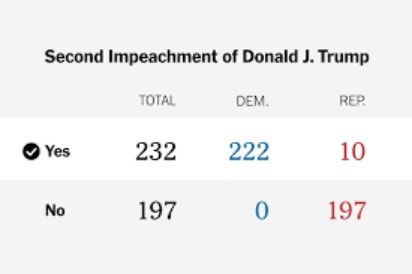 President Trump is Impeached for a Second Time: On January 13, 2021 the House of Representatives voted to impeach President Donald Trump on the single article of “Incitement of Insurrection”. The vote was 232 to 197, with 10 Republicans joining all House Democrats in voting for impeachment. The text of the impeachment document (https://www.congress.gov/bill/117th-congress/house-resolution/24/text) contains the following reasons for impeachment: “…. the House of Representatives, and the Senate met at the United States Capitol for a Joint Session of Congress to count the votes of the Electoral College. In the months preceding the Joint Session, President Trump repeatedly issued false statements asserting that the Presidential election results were the product of widespread fraud and should not be accepted by the American people or certified by State or Federal officials. Shortly before the Joint Session commenced, President Trump addressed a crowd at the Ellipse in Washington, DC. There, he reiterated the false claims 'we won this election, and we won it by a landslide'. He also willfully made statements that, in context, encouraged-and foreseeably resulted in-lawless action at the Capitol, such as: 'if you don’t fight like hell you’re not going to have a country anymore'. Thus incited by President Trump, members of the crowd he had addressed, in an attempt to, among other objectives, interfere with the Joint Session’s solemn constitutional duty to certify the results of the 2020 Presidential election, unlawfully breached and vandalized the Capitol, injured and killed law enforcement personnel, menaced Members of Congress, the Vice President, and Congressional personnel, and engaged in other violent, deadly, destructive, and seditious acts”. The impeachment document further states that “President Trump’s conduct on January 6, 2021, followed his prior efforts to subvert and obstruct the certification of the results of the 2020 Presidential election. Those prior efforts included a phone call on January 2, 2021, during which President Trump urged the secretary of state of Georgia, Brad Raffensperger, to 'find' enough votes to overturn the Georgia Presidential election results and threatened Secretary Raffensperger if he failed to do so.” 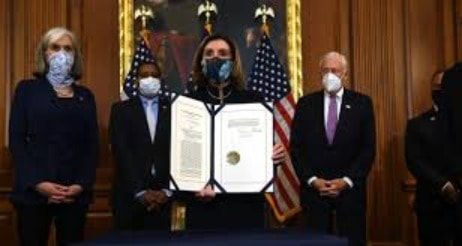 Most of us have viewed the television coverage and read the news reports, and pretty much concur with the reasoning behind the impeachment of Donald Trump. There is evidence that several militia groups had been planning to storm the Capitol even before Donald Trump’s speech of January 6, 2021. But no one can dispute that Donald Trump’s rhetoric about the “stolen election” was the impetus behind the Capitol riot. Even his political allies believe that he committed impeachable offenses. According to the New York Times, Senate Republican leader Mitch McConnell believes that President Trump committed impeachable offenses. House Republican leader Kevin McCarthy stated to House colleagues that President Trump was at least partially responsible for the Capitol riot. 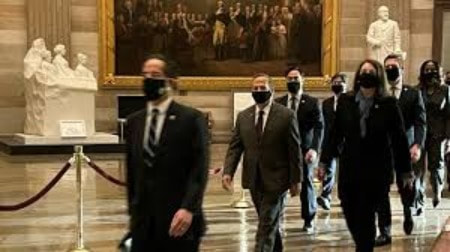 On to the Senate Trial: On January 25, 2021 House managers delivered the article of impeachment to the Senate, officially starting the trial process. Senate leadership agreed to delay the trial for a few weeks in order to give the former president time to prepare for the trial and to give the Senate time to continue the process of confirming President Biden’s cabinet nominees. On January 26, 2021 all Senators were sworn in as jurors for the upcoming trial. Senator Patrick Leahy of Vermont will be the presiding officer. The impeachment trial will begin on February 9, 2021 with oral arguments. It will take 2/3 of the Senators (67) to vote to convict Donald Trump. Assuming all 50 Democratic Senators vote to convict, it will take 17 Republican Senators to vote for conviction. 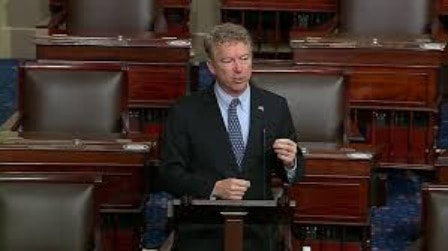 Objections to the Senate Trial: New Senate leader Chuck Schumer (D-New York) claimed that “…healing and unity will only come if there is truth and accountability. And that is what this trial will provide”. But not all republicans are buying this argument. Many are saying that it will further divide the country, and the point is moot now that Donald Trump is no longer in office. Others, like Kentucky Senator Rand Paul, consider it unconstitutional to impeach a president who is already out of office. Even before the Senators were sworn in as jurors, Senator Paul put forth a motion to declare the impeachment trial unconstitutional. In the resulting vote, 45 Republicans, including Mitch McConnell, agreed with Senator Paul. But Senator Paul’s attempt to rule the impeachment trial unconstitutional failed, and it will proceed as scheduled. My Views on the Senate Impeachment Trial:
 Politics as Usual: In recent days the Republican leadership in the House and Senate have concluded that, for better or worse, they need Donald Trump. In order to regain the House and Senate in the mid-term elections they will need those Republicans who are still loyal to Donald Trump, and there are millions. Senator Lindsey Graham stated bluntly this week, “We cannot take the Senate back without his help (Donald Trump’s). That’s just a fact”. It’s a sorry day in our democracy when the quest for power trump’s (no pun intended) justice, integrity, and democratic values. The Republican party would do the country a huge favor by convicting Donald Trump and then preventing him from ever running for high office again. But instead they have chosen to make a deal with the devil and they will have to live with the consequences. Sadly the country will have a difficult time unifying with Donald Trump’s polarizing presence.
There is no doubt in my mind that Donald Trump threatened the integrity of our democratic system, interfered with the peaceful transition of power, and imperiled a coequal branch of government. In short, he committed impeachable offenses and the House of Representatives was correct in impeaching him. This second impeachment will forever be a stain on his legacy. However, I fear that delivering the article of impeachment to the Senate to initiate an impeachment trial will prove to be a mistake. If you enjoy reading this type of commentary please subscribe to my blog and tell a friend. You will receive an email notification when new blogs are posted. The email will come from the site’s email: armchairamerican1776 @gmail.com.
Thanks, Armchair American  The President of the United States has nearly unlimited power to pardon or commute the sentences of those accused or convicted of federal crimes. This power is embedded in Article 2, Section 2 of the Constitution, which states that the president has the “power to grant reprieves and pardons for offenses against the United States, except in cases of Impeachment”. The framers of the Constitution thought that fear of impeachment, the court of public opinion, or the integrity of the person holding the highest office in the land, would keep any abuses in check. Unfortunately, this has proven not to be the case. The self-serving pardons granted by President Trump in the closing hours of his administration, demand that reforms be explored.  Exercise of the Presidential Pardon: The Constitution provides no standards or guidelines on the use of the presidential pardon, and therefore it can be used for any reason, or no reason. Pardons were deemed necessary to address injustices, at a time when many crimes were punishable by death and haste was of the essence. As Alexander Hamilton argues in Federalist No. 74 (https://guides.loc.gov/federalist-papers/text-71-80), the purpose of the pardon power is to temper justice with mercy, and in order to facilitate reconciliation which is sometimes needed to restore the tranquility of the commonwealth. Examples of this include pardons granted by Abraham Lincoln and Andrew Johnson to Confederate Soldiers, and amnesty granted by Jimmy Carter to Vietnam-era draft evaders.
An 1866 Supreme Court ruling affirmed that the presidential pardon “extends to every offence known to law, and may be exercised at anytime after its commission, either before legal proceedings are taken, or during their pendency, or after conviction and judgement”. This was how President Ford was able to grant Richard Nixon a full, free, and absolute pardon for all offenses against the United States even before he was charged with any. 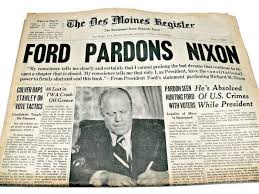 It is important to note that presidential pardons only exonerate federal crimes. It can not be used to pardon state or local offenses, and it cannot be used to overturn civil judgments. The president does not have the power to pardon defendants in an impeachment trial or anyone who has been impeached. The pardon may be granted even before legal proceedings have begun, but pardons may not be granted for crimes that have not yet been committed.  Can Presidents Pardon Themselves? The Constitution does not explicitly prohibit it, and no president has tried. But as James Madison wrote, “no man is allowed to be a judge in his own case, because his interest would certainly bias his judgement, and, not improbably, corrupt his integrity”. This is a longstanding common-law principle, and many legal experts agree that a self-pardon would not stand up to judicial scrutiny. Richard Nixon may have sought to pardon himself if not for his Justice Department’s Office of Legal Counsel opinion that a president could not pardon himself. If a president attempted a self-pardon, the matter would most certainly end up in the Supreme Court.  Office of the Pardon Attorney: The Office of the Pardon Attorney, within the Department of Justice (DOJ), was established approximately 125 years ago to assist the president in the exercise of executive clemency. Executive clemency may take several forms. These include full pardon, commutation of sentence, remission of fine or restitution, or reprieve. Requests for executive clemency are directed to the Pardon Attorney for review, investigation, and preparation of the DOJ’s recommendation to the president. The Office of the Pardon Attorney has established procedures and standards for considering pardon petitions ( https://www.justice.gov/pardon).  But the president is not required to follow their recommendations and retains full pardon authority. In fact, President Trump has mostly bypassed the Office of the Pardon Attorney when considering pardon petitions. Instead, petitioners have approached the White House directly through advisor Jared Kushner, Chief of Staff Mark Meadows, White House Council Pat Cipollone, or the president himself. 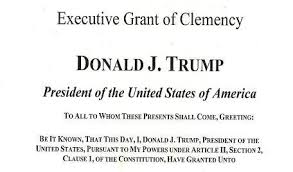 Pardons as Tools of Justice or Personal Gain? President Trump was not the first, and he certainly won’t be the last president to use the executive clemency system to his own advantage. Under Donald Trump, the executive clemency system has been dominated by inside access, and used to serve his personal goals and whims. Analysis by Harvard law professor Jack Goldsmith found that 86 of Donald Trump’s first 94 pardons were “aberrant”’; meaning that they circumvented the normal review process and benefitted celebrities, or people with political or family ties to the president (https://www.lawfareblog.com/trumps-circumvention-justice-department-clemency-process). In 2020, Donald Trump granted clemency to loyal associates Paul Manafort, George Papadopoulos, Michael Flynn, and Rodger Stone. Donald Trump also pardoned Jared Kushner’s father, a convicted criminal, as well as four Blackwater security guards convicted of murdering civilians in Iraq. These individuals were not wrongly convicted, showed little contrition or remorse for their crimes, and do not serve the public good by being pardoned. The pardon system was not established to foster cronyism and to subvert the rule of law. But this seems to be the case in these instances.  The biggest abuse of the system is the large number of pardons issued in the final hours of a presidency, leaving little time for scrutiny. This is exemplified by Bill Clinton’s pardon of Marc Rich who was indicted for tax evasion and racketeering. Rich and his wife were large donors to Hilary Clinton’s Senate campaign and to the Clinton Library Foundation. The fact that Rich was a fugitive from law living overseas, did not prevent him from getting a “get out of jail free” card. 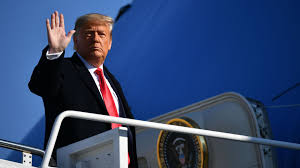 On his final day in office, President Trump pardoned 74 people and commuted the sentences of 70 others. I’ll let you decide how many of these meet the Constitution’s intent of the pardon clause. Here is a full list of the 144 people receiving clemency: (https://www.nbcnews.com/politics/donald-trump/full-list-trump-s-last-minute-pardons-commuted-sentences-n1254806). Many of these last-minute pardons are rotten to the core, but perfectly legal. So, what can be done about it? Nothing, without some type of reform.  Possible Reforms: If you assume, as Alexander Hamilton did, that all presidents would show “prudence and good sense” in the exercise of the pardon authority, then nothing needs to be done. But as recent history has shown, not all presidents are the principled gentlemen that the framers of the Constitution had envisioned. Here are a few suggestions for reforms that would better align the president’s pardon authority with how it was originally intended:
The president’s pardon authority was not intended to excuse injustice, but to do justice. The Constitution gives the president nearly unfettered authority to issue pardons. There is very little transparency in the process, and many of the most questionable pardons occur in a president’s final hours in office. It is time to reform the pardon system and restore it to the purpose for which it was intended. If you enjoy reading this type of commentary please subscribe to my blog and tell a friend. You will receive an email notification when new blogs are posted. The email will come from the site’s email: armchairamerican1776 @gmail.com. Thanks, Armchair American 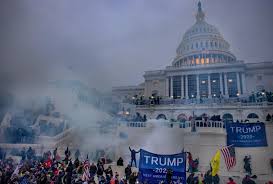 A nation’s capital comes under violent assault by an unruly mob, incited by a despotic leader intent on holding onto power despite having lost a free and fair election. Just another news report from Venezuela, Belarus, or Kazakhstan? No! I’m talking about what took place at the U.S. Capitol on Wednesday.
The U.S. Capitol building was attacked by a mob of Donald Trump supporters to disrupt the certification of Joe Biden as the next President of the United States. The assault on the heart of our democracy was an insurrection, a violent uprising against an established government. These events did not erupt spontaneously. They have been brewing since the November 3rd election, fed by the lies and vitriol of a man who would not accept defeat. In an act of sedition, President Donald Trump implored his supporters not to accept the results of the election, and incited them by perpetrating the lie that the election was stolen from him. Just a short time before a joint session of Congress assembled to certify the election of Joe Biden and Kamala Harris, Donald Trump addressed his supporters near the White House at the “Save America” rally. Here are some of the president’s own words: “All of us here today do not want to see our election victory stolen by emboldened radical left Democrats, which is what they’ve done and what they are doing. We will never give up. We will never concede, it doesn’t happen. You don’t concede when there’s theft involved. Our country has had enough. We will not take it anymore and that’s what this is all about.” In his hour and thirteen-minute speech to his followers, Trump laid out his grievances and a litany of lies about how the election was stolen from him. He implored Vice President Pence not to certify the election, and told his followers to walk to the Capitol once his speech was over, with these words: “We’re going to walk down to the Capitol, and we’re going to cheer on our brave senators and congressmen and women. We’re probably not going to be cheering so much for some of them because you’ll never take back our country with weakness. You have to show strength, and you have to be strong. We have come to demand that Congress do the right thing and count the electors who have been lawfully slated”. Within two hours, Trump’s supporters had broken into the Capitol building, sending members of both chambers fleeing for safety, and desecrating the seat of America’s democracy. When the mayhem was over, at least two people were dead and dozens were injured. This was not a protest, it was an unprecedented assault on our democracy, and a glimpse at how a constitutionally formed government can fall. The only winners in this unholy drama are the other despotic leaders from around the world who were undoubtedly cheering Trump on. This stain on America democracy certainly sent champagne corks flying in the government chambers of China, Russia, North Korea and Iran. Donald Trump is the most dangerous man in America, and a grave threat to our democracy. The damage he has done to this country, both domestically and internationally, is incalculable. He is an enemy of free and fair elections, the institutions of democracy, and common decency. He should be removed from office swiftly, before he can do any more damage. Vice President Pence should do the right thing, and regain his credibility by invoking the 25th Amendment to have the president removed from office. Short of that, the Congress should move immediately to have the president impeached. There is time for expedited impeachment proceedings both in the House and Senate. Extraordinary times demand extraordinary measures. I advocate for impeachment. The 25th Amendment would not preclude the president from seeking office again, but impeachment can. It would be in the GOP’s self-interest to push for this option. If Donald Trump is not banned from running for president again, he will be a thorn in their side for years to come, and the party will become disastrously divided. Donald Trump announced today that he will not be attending the inauguration of Joe Biden. Just as well, he will probably be in exile in Russia or North Korea by then (only half joking). I wish I could say that this is the end of a sorry chapter in American history, but the drama will continue until Donald Trump is dealt with. Lost in all the drama of the week is the fact that the Democrats won both Senate runoff elections in Georgia. The Democrats will soon be the majority in the Senate. Republicans blame the erratic behavior of Donald Trump for the defeat. But as the proverb says, “You live by the sword, you die by the sword”. If you enjoy reading this type of commentary please subscribe to my blog and tell a friend. You will receive an email notification when new blogs are posted. The email will come from the site’s email: armchairamerican1776 @gmail.com. Thanks, Armchair American  The new year is finally here, and no one wants to put 2020 in the rearview mirror more than I do. The beginning of a new year is a time to reflect, take stock, and move forward with the hope that the year ahead will be better than the last. Much of what made 2020 challenging, (I’m being kind), will follow us into the new year. The coronavirus pandemic cast a dark shadow on much of 2020, and its impact will be felt for much, if not all, of 2021. Politics also dominated 2020. The hyper-partisanship continues, and we start the year with a very busy political calendar which will set the stage for 2021. This blog post is a brief look at what’s on my radar, and my wishes for 2021.  Political Calendar January: January 3, 2021: The start of the 117th United States Congress. On the Senate side, new Senators will be sworn in and new rules adopted. In the House of Representatives, newly elected and re-elected members will be sworn in, and the Speaker of the House will be elected. January 5, 2021: Two Georgian Senate runoff elections are being held. The results will determine which party controls the Senate. The seats are currently held by GOP incumbents Kelly Loeffler and David Purdue. They are being challenged by Democrats Jon Ossoff and Raphael Warnock, respectively. January 6, 2021: Congress will gather in joint session to certify the electoral votes for president and vice president of the United States. Vice President Mike Pence will preside over the proceedings, and he will open the certificates of the electoral votes of each state and the District of Columbia. Once opened, each certificate is read aloud and the vice president calls for any objections, if any. The objection must be in writing and endorsed by at least one Senator and one House member. If an objection is raised, the joint session is suspended and each house meets separately to debate and vote on the objection. If the objection fails, the votes are counted and the joint session of congress continues to count the electoral votes of the remaining states. Objections are rare, and the certification of the electoral votes is typically quick and uneventful. But the 2020 presidential election was anything but typical, and objections will be raised in a last-ditch effort to overturn the election in Donald Trump’s favor. Senator Josh Hawley (R-Missouri) and Congressman Mo Brooks (R-Alabama) plan to raise one or more objections due to what they claim are voting irregularities in certain states. Several other Republican members of Congress will raise their objections as well. It could be a long day. But this is all just political theater. The Democratic held House will never vote to uphold the objections, and several Republican Senators have no intention of objecting to any of the certified electoral college votes. The only good that will come out of this affront to our democracy is that it will force Republicans in Congress to publicly acknowledge their support for either Donald Trump or the electoral process. January 20, 2021: Joe Biden will be sworn in as the 46th President of the United States, and Kamala Harris will be the first woman (of any color) to become vice president. Due to COVID-19, the inauguration will probably be a subdued affair, with most of the festivities occurring virtually. The only real question now is whether or not Donald Trump will be in attendance. I hope that he is. Not because I want to give him any more TV time, but for the sake of the country. Donald Trump’s presence will maintain our country’s tradition of a smooth transition of power, and signal to his supporters that Joe Biden is the legitimate president. I just hope, for this one day at least, Donald Trump can keep his ego in check and put the country ahead of his self-interests.  Other Things on My Radar for the Year Ahead: Coronavirus Pandemic: Unfortunately, the pandemic will dominate our lives for at least another year. The Pfizer and Moderna vaccines provide hope that there is light at the end of the tunnel. By the 2nd half of the year there should be additional COVID-19 vaccines approved for use in the U.S. from Johnson & Johnson, AstraZeneca, and Novavax. But the real issue to keep an eye on is the distribution and administration of the vaccines, in the U.S. and around the world. As we have witnessed over the past few weeks, it is a tall order to get the vaccines to where they are needed, and then getting them into the arms of people. Our healthcare system is exhausted by the hundreds of thousands of COVID patients being treated, and the Public Health System is doing all it can to keep up with testing and contact tracing. The federal government is going to have to step up in a big way if the vaccination program is going to succeed. The system also needs to keep an eye on the new variants of the virus that are currently in the population, and to convince enough people to get the vaccine in order to achieve herd immunity. What Donald Trump Does Next: I don’t think that Donald Trump is going into quiet retirement at Mar-a-Lago. He will continue to wield considerable influence in the Republican Party. The question is, what role will he take (or make for himself)? Will Donald Trump be a king maker, an elder statesman, or something more? I think he will launch his 2024 presidential campaign on January 20, 2021. Preparing for the Next Pandemic: Let’s face it, our response to the current pandemic was not good. We have no excuse not to be ready for the next pandemic, which will arrive sooner rather than later. The world has learned a lot about what has worked and what hasn’t during the current pandemic. The United States has a lot of work to do to put the systems and best practices into place, and to build critical supply chains. Student Loan Forgiveness: I don’t think that the Democrats will win back the Senate this year, so not much will be done on student loan forgiveness. Nonetheless, this is an important subject that needs careful consideration. Removing or Modifying the Presidential Pardon: No one is above the law, except the President who has the authority to grant pardons for offenses committed against the United States. President Trump’s recent pardons of convicted criminals (as well as questionable pardons made by other presidents), makes this a topic for serious discussion. Medicare for All: Most people agree that the healthcare system in the United States is broken, and the massive amount of money it sucks from the economy is unsustainable. There is no easy fix, and the politics surrounding it seem insurmountable. But I think that Medicare for All is a step in the right direction and needs to be pushed forward. Gun Control: With Republicans in control of the Senate this is probably a nonstarter. But you can’t convince me that assault style weapons, armor piercing bullets, and high-capacity magazines are guaranteed rights under the Constitution.  Wishes for the New Year:
Even though 2021 brings many challenges, I remain hopeful for the new year. The new administration will bring competent leadership to Washington D.C. The availability of COVID-19 vaccines and the resiliency of the American people, give me hope that when we look back on 2021 there will be a lot to celebrate. Happy New Year! If you enjoy reading this type of commentary please subscribe to my blog and tell a friend. You will receive an email notification when new blogs are posted. The email will come from the site’s email: armchairamerican1776 @gmail.com. Thanks, Armchair American   Joy to the world, the vaccines have come. Let earth begin to heal. Let's thank those who delivered them; let every arm prepare for one; and heaven and nature sing, and heaven and nature sing, and heaven and heaven, and nature sing. Is this a Christmas miracle? Let’s not get ahead of ourselves. This is still 2020 after all, and we have a long road ahead. The two COVID-19 vaccines currently in limited distribution were developed in record time, but the development of the technologies behind the vaccines took decades. Let’s look at the two vaccines currently being distributed and what to expect in the coming months.  Operation Warp Speed (OWS): A public-private partnership initiated by the U.S. government to facilitate and accelerate the development, manufacturing, and distribution of COVID-19 vaccines, therapeutics, and diagnostics (https://www.hhs.gov/coronavirus/explaining-operation-warp-speed/index.html). This is an interagency program spearheaded by the Department of Health and Human Services. The main goal of this program is to produce and deliver 300 million doses of safe and effective vaccines, with the initial doses available by 2021. So far so good. The Chief Operating Officer of the program is General Gustave Perna, and the Chief Scientific Advisor is Moncef Slaoui. 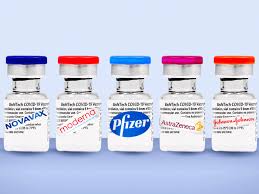 In August, OWS chose six companies to receive funding in order to expedite development and manufacture of COVID-19 vaccines. These companies are Johnson & Johnson, Moderna, Astra Zeneca/University of Oxford, Novavax, Merck, and Sanofi/GlaxoSmith Kline. Pfizer/BioNTech did not receive any direct funding from OWS, but has agreed to supply vaccines. Pfizer/BioNTech COVID-19 Vaccine: This vaccine was given Emergency Use Authorization (EUA) by the FDA on December 11, 2020. This is not the same as a full FDA approval, but it allows the vaccine to be used because there is sufficient evidence to show that its potential benefits outweigh its risks. Nearly 3 million doses of vaccine were delivered over the last ten days to 636 sites across the U.S. An additional 3 million doses will be delivered over the next few weeks to complete the required two dose regimen. Twenty to thirty million doses will be delivered each month in the first quarter of 2021. The first vaccines began to be administered to frontline healthcare workers on December 14, 2020. The vaccine was developed in Germany by BioNTech using mRNA technology (https://www.cdc.gov/coronavirus/2019-ncov/vaccines/different-vaccines/mrna.html). BioNTech has partnered with Pfizer to help fund, manufacture, and distribute the vaccine. OWS has contracted with Pfizer to purchase 100 million doses of the vaccine for $1.95 billion. Pfizer will produce about 1.3 billion doses of the vaccine in 2021 to be distributed around the world. The U.S. government is currently negotiating with Pfizer for an additional 100 million doses of vaccine, but Pfizer lacks the required raw materials. The government is considering using the Defense Production Act to speed up production of the needed materials. In an interview with CNBC, Pfizer CEO Albert Bourla said he would welcome the U.S. government’s help in procuring needed materials in order to increase production of the vaccine. This just in: Today (12/23), Pfizer and BioNTech have signed a $2 billion agreement with the U.S. government for the purchase of an additional 100 million doses of COVID-19 vaccine. At least 70 million doses will be delivered by June 30, 2020, and the remaining 30 millions doses will be delivered no later than July 31, 2020. What You Need to Know About the Pfizer Vaccine:
You can find more information on the Emergency Use Authorization of the Pfizer Covid-19 vaccine at: (https://www.fda.gov/media/144414/download). Moderna COVID-19 Vaccine: This vaccine was given Emergency Use Authorization by the FDA on December 18, 2020. The FDA stated that its analysis “supported a favorable profile”, and confirmed Moderna’s earlier assessment that its vaccine was 94.1% effective. Administration of this vaccine began on December 21, 2020. The Moderna vaccine is roughly equivalent to the Pfizer vaccine, both of which use synthetic messenger RNA technology. Moderna is a small biotech company based in Cambridge, Massachusetts, and the vaccine is the first product it has brought to market. Moderna will rely on contract manufacturers, such as Catalent Biologics in Indiana, to package and distribute their product. They plan to produce 500 million doses in 2021. Unlike Pfizer, Moderna has worked closely with Operation Warp Speed. The vaccine was developed in partnership with the National Institute of Allergy and Infectious Diseases, under-written by the government. Last summer the government signed a contract to purchase 100 million doses of the vaccine to be delivered in the first quarter of 2021. Earlier this month the government signed another agreement to purchase an additional 100 million doses to be delivered by the end of the 2nd quarter. This brings the government’s investment in the Moderna vaccine to $4.1 billion. What You Need to Know About the Moderna Vaccine:
You can find more information on the Emergency Use Authorization of the Moderna Covid-19 vaccine at: (https://www.modernatx.com/covid19vaccine-eua/). Other COVID-19 Vaccines on the Horizon in the U.S.:

 Vaccine Distribution: Operation Warp Speed is coordinating distribution of all vaccines. It is allocating vaccines according to each state’s population. The CDC has established guidelines to aid the states in prioritizing the limited supply of vaccines. The individual states have the final say on how the vaccines will be distributed, but most states will follow the CDC guidelines. The highest priority (Phase 1a) will be frontline healthcare workers and older people and staff in residential care homes. The CDC just released new guidelines for people in the next priority group (Phase 1b). This group includes people 75 and older, and frontline workers in “essential” jobs. These essential workers include teachers, emergency workers, and people who work in grocery stores, prisons, food processing plants, and public transportation. It will probably take most of the 1st quarter of 2021 to vaccinate this group of people, assuming no supply disruptions. The next group (Phase 1c) will be people aged 65-74, and younger people with high- risk health conditions. Even if we wanted to vaccinate everyone sooner, the supply just isn’t there. Phase I alone will use most of the vaccines currently contracted for through Operation Warp Speed. The country will need at least one more approved vaccine to get all of the general public vaccinated by the end of the summer. The National Governors Association and Duke University have developed a website to help navigate the vaccine distribution across the country. For your state’s specific plan follow this link: (https://healthpolicy.duke.edu/news/covid-19-vaccination-plans-state). The CDC has established the “Pharmacy Partnership for Long-Term Care” to offer onsite COVID-19 vaccination services for residents and staff of nursing homes and assisted living facilities. The participating pharmacies include CVS, Walgreens, and Managed Health Care Associates.  How Much Will the Vaccine Cost?: The federal government (tax payers) is paying for the vaccine. Healthcare providers may charge an administration fee, but in most cases this will be covered by medical insurance.  Will Vaccination be Mandatory?: At this time vaccination is voluntary. It would be legally questionable to mandate vaccination with a product that has not received full FDA approval. But it is likely that there will be travel restrictions put in place requiring people to be vaccinated before flying or entering certain foreign countries. Will the Vaccines be Effective Against New Virus Variants: According to HHS officials and reports from Pfizer and Moderna, there is a high level of confidence that existing vaccines will be effective against new COVID variants, such as the one in the United Kingdom(UK). Moderna and Pfizer will conduct tests on the UK variant in the coming weeks to make certain that their vaccines are effective. Challenges Remain:

 Vigilance and Patience: It will take most of 2021 to get the majority of the eligible people in the U.S. vaccinated against COVID-19. This is a massive effort and hiccups are bound to happen. We all just need to be patient. While we wait for herd immunity to be achieved, which could be many months to years away, we need to continue to protect ourselves, our families, and communities against the virus. This means that mask wearing, social distancing, and hand sanitation are as important as ever. Even after people become vaccinated, they may still shed the virus, so we must remain vigilant. New information about the coronavirus, COVID-19, and vaccines is coming out daily, so stay informed. The vaccines currently available, and those in development, give us hope for 2021. The efforts behind these vaccines demonstrate what can be accomplished when thousands of people in the public and private sectors come together in common cause for the betterment of humanity. The true Christmas miracle would be if this becomes a trend, and people come together to solve intractable problems like homelessness, poverty, hunger, racial injustice, the failed healthcare system, etc., etc., etc. One can only wish; and here’s wishing you a Merry Christmas.  If you enjoy reading this type of commentary please subscribe to my blog and tell a friend. You will receive an email notification when new blogs are posted. The email will come from the site’s email: armchairamerican1776 @gmail.com.
Thanks, Armchair American 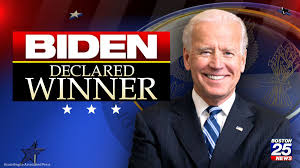 For all intents and purposes the 2020 presidential election is finally over. The Electoral College met on December 14th in all 50 states and the District of Columbia and cast their electoral votes. The Electoral College has spoken and the winner of the 2020 presidential election is (drum roll please), Joe Biden! It was a very contentious election, and President Trump and his allies have tried every legal maneuver possible to have the election results overturned. But the numbers don’t lie. Here is the election scorecard, which even the most hardened partisan cannot overlook: 2020 Presidential Election Score Card Votes/Challenges Trump Biden Popular Vote 74,223,753 (46.9%) 81,283,495 (51.4%) -------------------------------------------------------------------------------------------------- Recounts in Wisconsin and Georgia √ -------------------------------------------------------------------------------------------------- Lower Courts Lawsuits (50+) √ -------------------------------------------------------------------------------------------------- Supreme Court Rulings (2) √ -------------------------------------------------------------------------------------------------- Electoral College Votes 232 306 -------------------------------------------------------------------------------------------------- Winner √ ------------------------------------------------------------------------------------------------- Even before all of the votes from the November 3rd election were tallied, the President’s campaign and his allies, began filing over 50 lawsuits in various jurisdictions. The lawsuits contested the election outcome due to alleged fraud or voting irregularities. Some of these lawsuits are still pending, but the majority were thrown out or decided in Joe Biden’s favor due to lack of evidence. The first Supreme Court challenge, to reverse the election results in Pennsylvania, was denied due to lack of merit. The second Supreme Court challenge, filed by the Texan Attorney General, was denied due to lack of standing (he didn’t have the legal right to sue other states over their election laws). Much to the chagrin of President Trump, the separation of powers is still working. Here is a reference to all of the legal challenges: https://www.9and10news.com/2020/12/10/status-of-election-related-legal-challenges/. The partial recount in Wisconsin and the full hand recount in Georgia, both went in Joe Biden’s favor. 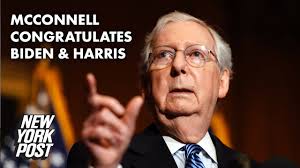 On the floor of the Senate today, Leader Mitch McConnel acknowledged Joe Biden’s victory in the Electoral College. He went on to congratulate President-elect Biden and Vice President-elect Harris on their victory. On January 6, 2021 Congress will meet in joint session to count the electoral votes and declare the winner of the presidential election. For the sake of the country, let’s hope that Donald Trump and his millions of admirers accept the outcome of the election so that we can work together on the challenges ahead. 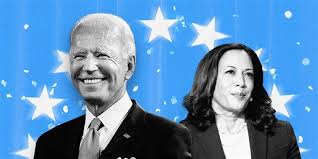 If you enjoy reading this type of commentary please subscribe to my blog and tell a friend. You will receive an email notification when new blogs are posted. The email will come from the site’s email: armchairamerican1776 @gmail.com.
Thanks, Armchair American 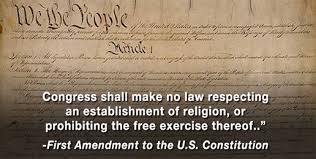 On November 25, 2020, in a 5-4 ruling, the U.S. Supreme Court sided with religious organizations in a case over COVID-19 restrictions put in place by New York Governor Andrew Cuomo. The recent appointment of Justice Amy Coney Barrett has given the court a conservative majority, so the ruling should not be surprising. Is this ruling a shadow of things to come for the high court or just a one-off event? Let’s take a closer look. 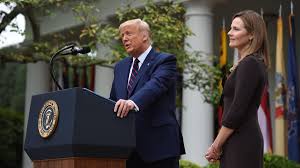 I am not a lawyer. The extent of my legal training is a few graduate level courses in business and tax law. When I am confronted with a constitutional issue that I am not familiar with I first consult the relevant articles in the U.S. Constitution. Then I attempt to determine the intention of the writers of the Constitution by reviewing the Federalist Papers, and any other pertinent writings. Finally, I see if there have been any similar cases ruled on by the Supreme Court which may have established a precedent for the issue under review. Fortunately, I have already researched and addressed the constitutionality of pandemic restrictions in my previous blog "are-pandemic-restrictions-violating-your-first-amendment-rights.html". From the previous blog on this topic we know that states have broad powers to restrict individual liberties in the name of public health. In issues of medical and scientific uncertainties, state health officials should not be subject to second-guessing by an unelected federal judiciary which lacks the background, competence, and expertise to assess public health matters. Restraints may be placed on constitutional rights by the state for the common good. However, the restrictions have to be applied without preference to content or viewpoint. For example, if officials restrict indoor religious gatherings to 50 people, they must restrict all indoor gatherings to 50 people. This is where I think the State of New York crossed over the line. The state singled out houses of worship and imposed harsh restrictions on indoor religious gatherings. Let’s take a look at the case. 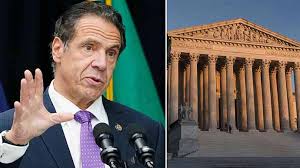 Roman Catholic Diocese of Brooklyn, New York v. Andrew M. Cuomo, Governor of New York : www.supremecourt.gov/opinions/20pdf/20a87_4g15.pdf The Catholic Diocese of Brooklyn, along with Agudath Israel of America sought to overturn an Executive Order issued by Governor Cuomo which imposed restrictions on attendance at indoor religious services taking place in “red” or “orange” zones. In red zones, no more than ten people could attend each religious service, and in orange zones, attendance was limited to twenty-five. The religious groups claimed that this was in violation of the Free Exercise (of religion) Clause of the First Amendment. They argued that the regulations treated houses of worship much more harshly than comparable secular facilities. Five of the nine justices agreed, writing that “…the regulations cannot be viewed as neutral because they single out houses of worship for especially harsh treatment”. As an example, in an orange zone attendance at houses of worship is limited to twenty-five people, even though non-essential businesses may decide for themselves how many people to admit. It should be noted that before this case was decided, Governor Cuomo reclassified the areas in question from orange to yellow, allowing for religious services to take place at 50% of their maximum capacity. However, the Court went forward with the case because the Governor could enact more restrictive classifications at any time.  Implications of the Ruling: The case’s immediate impact is narrow, setting aside two specific restrictions on attendance at houses of worship in New York. The ruling did not overturn all pandemic restrictions at houses of worship, such as mask wearing and social distancing mandates. I don’t think that this case sheds any additional light on how Justice Amy Coney Barrett will rule in future cases. She did vote with the conservative majority, but did not issue her own opinion. The most telling opinion was written by Trump appointee Neil Gorsuch. He wrote, “Government is not free to disregard the First Amendment in times of crisis”. He went on to write that the court precedent that Chief Justice Roberts cited in a related California case, “…hardly supports cutting the Constitution loose during a pandemic”. You may read the full text of the case and accompanying opinions at the link cited above. 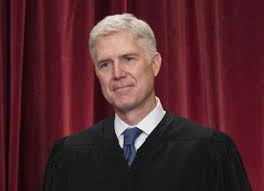 Earlier in the year the Supreme Court upheld indoor religious service restrictions in California and Nevada: (https://www.supremecourt.gov/opinions/19pdf/19a1044_pok0.pdf). These restrictions were not as severe as the ones in New York, and applied equally to religious and secular organizations. The new conservative court may have a different view. The New York case will certainly embolden religious groups, and we will soon see challenges to California’s restrictions on indoor religious gatherings. Just this Thursday the AP reported that the Supreme Court ordered a lower federal court to reexamine California restrictions on indoor religious services in light of the recent ruling in New York. With COVID-19 cases surging in California, it is uncertain if the Governor’s restrictions will stand. What does seem certain is that Chief Justice Roberts will have a challenging time holding sway over the five conservative justices, and his position as the swing voter on the Court has been neutered. 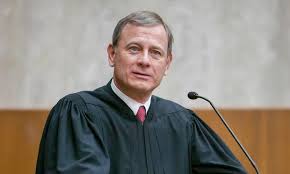 I agree with the Supreme Court’s ruling overturning New York’s attendance restrictions on religious gatherings. These restrictions specifically targeted houses of worship in violation of their First Amendment rights. New York classified such businesses as liquor stores, bicycle repair shops, hardware stores, and acupuncturists as “essential”, and therefore not subject to capacity restrictions. This seems arbitrary. Does it make any kind of sense to restrict a 1000 seat church to ten or even twenty-five attendees when it is legal to cram 200 people into the passenger cabin of a jetliner for a six-hour transcontinental flight? Not to get sidetracked, but most airline travel today is nonessential, and a passenger may take off their mask to eat or drink. Sounds like an indoor restaurant to me, but restaurants are no longer allowed to offer indoor dining. My point is, that it is a slippery slope when we allow public officials to pick winners and losers. When that happens, we have a lot more to lose than just our religious freedoms. As for the new conservative court, governors have been warned that they better carefully consider any restrictions that interfere with the free exercise of religion, even during a pandemic. 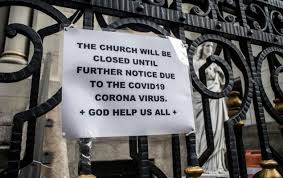 February 23, 2021 Update: On February 5, 2021 the Supreme Court ruled that California’s ban on indoor church services violated the free exercise of religion guaranteed by the First Amendment. But the Court kept in place prohibitions on singing and chanting, and allowed the state to limit indoor services to 25% of the building’s capacity. This is not surprising in light of a similar ruling in New York last November.
The decision was 6-3, with the majority arguing that California had singled out places of worship for unfair treatment. This is hard to argue against since some religious buildings are the size of whole city blocks, and restricting any attendance in such buildings seems arbitrary and not grounded in science. The Court’s three liberal decenters stuck to the belief that the Court should not overrule the public health experts during an ongoing pandemic. If you enjoy reading this type of commentary please subscribe to my blog and tell a friend. You will receive an email notification when new blogs are posted. The email will come from the site’s email: armchairamerican1776 American @gmail.com. Thanks, Armchair American  We in the U.S. are still living through the drama of the 2020 presidential election. Just like in the 2016 election, many voters found themselves voting against one candidate rather than for a preferred candidate. John Adams worried that “a division of the republic into two great parties…is to be dreaded as the great political evil.” It appears that Adams’ worries have come to pass. But we have not gotten here overnight, and there is plenty of blame on all sides of the political spectrum. More importantly, is there anything that individual voters can do, or do we just have to accept the status quo?  There are many organizations and grass roots movements working to patch the holes in the political system, and to strengthen the democratic process in our country. I have already written about some of them. I dedicated a blog post to the Electoral College (the-electoral-college-love-it-or-leave-it.html). The “National Popular Vote” is an organization attempting to neutralize the Electoral College (https: w.nationalpopularvote.com/). Here are a few other organizations, of varying political views, that are attempting to make a difference:  The Lincoln Project: (https://lincolnproject.us/). This organization was established by a group of conservative republicans to defeat Donald Trump and Trumpism, even if it meant helping Democrats get elected to office. In their view the political party is less important than restoring leadership and governance that respects the rule of law, recognizes the dignity of all people, and defends the Constitution and American values at home and abroad. With Donald Trump setting himself up as a presidential candidate in 2024, or simply as a Republican power broker, the Lincoln Project will not soon go away.  Run for Something: (https://runforsomething.net/). This organization helps to support young diverse progressives running for office. Their goal is to build a strong Democrat bench for elected and leadership positions.  Indivisible: (https://indivisible.org/). This is a national grassroots movement of millions of activists in every state, with partnerships between thousands of autonomous local Indivisible groups and a national staff. Their main goal is to defeat the right-wing takeover of American government and build an inclusive democracy.  Sunrise Movement: (https://www.sunrisemovement.org/). This is a youth movement to stop climate change and create millions of good jobs in the process. The Sunrise Movement is attempting to make climate change an urgent priority across America, end the corrupting influence of fossil fuel executives on our politics, and elect leaders who stand up for the health and well-being of all people.  Swing Left: (https://swingleft.org/). This organization helps individuals find the most impactful things that they can do to help Democrats win key elections.  Americans for Prosperity: (https://americansforprosperity.org/). This is a right leaning group that engages in broad-based grassroots outreach to advocate for long-term solutions to the country’s biggest problems. They focus on issues that prevent people from reaching their full potential, such as immigration, tax reform, burdensome regulations, healthcare and criminal justice.  Freedom Works: (https://www.freedomworks.org/). A right leaning organization established to build, educate, and mobilize the largest network of activists to advocate for the principles of smaller government, lower taxes, free markets, personal liberty and the rule of law.  Unite America: (https://www.uniteamerica.org/). This grass roots organization is dedicated to putting country over party, which is what attracted me to it. It is a movement of Democrats, Republicans, and Independents working to put voters first by fostering a more representative and functional government. They do this by investing in nonpartisan electoral reform campaigns and work to elect centrist candidates. Two major issues that Unite America is working on are “open primaries” and “rank-choice voting”. If these two voting models were adopted nation-wide, it would go a long way towards loosening the stranglehold that the Republicans and Democrats have on our electoral system. Let’s look at these two policies more closely.  Open Primaries: In eighteen states, independent voters are either prohibited from voting in party primary elections or face restrictions. This is because the primary system is closed to only those registered to one of the two major political parties. This seems undemocratic, and unfair due to the fact that all taxpayers pay to hold elections. Open primary systems allow independent voters to vote in either party’s primary. Independent voters, and voters not affiliated with a political party, are the fastest growing segment of the electorate. Open primaries give all constituents a voice in the election and it moderates the process by forcing politicians to appeal to independents as well as to their base. Closed primaries have the perverse effect of producing elected officials more accountable to their party than their constituents. Party primaries are a main reason why elected representatives refuse to work across the aisle. Working across the aisle is often viewed as being disloyal to the party and may result in getting beaten by a more ideological extreme candidate in the next election. “Open Primaries” (https://www.openprimaries.org/) is an organize advocating for open primaries. It was founded on the principle that no American should be required to join a political party to exercise their right to vote.  Rank-Choice Voting (RCV): An election system in which a voter can rank candidates in order of preference. It is really quite simple. Here’s how it works:
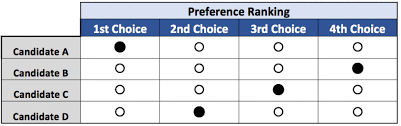 Advantages of RCV over Traditional Voting:
 Rank-Choice Voting is not just wishful thinking. Five states use RCV for overseas and military voters, and twenty municipalities use or have recently approved the use of RCV. In 2016 Maine passed a law that mandates that all state and federal primary elections, and federal general elections be conducted by RCV. In 2020 Maine became the first state in the U.S. to use rank-choice voting in a presidential election. Follow this link to learn to more on RCV in Maine: (https://www.newscentermaine.com/article/news/politics/elections/what-is-and-how-does-maine-ranked-choice-voting-work/97-e7964e06-a087-4b79-97cc-7f053c294248).  Earlier this month voters in Alaska approved a ballot measure to mandate the use of rank-choice voting in general elections and the use of “top-four” nonpartisan primaries (https://www.adn.com/politics/2020/11/17/alaska-becomes-second-state-to-approve-ranked-choice-voting-as-ballot-measure-2-passes-by-1/). In Alaska’s new “Final Four Voting” system, all candidates, regardless of party affiliation, would run in a single primary open to all voters. The top four vote getters advance to the general election. In the general election, voters rank the four candidates in order of preference. This is certainly a threat to the status quo (Democrat and Republican parties), but it puts voters first by giving them more of a voice in their elections.  Keep an eye on future elections in Maine and Alaska, this could (and in my opinion should) be our future all across America. The reason that these reforms have taken hold in Maine and Alaska, is that the voters in these states are very independent and don’t march in lock-step with the two major political parties. Our country is more politically polarized than ever, and this is not going to change any time soon if just two political parties are calling the shots. Let’s heed the warnings against hyper-partisanship that George Washington articulated in his farewell address, and the great political evil of a republic divided by two great parties that John Adams warned about. “Open primaries” and “rank-choice voting” are nonpartisan approaches that give voters more choice, promotes candidates with broader appeal, and encourages politicians to look beyond their party’s interests. We don’t have to accept politics as usual. 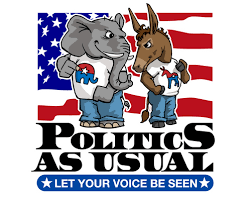 If you enjoy reading this type of commentary please subscribe to my blog and tell a friend. You will receive an email notification when new blogs are posted. The email will come from the site’s email: [email protected].
Thanks, Armchair American  With COVID-19 raging across the world, and the U.S. dealing with the aftermath of a very contentious presidential election, there is no better time to reflect upon the lessons that I learned while walking the “Camino de Santiago”. Also known as “The Way of St. James”, the Camino is an ancient Christian pilgrim route(s), leading from various points in Europe to the cathedral in the city of Santiago de Compostela in northwest Spain. There is a shrine in the cathedral which holds the remains of the apostle St. James. Christians have been making this pilgrimage for centuries, and today hundreds of thousands of people from all over the world, walk the Camino each year. Many modern “pilgrims” walk the Camino for religious or spiritual reasons, some to connect with nature, others for health and exercise, and many others in search of peace and quiet reflection.  One of the most popular Camino routes is the French Way (Camino Francés), which starts in St. Jean Pied-de-Port in the Basque region of southern France. This route crosses the Pyrenees from France and traverses approximately 800 km (nearly 500 miles) across northern Spain to the Galician city of Santiago de Compostela. My wife and I walked the Camino Francés over five weeks in the autumn of 2019. We walked the Camino in 33 stages and took two rest days. We walked for 6-8 hours, and averaged 15 miles on the trail per day. The journey took us over mountains, through river valleys, across deserts, and through high, barren plateaus. The weather ranged from hot and sunny to freezing rain. But we were prepared for that. What is difficult to prepare for is the endless miles of solitude, with nothing but your thoughts to keep you company. The time for reflection and self-evaluation is the essence of any journey, and we had nothing but time. The physical hardships of a long trek over several weeks force you to go deep within yourself to find the strength to continue. You also find valuable lessons along the way, that I now carry with me. It has been just over one year since we completed the Camino, and upon reflection, I realize how important those Camino lessons are in helping me get through this very tumultuous year. I would like to share with you some of my reflections, and the lessons that I learned while walking the Camino de Santiago:  Be in the moment and don’t be overwhelmed by the challenges ahead. When we crossed the Pyrenees, the mountain pass that we had to reach was visible for many miles. The task seemed impossible, and we thought that we would never make it to the top. We finally realized that it was counter-productive to focus on the destination and the number of miles yet to be walked. Instead, we tried to focus on the moment and enjoy where we were at the present time. This made the journey easier and much more enjoyable. This has parallels with the long road we still have to face with the COVID-19 pandemic. It will be many months or even years before effective therapeutics and vaccines are developed to get us through the pandemic. But if we focus on the end point, our lives will be filled with dread and hopelessness. We need to live in the present and make the most of every day, regardless of the circumstances.  We have been down this path before. We get caught up thinking that our experiences are new and our challenges are unique. But they seldom are. Along the Camino we walked through many ancient towns, often along roads built by the Romans over 2000 years ago. We walked the same roads as millions of pilgrims before us. This knowledge helped me to put our current day challenges into perspective. Many generations of people have had to endure deadly pandemics, most recently the Spanish Flu of 1918-1919. Contentious presidential elections have been with us through most of our history as a country. Who can forget Bush v. Gore in 2000, when the Supreme Court stepped in and essentially decided the election? We have been down this path before, and will overcome our present-day challenges.   We often confuse wants for needs. One night we stayed in a family run hostal in the small village of Hornillos del Camino. The proprietor insisted on carrying my bag up to our second-floor room. I apologized for the weight of the bag and he replied, “No problema, Americans need lots of things”. To myself I said, “He has no idea”. On the Camino you carry most of your belongings in a backpack. Therefore, it is important to carry only the essentials. Living out of a backpack you quickly learn what is essential and what is not. It is amazing how few things you actually need on a daily basis. There is a saying on the Camino, “The quantity of possessions one travels with represents the amount of fear one carries”. It is so true because most of what we carried were spare articles of clothing and items for every contingency that we could think of. We carried supplies in case of rain, if it was sunny, if there were bugs, if we got blisters, if we couldn’t find food, or if we couldn’t find water. Our packs were full of our fears. We hadn’t yet learned another truth, that “the Camino will provide”. If you put your faith in God’s hands, or trust in the universe, things tend to work out. The pilgrim network along the Camino is vast, and dedicated to helping fellow pilgrims. As long as we were open to the generosity of others, we were never alone and lacked for nothing.  Our commonalities outweigh our differences. As we walked the Camino, we met people from all over the U.S., Europe, Asia, Africa, Australia, Canada, and South America. Many of these people came from different cultures and spoke different languages. But we all came to Spain for a common purpose. Each of us got up every day, donned our backpacks, and walked many miles before searching for a place to take our evening’s respite. We filled our water bottles from the same fountains, ate communal dinners under the same roof, shared our stories of aching feet, and discussed the best route for tomorrow’s journey. The electoral college map of the United States paints a pretty bleak picture of the political divide in this country. But politics does not define who we are as individuals or as a people. We are human beings with common goals and desires for ourselves, families, and communities. Political labels don’t define us, but our common humanity does. If we accept our differences and embrace our commonalities, together we can more this country forward.  Control is an illusion. You can’t control everything, because you are not in charge. My wife and I are planners, and we had every stage of the journey mapped out. But you soon learn on the Camino, as in life, there are so many things that are out of your control. We couldn’t control whether the day would bring scorching heat or bitter cold rain, whether the water at a particular fountain was potable, if the shop would be open during siesta, or if our feet would blister despite all the training. Today we can’t predict, much less control, the course of the COVID-19 pandemic. The only thing that we can control is our reaction to the circumstances that we find ourselves in. Today we make a choice whether or not to wear a face mask in public and to practice social distancing. I’m not saying that planning is a bad thing. We just have to be flexible, and realize that there are many things in our lives that we have little, if any, control over.  If you wait for the perfect time or for the conditions to be just right before you act, you won’t get very far. There is a degree of risk in every journey and in anything of consequence that we endeavor to do. It is human to try and minimize risk. It is also human to focus on “why not” to do something, rather than on the “how” to move forward or to make it happen. If you wait for conditions to be just right, you will miss out on much that life has to offer. We decided to walk the Camino after a relatively short planning period. We would have been better prepared if we had waited to the spring of 2020. But if we had waited, we would have never made the journey due to COVID-19.  Silence is golden. While walking the Camino I didn’t listen to music or podcasts. I wanted to be open to the sounds of nature and the voices of my fellow pilgrims. I found that by turning off the noise that I was accustomed to at home, I was better able to experience my surroundings and become immersed in the experience. I was also able to experience peace, and become more comfortable with my inner thoughts. The lack of TV, internet and newspapers along the Camino, made it a much more peaceful, rich, and rewarding experience. We also made it a rule not to discuss politics on the Camino, which did wonders for our mental health. I find it important to take a little time each day to turn off the noise, and spend time in quiet reflection. If this occurs when out in nature, all the better.  Walking in nature is like Prozac for the soul. Walking forces you to slow down and become more attuned to your surroundings. You see, hear, smell, and sense things that you never would by driving, or even riding a bike. The beauty of nature helps us to connect with the wonders of life and rekindle the simple joys that were common in our youth. Along the Camino we visited some of the most spectacular cathedrals in the world. But nothing that man has built comes close to the majesty and beauty of the landscapes and natural wonders that we encountered. As the weather and topography changed, so did the colors and variety of flora that we encountered. We would not have been able to experience the wonders of the natural environment if we were traveling any other way than on foot.   Chance encounters and unplanned moments bring joy to the day. Along the Camino there are a lot of ancient cities and historic sites which we knew about and planned for. But some of our most memorable experiences were chance encounters and unexpected sites that we happened upon. For example, the magnificent view that emerged as we left a wooded path, rounding a corner and being confronted by a long-horned cow, the local cat who escorted us through her village, the brightly colored mushrooms and unusual flowers that sprang up along the path, the ancient stone walls covered in bright green moss, or the chance encounter with our Camino friends, Dave and Julie from Tasmania, on the bustling streets of Santiago. These were the types of things that made each day special. There are many experiences in life that are fleeting, and we may never experience them again. Knowing this helps you appreciate them more, and to be fully present when they occur.  Take time to occasionally look behind you to see where you have been. In our efforts to charge ahead and get to the next destination, we often forget where we are or where we have been. On long days when we were pressed for time, the natural thing to do was to lower our heads and press forward as quickly as possible. It was only when we paused and looked back over the landscape that we had just traversed, did we realize where we had been. Once we realized this, we would often stop and look behind us. This gave us an appreciation for our surroundings, and a chance to see it in a whole new light. Knowing that in all probability we would never be in this place ever again, helped to crystalize the importance of the moment for us.  You don’t have to go to Spain to have a “Camino” experience. Traditionally it has been a religious pilgrimage, and to some it still is. For others, it is an opportunity to be in the company of like-minded people. Some like the communal living, others enjoy hiking and want the physical challenge of the Camino. Others are drawn to the natural beauty, and still others come for the historic and architectural wonders. The Camino experience may be found close to home, particularly in the beauty and solitude of nature. Take out the earbuds, turn off the cell phone and TV, and find peace and solitude where you are. Who doesn’t need that right around now?
If you enjoy reading this type of commentary please subscribe to my blog and tell a friend. You will receive an email notification when new blogs are posted. The email will come from the site’s email: [email protected]. Thanks, Armchair American 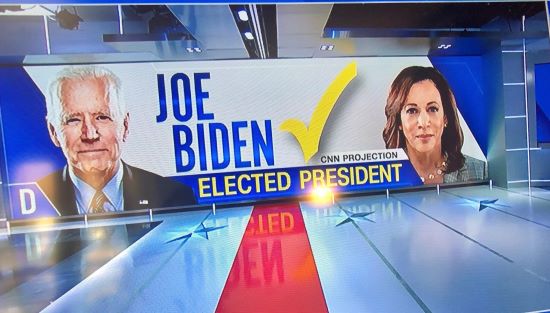 Congratulations to Joe Biden and Kamala Harris. President-elect Joe Biden will become the 46th President of the United States, and Kamala Harris will become the first woman Vice President in our history! Donald Trump’s campaign played to voters’ fears, while Joe Biden’s campaign appealed to voters’ hopes. At a time when this country is more politically divided than ever, who do you think has a better chance of uniting us? The Republican Party should be proud of how close the race was, and the seats that they picked up in Congress. But they need to get behind a leader who brings out the best in Americans, not the worst. A leader who can rise above petty politics, who sees America as one people, and works to unite rather than divide. As predicted, the coronavirus did not mysteriously disappear on November 4th, and the stock market did not crash. Joe Biden is a decent and honest man. Let’s all get behind Joe Biden and Kamala Harris and help to confront the formidable challenges ahead. God Bless America. 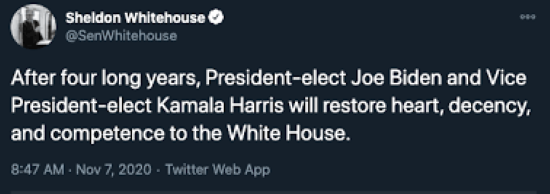  In 2016 Donald Trump ran for president as an outsider and disrupter. This helped him defeat Hilary Clinton, a Washington insider with over thirty years of baggage. According to exit polling during the 2016 presidential election, the most important quality identified by voters was that the candidate would bring change (https://cookpolitical.com/analysis/national/national-politics/what-do-voters-want-confrontation-or-compassion). What are voters looking for this time? What qualities do voters look for in a presidential candidate, and what role does leadership play? Leadership Qualities in a Good President: According to many historians, there are several leadership qualities found in good presidents (https://www.ushistory.org/gov/7e.asp). They include the following:
 Leadership in Turbulent Times: We are certainly living through turbulent times. The coronavirus pandemic has killed or sickened millions of people, forced millions out of work, and placed a dark cloud over the economy. There are ongoing protests over racial injustice, and a widening political divide. But history shows us that America has lived through much more difficult times that required great leadership to see us through. No president was faced with a more difficult challenge than Abraham Lincoln who lead the country through a devastating civil war. Franklin Roosevelt came to power during the Great Depression and then lead the country through World War II. At moments of great challenge these presidents were guided by a sense of moral purpose, sought to heal divisions, and had to bring the country together to summon a common purpose.  Doris Kearns Goodwin explores presidential leadership in her book “Leadership: In Turbulent Times”. She discusses the following traits that served several presidents well during turbulent times:
Why We Vote the Way We Do: Research into why voters choose one presidential candidate over another has been going on for many years. It should be no surprise that the single most powerful predictor of a person’s vote choice is his/her political party affiliation (https://pprg.stanford.edu/wp-content/uploads/10-The-psychology-of-voting.pdf). Party affiliation is usually based upon shared values and preferences on a handful of key policy issues. The second predictor of who a voter will choose is based on the voter’s perception of the candidate’s personality traits (intelligence, knowledge, trustworthiness, and ability to be a strong leader). Since I am not affiliated with a political party, I lean towards this camp. This will be the 12th presidential election that I voted in. In the previous eleven, I voted for the Democratic candidate four times, the Republican five times, and a third-party candidate twice.  Trump vs Biden: Make no mistake, this election is a referendum on Donald Trump. Joe Biden is a secondary character in this drama. Will voters continue to respond to President Trump’s seemingly never-ending chaos and drama? Or will they be motivated by a more steady and stable form of leadership? According to a recent NBC/Wall Street Journal poll, 64% of Republicans like Trump’s willingness to confront and challenge the establishment in government and to shake up business as usual. In contrast, 70% of Democrats prefer a leader, like Joe Biden, who will bring competence and compassion to the way the government operates. Why I Don’t Believe Donald Trump Will Win Reelection: The president has not positioned himself to unify the country at a time when it is much needed. This country needs a beacon of hope due to the pandemic, economic uncertainty, and ongoing protests and anger over racial injustice. Donald Trump has used these issues to divide the country rather than to unite it. He has made no appeal to American optimism and aspirations. According to a recent Yahoo News/YouGov poll, most registered voters believe that in the last four years bipartisanship, race relations, and crime have worsened. Sixty-two percent of registered voters list Donald Trump’s management of COVID-19 as a major failure. COVID cases are surging across the country, and the stock market is sensing a weakening economy as a result. The president has no prescription for either COVID-19 or the weakening economy. In fact, the president has not articulated any vision or policy proposals for the next four years. The American people really don’t know what Donald Trump believes. He will do and say whatever he thinks will get him reelected. Donald Trump has shown scorn for science, puts politics before people, and aligns himself with the worst elements of our society. He doesn’t know the damage he does by not denouncing QAnon and right-wing militias. I’m sure that he doesn’t really believe in what these groups espouse, just like he really doesn’t hold the views of the religious right. But they are part of his base, and that is all that matters. Why I Didn’t Vote for Donald Trump: I didn’t vote for Donald Trump in 2016 because he had never held elected office before, he had no experience in governing, he had little foreign policy experience, and he lacked the temperament and character to lead this country. Donald Trump has now been president for the better part of four years (seems like forty), and my instincts were correct. Here is a list of my top reasons for not voting for Donald Trump in 2020 (but I could have listed many more):

According to taped conversations with Bob Woodward, the president knew the dangers of the coronavirus, but chose to down play them. It is obvious that the president didn’t want to hurt his reelection chances and gambled with peoples’ lives. This was the deal breaker for me. 
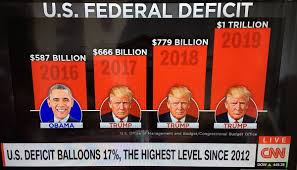
 Americans are resilient, and this country will survive and thrive regardless of the outcome of the 2020 presidential election. Due to the millions of mail-in ballots, we may not know the winner for many days after the election. We all need to be patient and let the process work itself out. If Donald Trump wins the election, he will not tear up the Constitution and declare himself “President for Life”. If Joe Biden wins, he will not confiscate your guns, impound your gasoline powered vehicles, or turn the suburbs into public housing projects ruled by violent leftists.  I have never seen the American electorate more energized by an election, and this is encouraging. If our “experiment” in self-government is to last, more citizens need to be involved. The electorate needs to champion candidates, for all levels of government, who will truly represent the people, and not just their political party. Yes, we are living through turbulent times, but we have been here before. This country is at an inflection point. It’s time we take stock, learn from the lessons of the past, and move forward with the courage and determination to make this representative democracy work for the vast majority of Americans.
If you enjoy reading this type of commentary please subscribe to my blog and tell a friend. You will receive an email notification when new blogs are posted. The email will come from the site’s email: [email protected]. Thanks  Large numbers of voters are not waiting until November 3, 2020 to cast their ballots. As of this date over 23 million Americans have voted, and so have I. Like me, most Americans had decided a long time ago who they’d vote for, at least for President. Maybe the pandemic restrictions have focused our minds more acutely on the election this year. Or maybe people are so sick of politics that they just want to vote, and move on with their lives. I fall into both camps. COVID-19 has forced states to change the way that elections are held, and have provided voters with more options. Let’s take a look at some of these new options and I will share my voting experience.  What’s the Rush to Vote?
 Early Voting: In order to facilitate voting during the pandemic, many states have taken steps to make it easier to register to vote, and have expanded ways to cast a ballot. Early voting of some sort is now available in 43 states and the District of Columbia. Options for early voting include mail-in voting/absentee voting, early in-person voting, and off hours voting, including weekends. For the specifics on each state follow this link: (https://www.ncsl.org/research/elections-and-campaigns/early-voting-in-state-elections.aspx).  Many states now allow voters to vote absentee without having to provide a reason. States like New York that require a valid reason to vote absentee, now consider fear of COVID-19 a valid reason for requesting an absentee ballot. Some states have sent absentee request forms to all registered voters. California, Nevada, and the District of Columbia have taken it a step further by sending mail-in ballots to all registered voters (https://www.usnews.com/news/elections/articles/2020-10-16/a-2020-success-story-early-voting-soars-even-as-the-coronavirus-pandemic-rages-on).
Voters now have several options once they complete their mail-in ballot. They can use the United States Postal Service, official drop boxes set up by the counties and states, in-person drop off sites, and at polling places once in-person voting begins. Most states will accept mail-in ballots even after election day, as long as they are post marked on or before November 3, 2020. This varies from state to state so check with your local election officials if you are unsure. Here is a link for the specific rules for each state (https://www.usa.gov/election-office).  Reports indicate that Democrats have outvoted Republicans 2 to 1 so far in this 2020 Presidential election (https://www.bbc.com/news/election-us-2020-54572790). Of these early voting Democrats, women and blacks are voting in high numbers. Republicans may be following President Trump’s lead by not trusting mail-in voting. Democrats may win the early vote, but they shouldn’t become over confident. Republicans will probably show up in large numbers at the polls on November 3, 2020. Pre-processing Early Ballots: How states handle ballots received prior to election day varies widely. It ranges from verifying signatures, opening envelopes, and readying ballots for tabulation. Twenty-two states process mail-in and absentee ballots upon receipt. Another twenty-five states process them starting several weeks, to just hours before election day. Pennsylvania, Wisconsin, Alabama, and Mississippi are not allowed to process or count mail-in ballots before election day. The following link provides the specifics for each state: (https://www.ncsl.org/research/elections-and-campaigns/vopp-table-16-when-absentee-mail-ballot-processing-and-counting-can-begin.aspx). If the election is close, the delay in processing mail-in and absentee ballots may result in a winner not being known for hours to days after the close of polls on November 3, 2020. Americans need to be patient and be prepared for a delayed election result.
My Voting Experience: I have known for many months how I would cast my vote in the Presidential election, but there were many down ballot candidates, propositions, and measures that needed further consideration. After spending the last several weeks watching news programs, listening to candidate forums (over Zoom of course), reading newspapers, and wading through dozens of election mailers, I sat down and filled out my mail-in ballot this week. In May, California Governor Gavin Newsom issued an executive order making all registered voters in the state automatically eligible to vote in the November 3, 2020 General Election by mail. Therefore, every voter in California was mailed a mail-in ballot. The process really got started last month. Here is the time line:
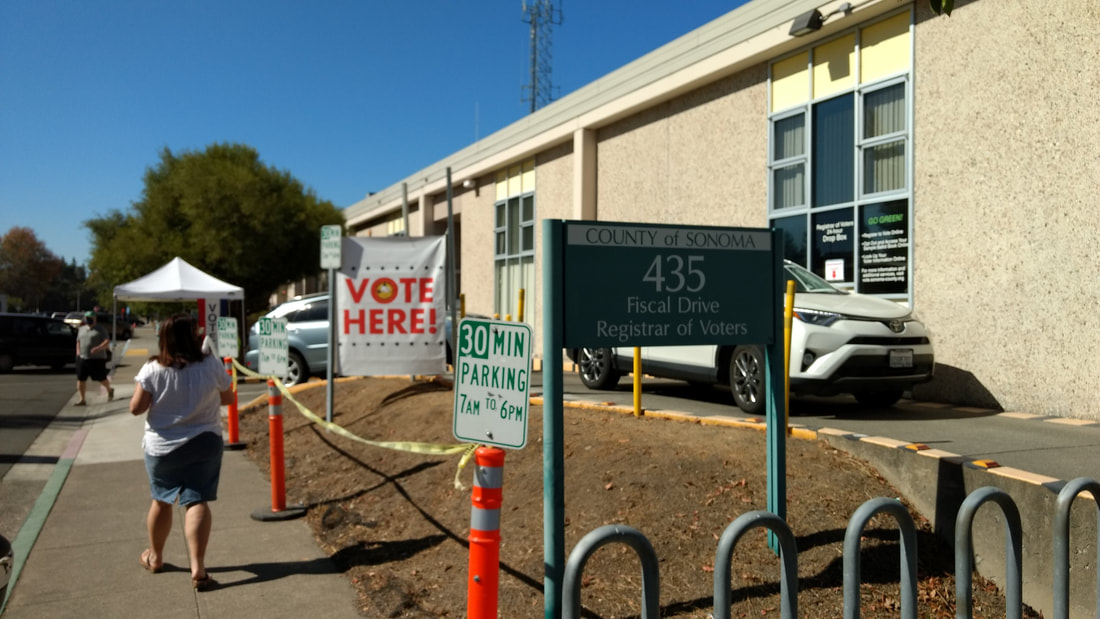
 If you use a drop box to deliver your ballot, make sure that it is officially sanctioned. In California, official drop boxes must include the county seal and be securely bolted to the ground. The use of unauthorized drop boxes to collect ballots is illegal in California. This has not stopped the GOP from placing unofficial drop boxes in several locations in Southern California. The motives for this are not exactly clear. Threatened with legal action, the GOP has stopped claiming that these drop boxes are official, and is restricting where they can be placed (https://www.npr.org/2020/10/16/923969669/california-eases-off-legal-threats-over-gop-unauthorized-ballot-drop-boxes). Counties publish the sites where sanctioned drop boxes are located. So check with county election officials if you are unsure.  When voting by mail it is important to get your ballot in as soon as possible. This leaves time to correct mistakes that sometimes occur, such as a signature that can’t be verified for whatever reason. The more people who vote early, the shorter the lines will be on election day, minimizing the spread of COVID-19. Getting your ballot in early will also ensure that your vote is included in the initial election results which will be reported shortly after the polls close on election day. The sooner the election results are known, the less opportunity there will be to spin a false narrative around the legitimacy of the election.  If you enjoy reading this type of commentary please subscribe to my blog and tell a friend. You will receive an email notification when new blogs are posted. The email will come from the site’s email: [email protected].
Thanks, Armchair American  Every four years we are reminded that the President and Vice-President of the United States are not democratically elected. They are elected by a group of 538 electors of the Electoral College. This November 3rd (or sooner if you vote by mail) when you cast your vote for President and Vice-President, you will actually be telling your State which candidate you want the State’s electors to vote for. What is the Electoral College? Does it still work as originally conceived, and what are the alternatives?  Electoral College: It is a body of 538 electors which is selected every four years from each State and Washington D.C., for the express purpose of electing the President and Vice-President of the United States. Every State gets one elector for each member of congress. California for example, has 2 Senators and 53 Representatives in the House of Representatives, and therefore has a total of 55 electors. Washington D.C. has a total of 3 electors.
As spelled out in the Constitution, each State chooses its own electors. The selection process differs by political party and by State. The National Association of Secretaries of State has compiled a list of the laws governing the selection of Presidential Electors for each State. (https://www.nass.org/sites/default/files/surveys/2020-10/summary-electoral-college-laws-100220.pdf). In all States, except Maine and Nebraska, the Presidential candidate with the most popular votes in that State, receives all of the State’s electors. In Maine and Nebraska, the electors are awarded to the popular vote winner of each congressional district, plus two electors are awarded to the winner of the State’s popular vote. In order to be elected President, the candidate must receive the majority of the electors, 270 or more.  Important Dates:
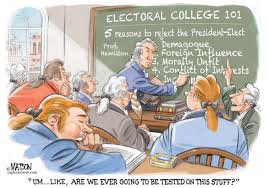 Why We Have the Electoral College: Article 2, section 1 of the U.S. Constitution established that electors selected from each State, and not a direct vote of the people, would elect the President and Vice-President. The Constitution established the number of electors each State was entitled to, but left it up to the individual States how to select their electors. Originally the candidate with the second highest number of electoral votes would become the Vice-President. This was changed in 1804 with the 12th Amendment, which directed electors to cast separate votes for the President and Vice-President. The drafters of the Constitution didn’t want a direct vote for President for several reasons. They needed to appease the less populated States, particularly those in the South who feared that a direct vote would disadvantage them. The drafters were also fearful that a direct election by all voters could be corrupted by foreign and other unscrupulous interests. It was also feared that the citizenry would not be well informed in order to make such an important selection to the highest office in the land. According to Alexander Hamilton, “A small number of persons, selected by their fellow citizens from the general mass, will be most likely to possess the information and discernment requisite to such complicated investigations.” (https://guides.loc.gov/federalist-papers/text-61-70).  Reasons to Change the Electoral College: According to a recent Pew Research poll, a majority of U.S. adults favor replacing the Electoral College with a simple popular vote system for electing the President. (https://www.pewresearch.org/fact-tank/2020/03/13/a-majority-of-americans-continue-to-favor-replacing-electoral-college-with-a-nationwide-popular-vote/). Below is a list of the main reasons to replace the current system:
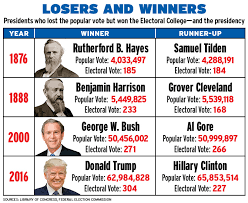
 Reasons to Keep the Electoral College:
 The National Popular Vote: Fixing the current system through a Constitutional amendment is a non-starter in the present political climate. Is there a non-Constitutional change that could achieve the same outcome as eliminating the Electoral College? The answer is yes, and a movement is already underway to do just that. The “National Popular Vote” is an organization established, not to eliminate the Electoral College, but to effectively neutralize it. The premise is rather simple. If enough States agree to pledge all of their electoral votes to the candidate who wins the national popular vote, that candidate will win the Presidency, effectively side-stepping the Electoral College. When enacted by enough States with a combined electoral vote count of 270 or higher, the National Popular Vote interstate compact will be established and go into effect. Since 2006, the National Popular Vote bill has been enacted by fifteen States and Washington D.C., representing 196 electoral votes. (https://www.nationalpopularvote.com/). This system would be more democratic in ensuring that every voter, in every State, has a direct vote in electing the President and Vice-President of the United States. With the 2020 Presidential election just three weeks away, I can’t think of a better time to review just how we elect our President, and to consider all the ramifications surrounding the process. The Electoral College has some pluses and minuses, but does it serve the best interests of the American people? I certainly don’t think that it functions as originally intended. The concentration of power in a few Northern States is no longer a problem. The selection of qualified Presidential Electors to weed out unsuitable candidates is an antiquated notion. In the age of the internet and mass media, we no longer have to rely upon direct contact with a candidate to hear their message. A national popular vote system would be more democratic and give voice to a more diverse group of candidates. The Democrat and Republican parties have not served this nation well over the past several decades. I seriously think that it’s time for some fresh ideas and fresh faces to confront the challenges ahead.
If you enjoy reading this type of commentary please subscribe to my blog and tell a friend. You will receive an email notification when new blogs are posted. The email will come from the site’s email: [email protected]. Thanks, Armchair American  President Trump and the Republican Party are doing their best to label Joe Biden as a socialist. This has become a prominent message coming out of the Trump campaign. Donald Trump has called Joe Biden a “Trojan horse for socialism”, and Biden’s “socialist agenda” was the republican’s favorite boogeyman at last summer’s convention. So, is Joe Biden intent upon unleashing a socialist agenda, bringing down capitalism and altering the American way of life? It all depends on your definition of socialism. Let’s take a closer look at socialism and whether or not Joe Biden’s agenda fits the definition.  Socialism: Various forms of socialism have been around for centuries. Socialism as it is now understood, emerged in response to the extreme economic and social changes experienced by the working class during the Industrial Revolution. Wealth disparities grew and working conditions deteriorated during this period.
Socialism is an economic and political system based on public ownership of the means of production, which includes the machinery, tools, factories, and natural resources to produce the goods required by society.(https://www.investopedia.com/terms/s/socialism.asp). Under socialism, individuals can still own property, but industrial production, natural resources, and infrastructure are communally owned and managed by a democratically elected government (the exception being communist countries that have authoritarian central governments). Any surplus or profit from these communally owned resources benefit the citizens. In a pure socialist system, all property is communally owned, a strong central government controls the economic production of goods and services, and provides citizens with their basic necessities including food, housing, medical care and education. The government essentially redistributes wealth and narrows the gap between rich and poor. There are no modern-day countries that have a pure socialist system. Cuba and China have strong elements of socialist market economies. These are actually mixed economies, where private enterprise and free markets are contributing more each year to the overall economic output. In China, privately owned companies generate from 33% to 70% of the GDP. In Cuba approximately 20% of the workforce is engaged in private enterprise. China is thriving principally because of its embrace of capitalism and the development of a market-based economy. Countries such as Venezuela and North Korea, which cling to their stringent socialist models, are economic failures and their citizens are suffering mightily. Most countries have mixed economies which contain some degree of capitalism and a number of socialist policies. The United States has a capitalist economy, controlled by government regulation, and backed up by entitlement programs. Free public education, Social Security, Medicaid and Medicare are all considered socialist programs. When enacted, these programs were considered very controversial, and there was concern that they would lead the country down the road to socialism. But can you imagine doing away with these programs today?
Social Democracy: Many consider Norway, Sweden, and Denmark to be socialist countries, but they are not. They are social democracies. Social democracies have free market economies paired with high taxes to support generous government entitlement programs. Individuals and corporations own a significant portion of the capital and means of production. Democratically elected governments redistribute wealth through high levels of taxation and strict regulations on labor and capital. In return for high taxes, most citizens are entitled to free education (through university), universal healthcare, subsidized childcare, subsidized housing (in some cases) and generous pensions. This system works well in the Scandinavian countries because there is a high level of trust in the government and government institutions. Distrust of the government in the United States is high, and therefore most citizens take a dim view of high taxes and wealth redistribution.  Joe Biden’s Policy Proposals: I view Joe Biden as a moderate democrat. In an effort to unify the party he has had to move further to the left to appease some of the progressives (Bernie Sanders). Some of Biden’s policy proposals call for big spending. So does that make him a socialist? Not according to the previous discussion on socialism. Let’s examine some of Joe Biden’s proposals that the republicans claim will lead us down the road to socialism:
A comprehensive list of all of Joe Biden’s policy proposals can be viewed at his website: (https://joebiden.com/joes-vision/#).  Many of Joe Biden’s policy proposals look like big government tax and spend programs. But on closer inspection they are really long overdue investments in America. Both political parties have argued that a big infrastructure bill is needed. I can think of no greater investment in our future than in education. Giving people the tools that they need to work and thrive makes them less dependent on the government, not more. In my view, smart investments in people, infrastructure, and American jobs, will pay dividends well into the future. Spending on small businesses, private sector jobs, green technology, and required infrastructure upgrades, is anything but socialism. Make no mistake, it doesn’t matter which political party is in office, government spending is massive and it will only get larger. The political parties just have different priorities for that spending. Even during a roaring economy, annual budget deficits under Donald Trump reached one trillion dollars, and that was prior to the start of the pandemic. (https://www.forbes.com/sites/chuckjones/2020/02/01/trumps-deficits-are-racing-past-obamas/#380f76348199). At least Joe Biden is prepared to increase taxes to pay for his budget priorities. The republicans fool themselves into thinking that tax cuts will “starve the beast” and force lower government spending. In reality, the deficits and debt march steadily higher. High budget deficits to support low taxes might be an effective reelection strategy, but it is a disastrous long-term strategy. The president has already passed trillions of dollars in legislation to get the crippled economy going again, and he will pass legislation to spend trillions more in the coming weeks. That doesn’t sound like a laissez-faire, free market economy to me. So be careful who you label “socialist” Mr. President.  Joe Biden’s overall policy package is not socialist. It calls for a lot of government spending, but it is mostly offset by eliminating President Trump’s tax reductions of 2017. Many socialist democracies around the world are thriving because they have found a balance between high taxes and the services that the citizens want. This country wants the benefits of a social democracy but is unwilling to pay for them. At least the democrats are more honest about it than are the republicans. If you enjoy reading this type of commentary please subscribe to my blog and tell a friend. You will receive an email notification when new blogs are posted. The email will come from the site’s email: [email protected]. Thanks, Armchair American  Today President Trump nominated Judge Amy Coney Barrett to replace Supreme Court Justice Ruth Bader Ginsburg who passed away last week. The Constitution gives the president the right to nominate and appoint Supreme Court Justices with the advice and consent of the Senate. What makes this nomination unusual is the fact that the presidential election is only 38 days away. There has never been a nomination made for a vacancy to the Supreme Court this close to a presidential election. Senate majority leader Mitch McConnell (R-Kentucky) has said in recent days that President Trump’s nominee will receive a vote on the floor of the United States Senate. All indications are that the confirmation hearings will begin the week of October 12, and a final vote by the full Senate should take place by the end of the month, a few short days before the election. The Senate has a constitutional duty to fulfill this function, so what is the problem?
Blocking President Obama’s Supreme Court Nominee: Within an hour of the death of Supreme Court Justice Antonin Scalia on February 13, 2016, Senate Majority leader Mitch McConnell said that the Senate should not confirm a replacement until after the 2016 presidential election. At the time he said “The American people should have a voice in the selection of their next Supreme Court Justice. Therefore, this vacancy should not be filled until we have a new president,” (https://www.politico.com/story/2016/02/mitch-mcconnell-antonin-scalia-supreme-court-nomination-219248).  On March 16, 2016 President Obama nominated U.S. Court of Appeals Judge Merrick Garland to fill the vacant seat on the Supreme Court. Soon after, Senator McConnell stated “It is a president’s constitutional right to nominate a Supreme Court Justice, and it is the Senate’s constitutional right to act as a check on a president and withhold its consent.” (https://www.wbur.org/npr/470664561/mcconnell-blocking-supreme-court-nomination-about-a-principle-not-a-person). Senator McConnell further stated “The America people are perfectly capable of having their say on this issue, so let’s give them a voice. Let’s let the American people decide. The Senate will appropriately revisit the matter when it considers the qualifications of the nominee the next president nominates, whoever that may be”. Then on March 23, 2016, after meeting in a closed-door session with Senate Republicans, Senator McConnell said “I believe the overwhelming view of the Republican conference in the Senate is that this nomination should not be filled; this vacancy should not be filled by this lame duck president.” That same day the Chairman of the Senate Judiciary Committee, Charles Grassley(R-Iowa), said that his panel would not move forward with any consideration of President Obama’s nominee.” Senators McConnell and Grassley coauthored an op-ed in the Washington Post around that time. In it they stated “Given that we are in the midst of the presidential election process, we believe that the American people should seize the opportunity to weigh in on whom they trust to nominate the next person for a lifetime appointment to the Supreme Court.” Another argument used by Senator McConnell in 2016 to justify blocking the nomination of Judge Garland was, “All we are doing is following the long-standing tradition of not fulfilling a nomination in the middle of a presidential year.” The problem is, no such tradition exists, (https://www.brookings.edu/blog/fixgov/2020/09/24/mcconnells-fabricated-history-to-justify-a-2020-supreme-court-vote/). What Does History Tell Us: According to the NYU Law Review, in the post- Civil War era there have been nine Supreme Court vacancies in place during presidential election years. For eight of those vacancies the nomination process began during the election year. In all of these cases the president was able to fill the vacancy during the election year. ( https://papers.ssrn.com/sol3/papers.cfm?abstract_id=2752287). Recently Senator McConnell has come up with a different precedent to justify his treatment of Judge Garland. According to the senator, since the 1880’s no Senate has confirmed an opposite-party president’s Supreme Court nominee in a presidential year. So, the Senate’s new precedent states that if the president’s party controls the Senate during an election year, the president gets to fill a Supreme Court vacancy. But when the opposite party controls the Senate during an election year, the president’s nominee cannot be confirmed by the Senate. There is no basis in the Constitution or in precedent to back up Senator McConnell’s latest claim. What good is the Constitution, Senator McConnell, if you get to make up the rules as you go along? Senator McConnell Shows His True Colors: It should be no surprise that Senator Mitch McConnell is hyper-partisan and places party loyalty above all else. During President Obama’s first term, Senator McConnell stated that his prime motive was to deny the president a 2nd term. So much for doing what’s best for the country! During a speech in 2016 the senator stated, “One of my proudest moments was when I looked Barack Obama in the eye and I said, Mr. President, you will not fill the Supreme Court vacancy.” Last year Senator McConnell used his blocking of the Garland confirmation to raise campaign funds. In campaign literature he wrote, “If there’s a vacancy on the Supreme Court in 2020, I will proudly confirm President Trump’s nominee. Sure the left and their allies in the media will go crazy. The Democrats will raise millions to defeat me. That won’t stop us from putting another conservative Justice on the Supreme Court” (https://www.usatoday.com/story/news/politics/2019/05/29/mcconnell-blocked-obama-supreme-court-choice-wouldnt-stop-trump/1268883001/). President Trump Nominates Judge Amy Coney Barrett to Fill Supreme Court Vacancy: President Trump announced the nomination today, just 38 days before the presidential election on November 3, 2020. This is the closest Supreme Court vacancy to a presidential election since 1864. But at that time President Lincoln would not put forth a nominee to fill the vacancy until after the election. There is no precedent for any Supreme Court nominee being confirmed between July and election day. There may simply not be enough time to properly vet a nominee to a lifetime appointment before the election, as the Republicans are attempting to do. Since 1975 it has taken an average of sixty-seven days for a nominee to receive a confirmation vote in the Senate. But Senator McConnell has already stated that the president’s nominee will receive a vote on the floor of the Senate, and he is sticking by the precedent that he created to justify blocking Judge Garland’s confirmation. Since the Senate is controlled by the president’s party, the president is perfectly justified in nominating a Supreme Court Justice during a presidential election year, and the Senate is perfectly justified in doing everything possible to get the nominee confirmed. Yes, Senator McConnell, the Constitution is blind regarding political party on this issue, too bad you can’t be. According to the latest news, confirmation hearings for Judge Amy Coney Barrett will begin in the Senate on October 12, 2020 and a full Senate vote will take place by the end of October, a few short days from the election. Mitch McConnel is not alone in his hypocrisy. All but two Republican Senators have pledged to see the confirmation process through to the end. Senator Lindsey Graham (R-South Carolina), the Chairman of the Judiciary Committee, is front and center when it comes to hypocrisy. In 2016 following the death of Justice Scalia, Senator Graham stated “If there’s a Republican president in 2016 and a vacancy occurs in the last year of the first term, let’s let the next president, whoever it might be, make the nomination.” During the 2018 Judge Kavanaugh confirmation hearings, Senator Graham stated “If an opening comes in the last year of President Trump’s term, if the primary process is started, we will wait to the next election.” With the prospect of confirming a conservative justice to the bench, Senator Graham has done an about face. He is leading the charge to make sure that Judge Barrett gets through the confirmation process and has a vote by the full Senate. Senator Graham is in a tough reelection campaign, so we shouldn’t be surprised that politics trumps principles. Democrat Reprisals: As you would expect, Democrats in the Senate and across the country are screaming foul and calling out the Republicans for their blatant hypocrisy. But scream as they might, there’s not a lot the Democrats can do to stop the confirmation process. The president has the right under the Constriction to put forth a nominee, and the Senate has the right to consider the nomination and consent or not. It only takes a simple majority vote in the Senate to approve the appointment, and it appears as if Leader McConnell has the votes. Already the Democrats are threatening reprisals if and when they take back control of the Senate. Here are a few:
A Win for the President: Getting a third conservative justice appointed to the Supreme Court will be a huge victory for President Trump. During a Fox News Radio interview last Thursday, the president indicated that he would agree with a Supreme Court ruling that Biden won the election. But short of a court decision, the vote would amount to a “horror show” because of fraudulent ballots, according to the president. He really believes that the election results will be contested, and he is doing everything within his power to assure that outcome. That is why the president needs nine Justices on the Supreme Court prior to the election. In Donald Trump’s world a Supreme Court Justice that he appoints is beholden to him. Much like the Attorney General and the FBI Director, who the president expects to do his bidding. The idea of an independent Justice Department doesn’t enter into his calculus, and neither does an independent judiciary. Donald Trump believes that if the election is contested and goes to the Supreme Court, that he will win due to the court’s ideologic makeup or out of loyalty to him. If the Supreme Court Justices actually rule on cases based on their political affiliations, then this country is really in deep trouble.  Judge Amy Coney Barrett is by all accounts a very conservative judge. But my main issue is not with the ideologic makeup of the Supreme Court. Call me naïve, but I have faith that the Justices rule on their honest interpretation of the Constitution and not on political motivations. I have an issue with Senator Mitch McConnell’s corruption of the Senate’s process for confirming Supreme Court Justices. I fear for what it will do to the proceedings of the Senate going forward. The Senate is a separate branch of government from the Executive branch, not a rubber stamp for it. If the Senate acts in lockstep with the president, where are the checks and balances, and who is protecting the country from Executive overreach? To act one way when the president is a Democrat and another way when the president is Republican, puts party over country and is just plain wrong.
If you enjoy reading this type of commentary please subscribe to my blog and tell a friend. You will receive an email notification when new blogs are posted. The email will come from the site’s email: [email protected]. Thanks, Armchair American  What do you call a group of black men with guns? A gang! What do you call a group of white men with guns? A militia! To put it mildly, this has been a difficult summer. The pandemic continues unabated, the country has endured devastating flooding down south and historic wild fires out west, and protests against racial injustice continue in several U.S. cities. Many of these protests have devolved into ugly and violent confrontations between protestors, law enforcement and counter-protestors. What really disturbed me was the presence of armed members of militia groups at several of the protests. Watching heavily armed men, who were not authorized law enforcement agents, patrolling the streets of America left me with a sense of foreboding. My fears were realized last month when a 17- year old boy with an automatic weapon, shot and killed two people at a protest in Kenosha, Wisconsin. After my outrage began to subside, it got me thinking about the militia movement and its legitimacy. Are these groups legal and what exactly constitutes a militia?  History of Militias in America: Militias have existed in America since colonial times. We all remember the Minutemen who confronted British soldiers in the years leading up to the Revolutionary War. The definition of what a militia is, as defined by Congress, has changed over time. In colonial times a militia represented a military force raised from the civilian population, for the common defense of the community. Militias were distinct from professional soldiers, and were generally organized around towns, regions, or colonies. Militias are enumerated in Article 1, Section 8 of the U.S. Constitution. Clause 15 grants Congress the power “To provide for calling forth the militia to execute the Laws of the Union, suppress Insurrections and repel Invasions”. Clause 16 grants Congress the power “To provide for organizing, arming, and discipling the militia, and for governing such Part of them as may be employed in the Services of the United States, reserving to the States respectively, the Appointment of the Officers, and the Authority of training the Militia according to the discipline prescribed by Congress”. Even before the ratification of the Constitution in 1788, we learned about the intentions of these “Militia Clauses” from the Federalist Papers. The Federalist Papers were authored mainly by Alexander Hamilton and James Madison, and were published in New York newspapers to promote the ratification of the Constitution. Hamilton dedicated Federalist No. 29 to the issues concerning the militia. The founding fathers feared that a standing army would be used by a tyrannical government to suppress the liberties of the citizens. But they needed to provide for the common defense. They saw state militias as a necessary compromise. Militias are “the only substitute that can be devised for a standing army, and the best possible security against it, if it should exist”, (https://guides.loc.gov/federalist-papers/text-21-30). The 2nd Amendment to the Constitution was adopted in 1791. It states “A well regulated Militia, being necessary to the security of a free State, the right of the people to keep and bear Arms, shall not be infringed”. The “Militia Act of 1792” stipulated that the militia would consist of each and every able-bodied white male citizen of the respective States, who is at least 18 years of age and under the age of 45. No other major legislation concerning militias was passed until the “Militia Act of 1903”, which repealed the Act of 1792. The 1903 Act divided the militia into two classes; the “Organized Militia”, which was the National Guard, and the “Unorganized Militia”, which was the reserve militia consisting of all male citizens of at least 18 years of age and below the age of 45. The Act offered federal funds to each state to train and equip its National Guard and set policies and procedures for training. The president was empowered to call up the National Guard for up to nine months to repel invasion, suppress rebellion, or enforce federal laws. The federal government was not allowed to order the National Guard to serve outside of the United States. The “Militia Act of 1908” removed the nine-month limit on federal service, and gave the president the authority to set the length of service.  In the lead up to the United States’ involvement in World War I, the “National Defense Act of 1916” was passed. It gave the federal government more control over the National Guard. Guardsmen were now required to take both state and federal oaths of enlistment. When called to active duty by the federal government, Guardsmen were relieved of their status in the State Militia and were federalized to operate outside of the United States. The 1916 Act was amended in 1933 to create a reserve component of the United States Army called the “National Guard of the United States”. Since then, all National Guardsmen (and women) have been members of both their State National Guard and the National Guard of the United States. Modern Militia Movement: This country was built on the blood, sweat, and tears of rugged individualists. Their founding principles revolved around individual rights, personal freedoms and civil liberties. These founding principles are held dear by most Americans, but seem to motivate some people to extremes. This is the case with many antigovernment groups. “Antigovernment” is a broad category of groups tracked by the FBI and civilian organizations such as the Southern Poverty Law Center (SPLC). Some groups are racist, some are hate groups, some are white nationalists, and some are militias. There are some groups that just want to be left alone, like survivalist groups, and members of various “Sovereign Citizens” groups. There are armed “Insurrectionists” intent on anarchy or over-throwing the government. There are right-wing “Patriot” groups who see themselves as protectors of the Constitution, and the last defense against an overreaching government. There are militia groups made up of all races and creeds. But most militia groups fall into the far-right Patriot category.  The modern American militia movement has been fed by white supremacy, conspiracy theories and bigotry. The main thrust of these theories is that the federal government is controlled by a mysterious elitist cabal which plans to take away Americans’ guns, overthrow local governments and install martial law over citizens. Another motivating theme is that the left is trying to flood America with immigrants who will vote Democrat and upset the balance of power. The real danger of these groups has been their support of racist and violent causes. They are highly visible at white supremacist rallies and frequently act as counter-protestors at Black Lives Matter marches. Several militia members have been convicted in recent years of acts of violence against Muslims and destruction of mosques.  There have always been militia groups in America operating on the fringes of society. Two key events have sparked the modern militia movement. The first was the 1992 armed standoff between Randy Weaver and US Marshalls at his compound in Ruby Ridge, Idaho. Weaver was a white supremacist who was being served a warrant for weapons violations. An armed confrontation ensued, resulting in the deaths of Weaver’s wife and son, and a US Marshall. The other incident was the 1993 raid by federal agents on the Branch Davidian compound in Waco, Texas. The raid went terribly wrong, resulting in a 51-day siege, leaving 76 people dead. These two incidents fueled the view that the government was out of control. According to the SPLC, antigovernment groups peaked around 1996 at over 860.  The 1996 bombing of the Oklahoma City Federal Building killed 168 people. This heinous crime was perpetrated by Timothy McVeigh who had ties to a Michigan militia group. The national spotlight on this event precipitated a decline in the militia movement. Over the following decade the number of active militia groups declined from 441 to 35 according to the SPLC.  The election of Barack Obama in 2008 saw a resurgence in the militia movement. This was spurred on by the racist “birther” movement which questioned Obama’s legitimacy, and out of fear that the government would begin to confiscate guns. The two largest and well-known militias in the country, “The Three Percenters” and the “Oath Takers” were started around this time. The Three Percenters was started by Mike Vanderboegh, a gun rights activist from Alabama. It is named for the dubious theory that during the Revolutionary War only three percent of Americans took up arms against the British. It is a loosely affiliated group active in most states with no formal leadership structure. According to their website (thethreepercenters.org), their goal is “to utilize the fail safes put in place by our founding fathers to rein in an overreaching government and push back against tyranny. We are working to preserve the intent of our government as designed”.  The Oath Keepers was founded by Stewart Rhodes, a Yale Law School graduate and former U.S. Army paratrooper. According to their website (oathkeepers.org), it is a non-partisan association of current and former military, police, and first responders who pledge to keep and fulfill the oath to “defend the Constitution against all enemies, foreign and domestic”. Oath Keepers pledge to defend the Constitution above all else, and follow the group’s orders and bylaws over those of elected officials and the agencies which employ them. Oath Keepers mostly recruit from the ranks of the military and law enforcement because they have weapons and tactical training. Those without military or law enforcement experience may join as associate members to support the cause. The Oath Keepers has a structured organization with leadership at the national, state, and local levels. It hopes to create a network of militias across the country. The group’s moto is “Not on Our Watch”. Their websites describe these groups in reasonable terms, but they are very active and well known to the FBI and law enforcement agencies in all 50 states. These groups provide the justification for members to take the law into their own hands, often at gun point, as we have seen at the border and during Black Lives Matter protests.  Many militia group members adhere to the beliefs of the QAnon conspiracy theory. Here is a link to my post on QAnon in case you didn’t read it: (https://armchairamerican.com/blog/qanon-what-is-it-and-should-we-care). In the QAnon theory, Donald Trump is a lone heroic warrior, elected to defeat the deep state. It appears as if Donald Trump is the one government official that the antigovernment movement can get behind. The president’s anti-immigrant rhetoric and his border policies feed right into the philosophies that motivate many of these groups. To make matters worse, the president refuses to condemn the right-wing extremism we have witnessed. His lack of condemnation of the violence in Charlottesville in 2017 is a prime example of this. To this day he blames all of the violence at Black Lives Matter protests on “antifa”, when the majority of it has been caused by right-wing movements (https://www.npr.org/2020/09/02/908347989/former-dhs-official-white-house-failed-to-take-far-right-extremism-seriously). Are Private Militias Legal: Private or citizen militias are armed military groups composed of private citizens and they are not recognized by federal or state governments. Some states ban private militias outright, but all fifty states have some provision in their state law that prohibits private military and paramilitary activities. Forty-eight states have constitutional provisions requiring all military activities, private or otherwise, to fall under the control of civil authorities. Twenty-nine states have statues that prohibit the formation of private military units without the authorization of the state government. These statues specifically prohibit such groups from parading or drilling in public with firearms. Twenty-five states have statues that criminalize certain paramilitary activity, such as training others in the use of firearms or explosives for the purpose of creating civil disorder. Most states have laws against “false assumption”. This includes assuming the duties of a law enforcement agent, and the unauthorized wearing of military uniforms.  In recent years we have seen many of these laws violated at the southern border, at right-wing rallies, and at Black Lives Matter protests. These laws were put in place to prevent the type of chaos and violence witnessed at the 2017 Unite the Right rally in Charlottesville, Virginia. The rally attracted many heavily armed militia groups dressed in military fatigues. These groups purported to be acting in the role of “peace keepers”, in violation of Virginia state laws.  All summer we have witnessed protests in the wake of the killing of George Floyd. Many of these protests were met by counter-protestors from private militia groups dressed in military gear and carrying assault rifles. These groups claimed to be keeping the peace and protecting private property. This put them in violation of state “assumption laws”. Beyond being illegal, these activities have led to deadly shootings in Portland, Oregon and Kenosha, Wisconsin.
For a complete list of the laws governing private militias in all 50 states, Georgetown University has a comprehensive review: (https://www.law.georgetown.edu/icap/wp-content/uploads/sites/32/2018/04/Prohibiting-Private-Armies-at-Public-Rallies.pdf). Militia groups are active in all fifty states and membership is in the tens of thousands. The number of militias peaked in 2011 at 334, and in 2019 there were 181 active militia groups being tracked by the Intelligence Project of the Southern Poverty Law Center (https://www.splcenter.org/fighting-hate/extremist-files/ideology/antigovernment). Militia groups have an idealized view of America, one that reflects the spirit of the Constitution, and their actions are justified by patriotism. These groups portray themselves as innocent neighborhood watch type groups, but they are not. The FBI considers well-armed militias to be a significant threat, and members of these groups have participated in a number of acts of domestic terrorism. We have a president who refuses to condemn these groups because many of their members are part of his political base. Acts of violence continue to occur at legitimate protest marches, and we are a few short weeks away from a very contentious presidential election. President Trump is doing his darndest to cast doubt on the integrity of the upcoming election. He views voting by mail as fraudulent and has stated that the only way that Joe Biden can win is by fraud. But we have heard this tune before. Before the 2016 election, Trump accused the Democrats of “rigging” the election and told his supporters to be on the lookout for voter fraud. The Oath Keepers heard this as a “call to action” and asked its members to station themselves at polling places around the country to “help prevent criminal fraud and attempted criminal voter intimidation on election day”. Are we in for a repeat in 2020? Unfortunately, I think we are. The presence of any outside groups at polling places, particularly armed groups, is voter intimidation pure and simple. We need to be aware of it and bring it to the attention of law enforcement if we witness it. I don’t even want to think about what could happen if Donald Trump feels that the election is stolen from him. We also need to make sure that our local law enforcement agencies are enforcing the laws which regulate militia group activities at protests and rallies. These groups claim to be protecting the streets for the citizens of the country, but I see it differently. If you enjoy reading this type of commentary please subscribe to my blog and tell a friend. You will receive an email notification when new blogs are posted. The email will come from the site’s email: [email protected]. Thanks, Armchair American  On August 8, 2020 President Trump signed the “Memorandum on Deferring Payroll Tax Obligations in Light of the Ongoing COVID-19 Disaster”(https://www.whitehouse.gov/presidential-actions/memorandum-deferring-payroll-tax-obligations-light-ongoing-covid-19-disaster/). The memorandum directs the Secretary of the Treasury to “defer certain payroll tax obligations with respect to the American workers most in need”. What’s this memorandum all about, who benefits, and is it a good idea? Like an “Executive Order”, an “Executive Memorandum” has the full force of the law. To learn more about the difference between these two executive actions go to (https://guides.loc.gov/executive-orders/order-proclamation-memorandum). What Does the Latest Presidential Memorandum Do: It allows employers to stop withholding Social Security taxes from employees’ paychecks for the rest of 2020. This would increase take home pay by 6.2%. Employers are still required to pay the 6.2% Social Security tax that they are responsible for. The program takes effect September 1, 2020 and ends December 31, 2020. Who is Eligible: Any employee whose wages or compensation is less than $4,000 during any bi-weekly pay period on a pretax basis, or an equivalent amount if not paid bi-weekly. If an employee’s pay fluctuates, they may participate during any pay period when the maximum is not exceeded. Do the Deferred Taxes Need to be Repaid: Yes, all the Social Security taxes will need to be repaid in 2021. The president's memorandum directs the Secretary of the Treasury to explore ways to eliminate the obligation to pay these taxes back. When President Trump signed the memorandum, he said that he will forgive these taxes and make permanent cuts to the payroll tax if re-elected. But Congress would need to pass legislation to permanently reduce the payroll tax or forgive any taxes not paid under this program.  In order to clarify some of the questions about the Presidential Memorandum, the IRS issued guidance under “Notice 2020-65” (https://www.irs.gov/pub/irs-drop/n-20-65.pdf). The notice provides the following clarifications:
Is the Payroll Tax Deferral a Good Thing: In my opinion no. There are lots of concerns that I have with the program. Here are a few:
 I’m not the only one against the president’s payroll deferral. On August 18, 2020 the U.S. Chamber of Commerce, National Retail Federation, National Restaurant Association, and nearly 30 other business groups sent a letter to Treasury Secretary Mnuchin, voicing their concerns. Chief among them were the serious hardships it could place on employees who would receive a large tax bill in 2021. The groups were also concerned about the administrative and legal obligations imposed on employers. These business groups indicated that they would recommend that their members continue withholding payroll taxes as before and not participate in the program. If President Trump is able to enact a permanent payroll tax holiday after January 1, 2021, as he suggested, it would have serious consequences on the longevity of the Social Security Trust Fund. According to the chief actuary of the Social Security Administration, a permanent payroll tax holiday would deplete the Trust Fund’s reserves by the middle of 2023 (https://www.ssa.gov/oact/solvency/VanHollenSandersWydenSchumer_20200824.pdf).  With all of the downsides to the president’s payroll deferral program, why would he even bother? It’s all political! The Congress is in a stalemate over additional pandemic relief spending, and the president wants to show that he is a man of action. The signing ceremony for the Presidential Memorandum was a great photo-op and it brings a lot of news coverage. News coverage of the president being “presidential” is about the best campaign coverage there is, and it doesn’t cost anything. Between now and election day, take any new policy statement or initiative with a grain of salt. We are in the middle of silly season.
If you enjoy reading this type of commentary please subscribe to my blog and tell a friend. You will receive an email notification when new blogs are posted. The email will come from the site’s email: [email protected]. Thanks, Armchair American |
AuthorThe Armchair American. 
Archives
April 2026
Categories
All
|


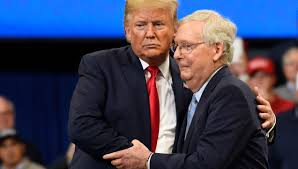
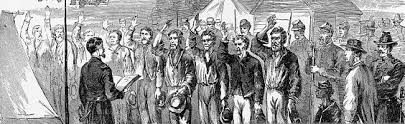
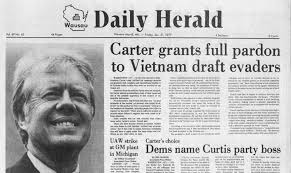

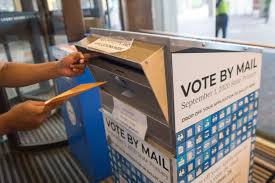
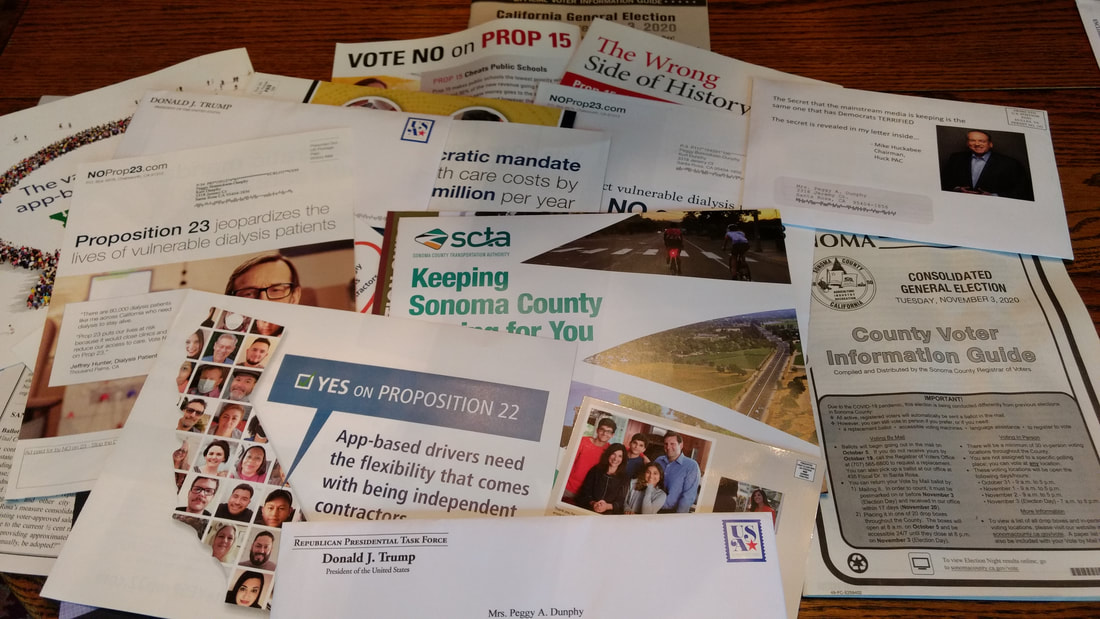
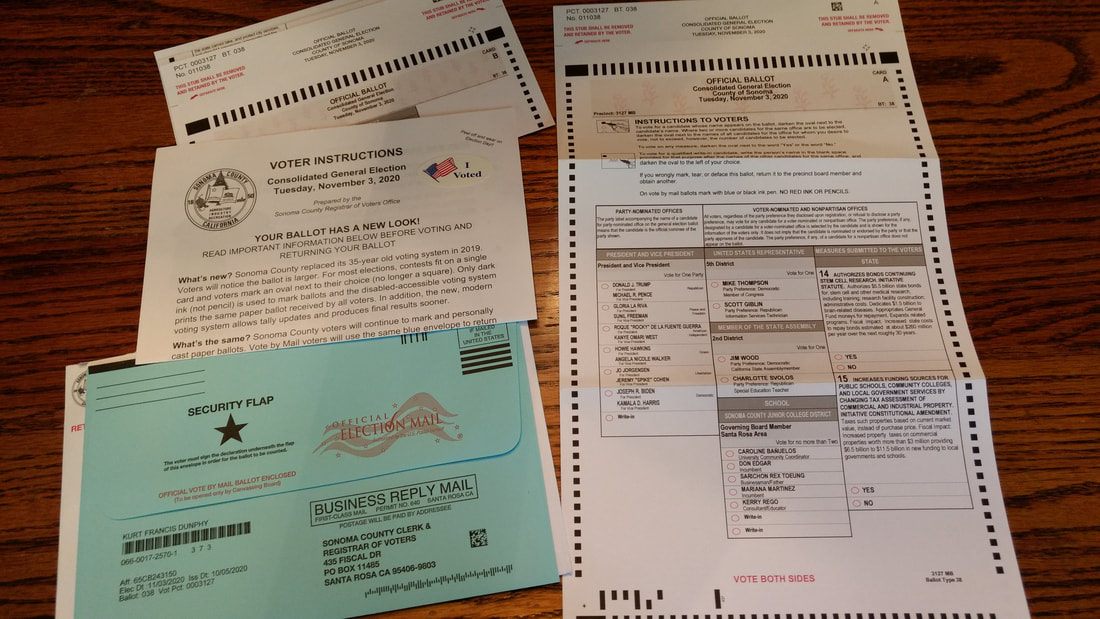

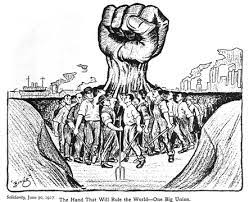

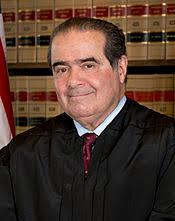
 RSS Feed