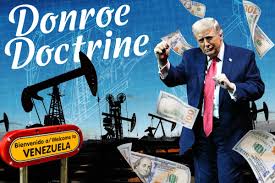
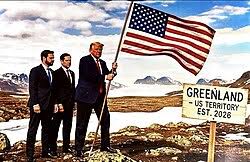
 Donald Trump retook the White House on the strength of his “America First” agenda. Most of the electorate understood that the agenda would focus on border security, deporting criminal illegal aliens, lowering costs for ordinary Americans, and keeping the United States out of “forever wars” and other foreign entanglements. Trump has succeeded in securing the southern border and has unleashed one of the largest mass deportation campaigns in history. But to the dismay of most Americans prices on essentials such as food, housing, energy, and health insurance have remained stubbornly high. The uncertain job market, attacks on the Federal Reserve, and the use of tariffs as blunt instruments against friends and foes, leave most Americans skeptical of Trump’s economic policies. Rather than address issues that matter most to American families, domestic priorities have taken a back seat to Trump’s aggressive ambitions on the world stage. Trump has ordered military strikes around the world, entangled the United States in regional conflicts, made military threats against friends and allies, shredded strategic alliances and redefined America’s role in the world. Trump’s aggressive use of the military and threats of territorial expansion has hurt America at home and upended America’s standing in the world. 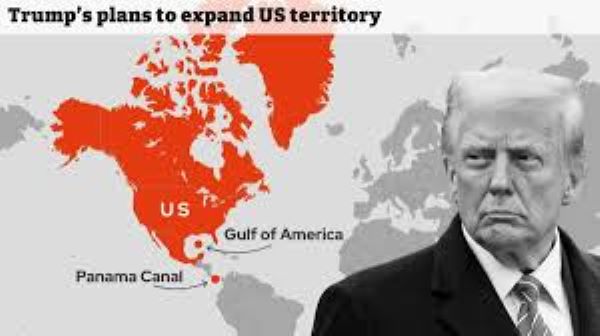 How We Got Here: It’s impossible to say what is motivating Trump’s irrational and often dangerous actions in the foreign affairs arena. He certainly has an eye towards his legacy, but many of his actions seem impulsive and possibly meant to distract the American people from pressing domestic issues. Trump started his second term by renaming the Gulf of Mexico the Gulf of America and changing the name of Mount Denali to Mount McKinley. Most other countries ignored these name changes, but Trump seems intent on changing the map of the world. He then turned his focus to taking back the Panama Canal and making Canada the 51st state. Trump has even floated the idea of redrawing the U.S./Canadian border and annexing the Canadian Provence of Alberta.  Is Trump’s rhetoric about taking over Canada simply bluster or “Trump being Trump”; or is there something more to it? The Canadians take Trump’s bombast seriously and have taken concrete actions to push back. Many American products have been removed from the shelves of Canadian retailors and the Canadian government is striking new commercial partnerships in Europe and in Asia. Canada is our closest ally and until recently our most important trading partner. The Trump administration has seriously damaged relations between our two countries. Let’s hope that it isn’t permanent. 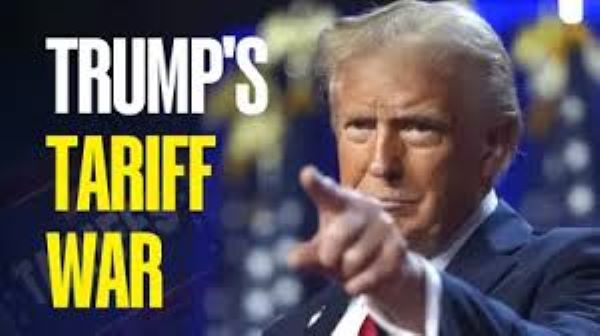 Tariffs: Early in his second term Trump bypassed Congress and issued sweeping new tariff policies on nearly every nation in the world. He claimed this authority by utilizing the “International Emergency Economic Powers Act”. The net effect of the new tariff policies, which are subject to change without notice, is that most countries now pay higher tariffs to export their goods to the United States. Trump has used the threat of increased tariffs as a blunt instrument to get other countries to bend to his whim. It's unclear if the tariffs will benefit the economy, but it is clear that the post-World War II rules-based liberal trade policy is over. Tariffs can be an effective tool to level the playing field in international trade. But Trump has used threats of tariffs against allies and adversaries to achieve foreign policy objectives. Any economic gains from tariffs will be overshadowed by the further straining of relations with strategic partners abroad. 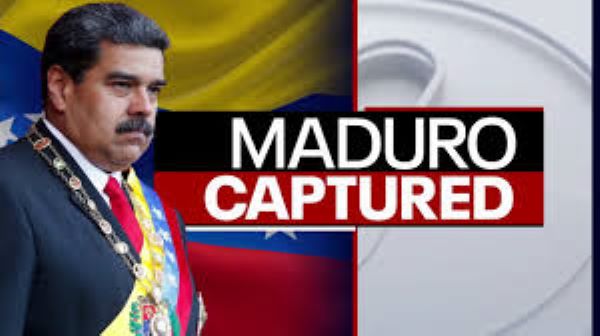 Aggressive Use of Military Force: To the surprise of most of his supporters Trump has adopted a much more aggressive use of the military than in his first term. He has authorized military strikes in Iraq, Syria, Nigeria, Somalia and Yemen. Trump has ordered bombing raids against Iran’s nuclear facilities and is currently positioning military assets for potential future strikes. The Trump administration has also involved itself in regional wars in Southeast Asia, Central Africa and the Middle East, most notably Gaza. What most of us didn’t see coming was Trump’s use of the military to enter Venezuela and capture its president, Nicolas Maduro, early last month. This aggressive use of military force against a sovereign nation and its president was condemned by the United Nations Security Council as a violation of international law. The capture of Maduro was the culmination of a huge military buildup in the region and the targeting of suspected drug smuggling boats in the Caribbean. As of this writing 40 boats have been targeted and approximately 133 people have been killed in military strikes. It is unclear whether Trump plans to run Venezuela, turn it into a democracy, or simply exploit its vast oil reserves. Whichever the case, Americans did not elect Trump to become the de facto leader of Venezuela. 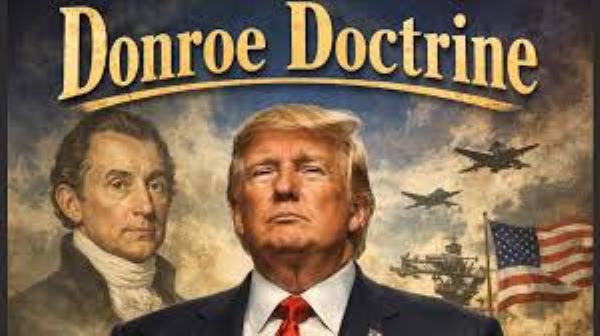 Donroe Doctrine: President James Monroe first articulated his vision for the Western Hemisphere in 1823, which would later become known as the Monroe Doctrine. The doctrine declared that the Western Hemisphere was the United States’ sphere of interest and warned European nations that further colonization or backing of puppet regimes would not be tolerated. In return the United States would not interfere in the internal affairs of European nations or their existing colonies in the Americas. After the successful Maduro operation in Venezuela Trump is asserting his authority over the entire Western Hemisphere. In what he has dubbed the “Donroe Doctrine”, Trump said “American dominance in the Western Hemisphere will never be questioned again". The State Department backed up Trump’s remarks by posting, “This is OUR Hemisphere and President Trump will not allow our security to be threatened”. The Trump administration released its national security strategy in November. In part the strategy states that the United States will reassert and enforce the Monroe Doctrine to restore American preeminence in the Western Hemisphere. The strategy also states, “We will deny non-Hemispheric competitors the ability to position forces or other threatening capabilities, or to own or control strategically vital assets in our Hemisphere”. In addition to protecting the homeland, the strategy acknowledges the need for access by the United States to “key geographies” throughout the region. Trump has identified Greenland as one of those key geographies in the region. 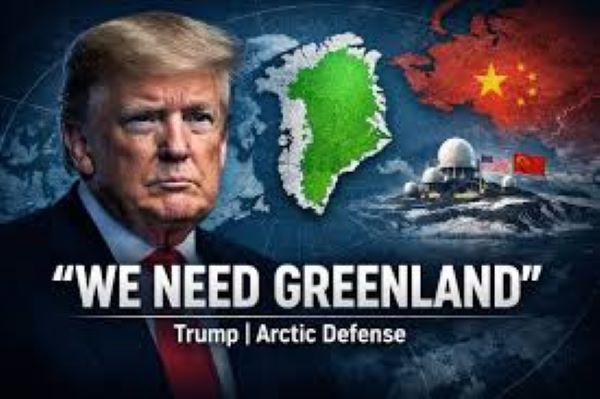 Threats to Take Greenland: The success of the operation to capture Maduro has emboldened Trump and heightened his aggressive stance towards Greenland, a self-governing territory of Denmark. He has threatened to annex Greenland, by the use of military force if necessary. For months Trump has insisted that the United States needs to control Greenland to ensure the security of the NATO territory against rising threats from Russia and China in the Arctic Region. Greenland and Denmark refute that any such threats from Russia or China exist. Greenland is an important NATO member and has been strategically important to the United States since World War II. American military personnel have been stationed on the island since the war and a 1951 treaty gave the United States a significant role in Greenland’s defense, allowing for the establishment of new bases or “defense areas” if deemed necessary by NATO. Trump’s claim that the only way to secure Greenland was through annexation by the United States is simply wrong. The leaders of both Greenland and Denmark readily acknowledge that the 1951 defense agreement, updated in 2004, gives the U.S. wide access to Greenland and provides a mechanism for the United States to increase its military presence. If Trump’s real reason for acquiring Greenland is for mineral extraction, the Danes make no secret of the fact that Greenland is open for business with the United States, making a takeover unnecessary. 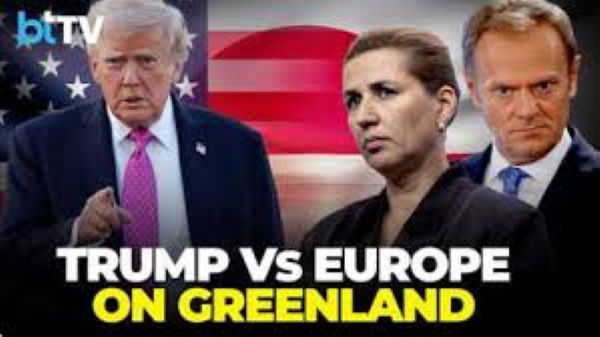 Trump was met with an icy reception by European leaders at the World Economic Forum in Davos, Switzerland last month. In the days leading up to the meeting Trump threatened to impose an additional 10% tariff on eight European countries if they opposed his efforts to take control of Greenland. The leaders of these countries and other NATO members were steadfast in their resolve to preserve the territorial integrity of Greenland and back Denmark’s sovereignty over the territory. There was also agreement among the NATO member states that an attack on Greenland, a NATO member, would create a disastrous rupture in the decades-old military alliance. Whether it was the negative reaction by the financial markets from threatened tariffs or reassurances from NATO leaders, Trump soon backed down. He dropped his tariff threats and took the use of military force against Greenland off the table. Trump declared victory and left Switzerland with a “framework” of a deal on Greenland, which has yet to be fully articulated. In the end the United States did not get ownership of Greenland and its security concerns could have been alleviated without any of Trump’s bluster. The real victors are the people of Greenland and the European leaders who stood up to Trump and persevered. 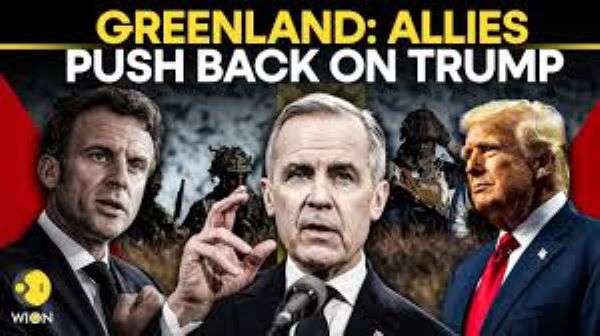 Allies Rethink U.S. Relationship: Trump left the meeting in Switzerland in a conciliatory manner after backing down from his threats. But the damage had been done. The threat of using military force against another NATO member was a bridge too far for the other nations in the alliance. The United States could no longer be trusted as a reliable strategic partner or be counted on to come to Europe’s defense in time of need. The Europeans were catching up to what the Canadians already knew; that the American-dominated rules-based world order, in place since the end of World War II, was over. Canadian Prime Minister Mark Carney was blunt in his assessment, essentially calling the old world order dead in a speech he delivered in Switzerland. In the speech Carney said, “We are in the midst of a rupture, not a transition”. Without naming the United States, he called out the great powers for, “۰۰۰using economic integration as weapons. Tariffs as leverage. Financial infrastructure as coercion. Supply chains as vulnerabilities to be exploited". Carney’s speech was a call to action, calling for the middle powers like Canada and European nations to, “۰۰۰act together because if we’re not at the table, we’re on the menu". He warned that “When the rules no longer protect you, you must protect yourself." European leaders didn’t need much convincing and took Carney’s words to heart. President Macron of France warned the European Union (EU) to brace for more hostility from the Trump administration. In what he saw as the” Greenland moment”, Macron called on the EU to be more resilient, to be more competitive and to stand together against economic threats from the United States. Macron believes that if the Europeans stand firm and have common leadership on the continent, they can assert their position as a global superpower. The Prime Minister of Belgium put to words what many others were thinking; “Being a happy vasal is one thing. Being a miserable slave is something else.” According to the president of the European Commission, the “Greenland moment” offered a tactical lesson in dealing with the United States: “Firmness, outreach, preparedness and unity.” 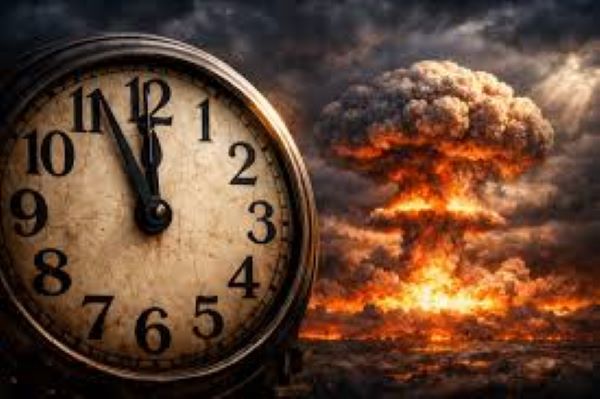 The World is Less Safe: Threats against Greenland cemented the view in Europe that Trump, and by extension the United States, is no longer a reliable NATO ally. With the Russians still waging a murderous war in Ukraine, the Europeans can no longer rely on the United States’ support for Ukraine. The friction between NATO members is playing right into the hands of Russian’s President Putin whose territorial ambitions are a threat to Europe. In this new reality most European nations are increasing military spending and stockpiling military equipment to levels not seen since World War II. With the protection of the United States’ “nuclear umbrella” in question, a leading newspaper in Sweden called for a Nordic nuclear arsenal, and the Prime Minister of Poland is exploring the idea of putting French nuclear weapons in Poland as a deterrent to Russian aggression. With Trump’s new focus on the Western Hemisphere, Asian allies are now concerned about U.S. commitments to countering China’s ambitions in the Indo-Pacific region. South Korea and Japan are now contemplating developing nuclear weapons of their own, a once unthinkable prospect. The “Doomsday Clock” has moved closer to midnight than ever before.
The dismantling of the United States’ strategic and military alliances may become Trump’s lasting legacy. The fact that the world is becoming a less stable place because of Trump’s bombast and irrational military moves are secondary to his ambitions. Asked in a recent interview if there are any limits to his global powers, Trump responded, “Yeah, there is one thing. My own morality. My own mind. It’s the only thing that can stop me.” God help us all!
If you enjoy reading this type of commentary please subscribe to my blog and tell a friend. You will receive an email notification when new blogs are posted. The email will come from the site’s email: armchairamerican1776 American @gmail.com. Thanks, Armchair American
0 Comments
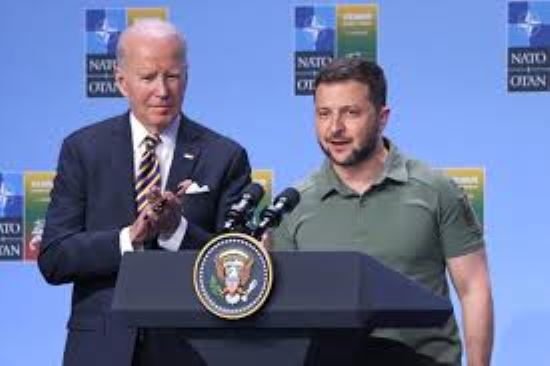
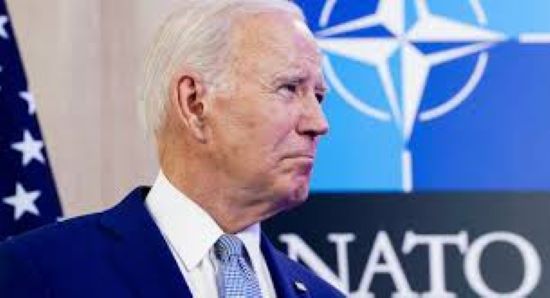 In one of my blogs last year I raised the question “Would Ukraine be better off if Trump was president?” The answer, for me at least, is a resounding no! Without the financial and military support from NATO countries, Ukraine would not be able to stand up to the military might of Russia. Russia would overrun Ukraine’s territory and annex it, much in the same way as it did to the Crimea in 2014. Soon Ukraine would no longer exist as an independent country. 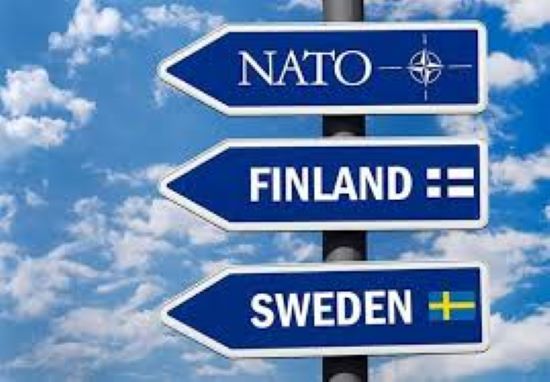 The United States’ policies toward aiding Ukraine, under the leadership of President Biden, have strengthened the Western alliance and made NATO more united than it has been in decades. Finland was recently admitted to the alliance, and President Biden helped negotiate a deal with Turkey’s President Erdogan to remove the final roadblock to allowing Sweden to join NATO. President Biden also helped to secure commitments from all NATO member nations to allow Ukraine to join the alliance once the war with Russia is over. Under Article 5 of the NATO treaty, an attack on one member is regarded as an attack on all of them. If Ukraine became a member of NATO before the end of the war, it would put the United States and other member nations at war with Russia. The United States is simply not willing to go to war with Russia over the invasion of Ukraine. In addition to escalating and widening the war by involving all NATO countries, Putin is just crazy enough to use nuclear weapons if he felt backed into a corner. 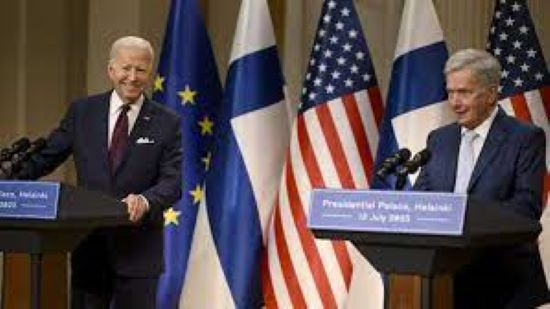 Last week President Biden traveled to Helsinki to congratulate Finland’s president on becoming the newest member of NATO. During his time in Helsinki the president also met with the leaders of Sweden, Norway, Denmark and Iceland. President Biden gave assurances of cooperation between our countries and conveyed the United States’ commitment to NATO. The contrast between President Biden’s recent Helsinki Summit and the one attended by President Trump in 2018 couldn’t be more different. At the summit in 2018 Trump met privately with Vladimir Putin. After the meeting Trump sided with Russia against his own U.S. intelligence agencies, disavowing the findings that Russia had indeed interfered in the 2016 elections. Trump stated during a press conference that he believed Putin, who had told him that Russia had not meddled in the U.S. elections. This left many of the United States’ allies in Europe shaken, questioning whether or not they could rely on security commitments from the United States going forward. 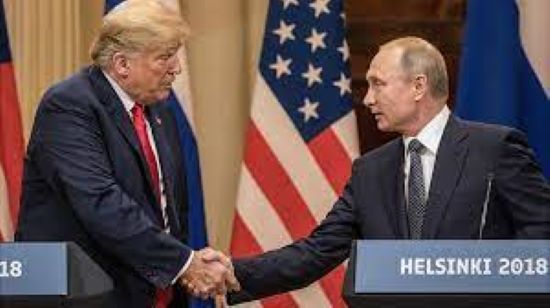 Despite Donald Trump’s attempts to rewrite history, it has been extensively reported over the years that he was no friend of NATO. On several occasions Trump told his top national security advisors that he wanted to pull out of NATO. If not for his chief of staff John F. Kelley and his national security advisor John Bolton, he might have done just that. He called the alliance obsolete and berated member states for not paying their fair share. Even though these claims were not true, it undermined confidence in the alliance and created division between members. In short, President Trump left the future of NATO in doubt, and President Biden has unified and strengthen it.
The COVID pandemic taught us that the world is more interconnected and interdependent than ever before. Economic and strategic relations between nations are vital, and that is particularly true for the United States. Tackling worldwide threats such as disease, climate change, and microplastic contamination of the environment will require strong relationships and cooperation among nations. It would be foolish to think that the United States has the resources and will to go it alone against military and competitive threats from the likes of China, Russia, and Iran. The United States cannot go it alone. Without security alliances such as NATO, and partnerships in the Middle East and the Indo-Pacific region, we will go the way of ancient Rome, the British Empire, and the Soviet Union. International relationships and alliances are key to the long-term prosperity and survival of our country. 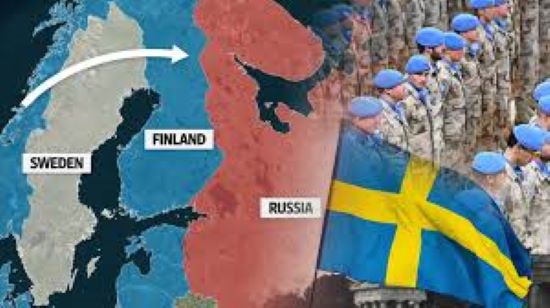 ChatGPT or any form of artificial intelligence were not used in the writing of this blog.
If you enjoy reading this type of commentary please subscribe to my blog and tell a friend. You will receive an email notification when new blogs are posted. The email will come from the site’s email: armchairamerican1776 @gmail.com. Thanks, Armchair American |
AuthorThe Armchair American. 
Archives
April 2026
Categories
All
|
 RSS Feed