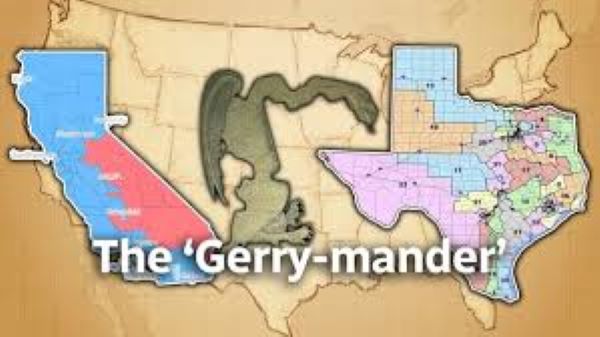
 I will soon be voting in the California primary election from a newly formed congressional district which is unrecognizable to me. The new district was established for the express purpose of gaining Democrats another seat in Congress by diluting the voices of some of the most conservative voters in the state. That doesn’t sound very democratic, and it’s not. Last November California voters approved Proposition 50 during a special election authorizing temporary changes to California’s congressional maps. In a previous blog post I explained that I am generally not in favor of redrawing congressional maps for the sole purpose of partisan advantage. But I voted for California’s new congressional maps to counter Texas’ blatant attempt to rig the mid-term elections. With negotiations to end the war in Iran going nowhere and prices on fuel and everyday necessities continuing to decimate household budgets, you would think that the needs of the American people would be top of mind for our elected leaders. Instead, many of our elected representatives are engaged in an intense race to redraw district maps for partisan advantage in advance of the mid-term elections. 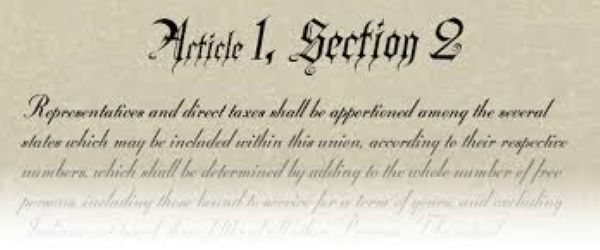 Some Background: Article 1, Section 2 of the Constitution of the United States provides the basis for determining the number of representatives each state has in the House of Representatives. The apportionment, or distribution, of the 435 seats in the House among the 50 states is based on population as determined by a national census conducted every ten years. Once apportionment is completed, each state goes through a process of drawing new electoral district maps to coincide with census data in a process called redistricting. Redistricting assures that every district within a state has an equal number of people in order to adhere to the “equality standard”, or “one person, one vote principle”. Rules for redistricting are determined by each state, and until recently, must comply with the provisions of the Voting Rights Act of 1965, which protects the voting rights of racial minorities. Gerrymander: The manipulation of voting and congressional districts for partisan gain is as old as the republic. Massachusetts Governor Elbridge Gerry and his political allies redrew state districts to favor their party in 1812. The map of one of the redrawn districts resembled a mythological salamander. A political cartoon in a Boston newspaper labeled the map a “Gerry-mander”, and the name stuck.  Recent Developments: Traditionally states redraw their congressional districts every ten years after the completion of the census. Between 1973-2024, only two states had conducted voluntary mid-decade redistricting. But traditions and norms are quaint notions of a bygone era.  Texas: In the summer of 2025, at the behest of Donald Trump, the Governor of Texas called a special session of the state legislature with the stated goal of finding five more Republican congressional districts. Despite the best efforts of Texas Democrats, the governor and Texas legislature approved newly drawn districts favorable to Republicans. This set in motion the current redistricting race in states across the country. Missouri, North Carolina and Florida followed Texas in approving new congressional maps favorable to the Republican Party. 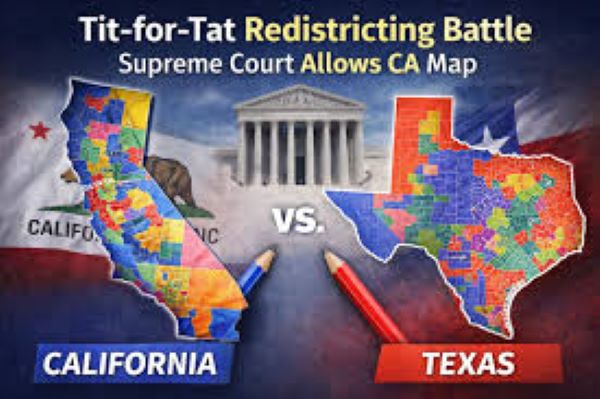 California: To neutralize the Republican advantage in Texas and to fight “fire with fire”, Governor Newsom spearheaded a redistricting effort in California. New congressional maps were drawn with the potential of giving California five more Democratic House seats. But the power to redraw congressional maps in California lies with an independent commission, not with the governor or state legislature. To get around this hurdle Governor Newsom called a special election in November for the people of California to vote on Proposition 50, which if passed would authorize temporary changes to California’s congressional maps. Voters overwhelming passed Proposition 50, and the new maps went into took effect.  Virginia: Last month the voters of Virginia approved a constitutional amendment to permit mid-decade redistricting and approved new maps with the potential of adding four Democratic districts. A few weeks later the Virginia Supreme Court blocked the redistricting plan approved by voters on procedural grounds. Then on May 15 the U.S. Supreme Court denied a request by Virginia Democrats to overturn the Virginia Supreme Court ruling, blocking the newly drawn congressional maps from going into effect.  Louisiana: A federal district court in Louisiana found that the 2022 congressional maps containing one majority-Black congressional district, was a violation of Section 2 of the Voting Rights Act. The state remedied this in 2024 by approving newly drawn maps which included two majority-Black districts. A group of Louisiana voters filed a lawsuit, calling the new congressional maps an unconstitutional racial gerrymander. The case made its way to the U.S. Supreme Court (Louisiana v. Callais) which made its ruling on April 29, 2026. The court’s majority ruled in favor of the plaintiffs, calling Louisiana’s congressional maps unconstitutional because race was used as a consideration in drawing congressional maps. The court deemed this to be a violation of Section 2 of the Voting Rights Act. Critics of the Supreme Court ruling view it as a gutting of Section 2 of the Voting Rights Act which was designed to protect the ability of minority groups to have political power and fair political representation. In a dissenting opinion Justice Elena Kagan wrote, “Under the court’s new view of Section 2, a state can, without legal consequences, systematically dilute minority citizens’ voting power.” In the aftermath of the Supreme Court ruling, Louisiana suspended its primary election for U.S. House seats in order to draw new congressional maps more favorable to Republicans. Other Southern states have already begun to use the Louisiana ruling to justify the redrawing of their own district maps, supercharging the redistricting race. Tennessee passed new district maps this month, and South Carolina, Mississippi and Georgia will most likely redraw their maps before the 2028 elections, eliminating even more majority-Black (Democratic) districts.  Alabama: In 2023 the U.S. Supreme Court ruled that Alabama’s congressional redistricting plan violated the Voting Rights Act, requiring the state to redraw its maps with a second majority-Black district. New maps were drawn to comply with the court’s decision and a new district comprised of 48.7% Black voters was created. The U.S. Supreme Court reversed this decision on May 11, 2026, in the aftermath of Louisiana v. Callais. The Governor of Alabama called a special session of the legislature to reschedule the state’s May primary election and to reinstate the congressional maps that had previously been declared in violation of the Voting Rights Act. The most likely outcome of this ongoing drama will be the elimination of one of Alabama’s two majority-Black districts, handing another seat to the Republicans.  Impact on Democracy: The U.S. has entered a new era where mid-decade redistricting is no longer rare and gerrymandering for partisan advantage is a legitimate reason to redraw district maps. It will now become more difficult to challenge congressional maps as racially discriminatory since it is now a legitimate defense to claim that the maps were drawn for partisan and not racial reasons. I have seen estimates that as many as 50% of seats currently held by Black representatives in Congress will be lost over the next two election cycles. Before Donald Trump ignited the redistricting race last summer in Texas, it was reasonable to assume that his party would lose enough House seats to hand the majority to Democrats. With historically low approval ratings Trump is desperately attempting to hold on to power, and his redistricting efforts are beginning to bear fruit. With recent Supreme Court rulings going in Republicans’ favor, the loss of Republican House seats to Democrats will be somewhat blunted.  Courts and politicians are supposed to serve the people, but the will of the people is being ill served because their voices are being diminished. Representative democracy erodes when people lose faith in the fairness of elections, undermining the legitimacy of the government. If people feel that their votes no longer matter, they will stay home and not participate in the democratic process. The redistricting efforts currently taking place create even more political polarization. Gaining and holding onto power has taken priority over doing what’s best for the country. When elected representatives are protected in “safe” districts they are no longer accountable to the people. Safe districts are recreated and controlled by a political party, making candidates beholden to the party and not the people within the district. If a candidate is not loyal to the party or doesn’t adhere to party orthodoxy, the party and its financial backers can find a more compliant candidate to replace them. Just ask Senator Bill Cassidy of Louisiana who lost his primary election last Saturday to a Trump backed candidate. Senator Cassidy committed the unforgiveable sin of voting to remove President Trump from office in the aftermath of the January 6, 2021 riot at the U.S. Capitol. 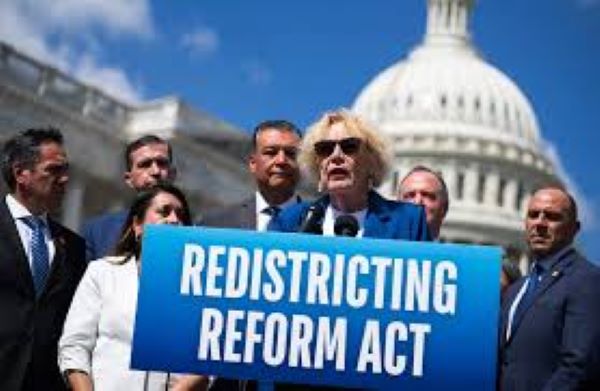 What’s to be Done? In the short term the race to the bottom will continue in the redistricting fight between blue and red states. In the long term only Congress can put an end to the madness. Seven states currently use Independent Redistricting Commissions (IRC) to draw congressional and state legislative district maps. These are fully independent, citizen-led commissions set up to draw district maps without any political or outside interference. They operate according to a prescribed set of rules. But for real reform to take place Congress needs to pass legislation to ban gerrymandering nationwide. Various efforts have been made over the years by Democrats to pass anti-gerrymandering legislation in Congress, only to be stymied by Republicans. The latest legislation to be introduced into both Houses of Congress by Democrats is the “Redistricting Reform Act of 2025”. This bill would require every state to establish an independent state commission to administer redistricting in the state. The bill would also ban most mid-decade redistricting by any state.  Other bills, such as the “For the People Act” and “Freedom to Vote Act”, have garnered little support. They are both much more comprehensive than the “Redistricting Reform Act of 2025” and don’t have much of a chance of getting through Congress. With the redistricting race currently tilting in Republicans’ favor, efforts by Congress to pass gerrymandering reform is doubtful. But it is up to us to make sure that this subject is not forgotten and continue to push our elected representatives until reform is accomplished.  As the United States closes in on its 250th anniversary, the democratic principles underpinning its founding are under threat. Free and fair elections are being undermined by gerrymandering and mid-decade redistricting. Minority voters are being disenfranchised by lack of representation, and many voters don’t even know their representatives. But this is no time to throw up our hands and disengage. A disaffected electorate will only fuel discontent and erode our democracy further. It is critical for voters to make their voices heard, and the best way is at the ballot box. Citizens need to vote in huge numbers in order to blunt the impacts of gerrymandering and other election shenanigans which are sure to materialize. Democracy is not guaranteed; it needs to be nurtured and protected. The voice of the people, particularly at the ballot box, is the best way to assure that elected officials stay accountable to those they profess to represent. 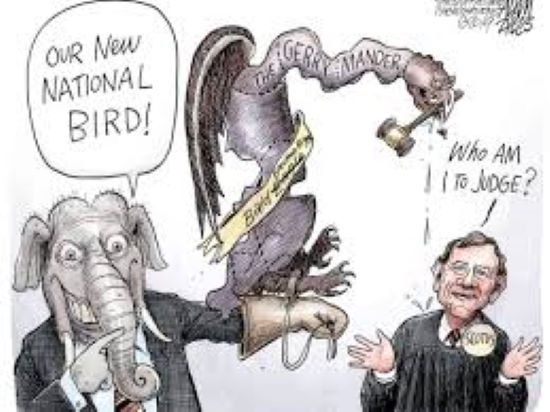 If you enjoy reading this type of commentary, please subscribe to my blog and tell a friend. You will receive an email notification when new blogs are posted. The email will come from the site’s email: [email protected]. Thanks, Armchair American Update: May 27, 2026: A step in the right direction from Congress OR IMMEDIATE RELEASE
May 27, 2026 Contact: Kevin W. Sayegh Problem Solvers Caucus Announces New Gerrymandering Working Group WASHINGTON, D.C. – Today, the Problem Solvers Caucus Co-Chairs Brian Fitzpatrick (R-PA) and Tom Suozzi (D-NY) announced the formation of a bipartisan working group focused on reforming the process that has led to extreme partisan gerrymandering across the country. The creation of this working group comes at a time when Americans across the political spectrum are increasingly frustrated with a system in which politicians often choose their voters instead of voters choosing their representatives. Politically motivated redistricting has led to greater political polarization and fewer competitive districts by rewarding ideological extremes over practical problem-solving. The Problem Solvers Caucus believes restoring confidence in democratic institutions requires bipartisan reforms that encourage accountability and fair representation for voters of all political backgrounds — Democrats, Republicans, and Independents alike. “Redistricting is a constitutional responsibility, and it should be approached with transparency, consistency, and respect for the rule of law,” said Gerrymandering Working Group Co-Chair Congressman Jeff Hurd (CO-03). “Congressional representation should reflect the people and communities being served, not the political interests of whoever happens to be in power. Americans deserve confidence that districts are drawn through a fair and transparent process, that communities of interest and rural voices are meaningfully represented, and that public trust remains at the center of these decisions. Colorado’s independent redistricting model has demonstrated that citizen-led, bipartisan approaches can help strengthen confidence in the process while remaining grounded in constitutional principles. Neither party should be able to manipulate district lines to guarantee outcomes or insulate politicians from accountability. The goal should be durable, commonsense standards that people trust regardless of which party benefits in any given cycle. Competitive and fairly drawn districts help ensure elected officials remain responsive to the people they serve and focused on solving problems rather than deepening partisan division. I am proud to co-chair this bipartisan working group because Americans deserve a process grounded in fairness, transparency, and public trust that strengthens confidence in our institutions.” “Voters should choose their representatives, not the other way around,” said Gerrymandering Working Group Co-Chair Congressman Ed Case (HI-01). “These hyperpartisan gerrymandering wars are destructive to democracy because they effectively disenfranchise large segments of our electorate and balkanize our nation into a state of perpetual partisan warfare. We need a Washington that truly represents the American people and works together to solve tough issues, not politicians endlessly pulled and beholden to irreconcilable extremes. I am proud to Co-Chair this bipartisan Problem Solvers working group that is committed to solutions that facilitate fair inclusion of all viewpoints, democratic debate and representative solutions.” “Coming from New York, where Republicans won 43% of the vote in 2024 but hold just 27% of the state’s congressional seats, while Democrat Governor Kathy Hochul has promised to go even further in 2028, and looking across New England, where Republicans routinely earn around 40% of the vote yet hold none of the region’s 21 congressional seats, I’ve seen firsthand the partisan consequences of gerrymandering,” said Gerrymandering Working Group Vice-Chair Congressman Nick LaLota (NY-01). “Now, as a member of the bipartisan Problem Solvers Caucus Working Group on Gerrymandering, I’ll work with colleagues on both sides of the aisle to identify reforms that better protect voters, strengthen public trust in our elections, and advance the constitutional principles of fairness and equal protection embodied in our founding documents.” “After the next census in 2030, we must restore redistricting to what it was always meant to be: a process for the people and by the people — not a political weapon used to rig outcomes before a single vote is cast. Michigan has shown that independent citizen-led redistricting can put fairness, transparency, and voters ahead of politicians. This cycle has shown how easily redistricting can be manipulated for partisan gain when politicians put power ahead of the public’s trust. In a democracy, voters should choose their representatives — representatives should never choose their voters,” said Gerrymandering Working Group Vice-Chair Congresswoman Debbie Dingell (MI-06). “Gerrymandering turns the system upside down. It lets politicians choose their voters, divides communities for political advantage, and makes too many elections less competitive before a single ballot is cast. Election reform has been a cornerstone of my work since entering Congress, and I am proud to now help lead this effort through the Problem Solvers Caucus,” said Problem Solvers Caucus Co-Chair Congressman Brian Fitzpatrick (PA-01). “We are bringing both parties together to end the race to the bottom, restore accountability, and put power back where it belongs—with the voters.” “Gerrymandering is dividing our country. It promotes safe seats that encourage politicians to pander to their bases that vote in low turnout primary elections. Gerrymandering rigs general elections, dilutes the will of the voters, carves up communities with shared interests, and incentivizes polarization instead of collaboration,” said Problem Solvers Caucus Co-Chair Congressman Tom Suozzi (NY-03). “The Problem Solvers Caucus exists to take on complex, structural problems dividing our country, and I’m proud our Caucus is launching this working group to fight for a fairer, more representative system.” "Gerrymandering, whether done by Democrats or Republicans, erodes public trust, weakens accountability, and undermines fair representation. That’s why I introduced the FAIR MAP Act to establish common-sense national standards and ensure voters choose their representatives, not the other way around. Every voter deserves confidence that the system is fair and that their vote counts equally. I’m proud to join the Problem Solvers Caucus Working Group focused on addressing gerrymandering and look forward to strengthening the integrity of our democratic process,” said Congressman Mike Lawler (NY-17). "For too long, partisan gerrymandering has allowed political parties to draw district lines that serve their own interests rather than the American people's," said Congressman Salud Carbajal (CA-24). "This kind of political brinkmanship is unsustainable and damaging to our democracy. That is why I am helping launch the Problem Solvers Caucus Gerrymandering Working Group to reform the redistricting process and restore trust in our elections." As of now, 10 members of the bipartisan Problem Solvers Caucus have volunteered to serve on the Working Group focused on addressing partisan gerrymandering. The working group is evenly divided along partisan lines, with five Democrats and five Republicans, and includes Reps. Jeff Hurd (CO-03), Ed Case (HI-01), Nick LaLota (NY-01), Debbie Dingell (MI-06), Mike Lawler (NY-17), Salud Carbajal (CA-24), Darren Soto (FL-09), Ryan Mackenzie (PA-07), Donald Norcross (NJ-01), and Chuck Edwards (NC-11). The Problem Solvers Caucus is a group of Members of Congress — split evenly between Republicans and Democrats — committed to advancing common-sense solutions to key issues facing our nation.
1 Comment
 By now all California registered voters should have received a vote by mail ballot sent out by their county registrar of voters. There is only one measure on the ballot to be voted on, Proposition 50. I urge all California voters to vote for this important proposition without delay. It could mean the difference between fair elections in 2026 or an unprecedented power grab by the Republicans through a rigged election. 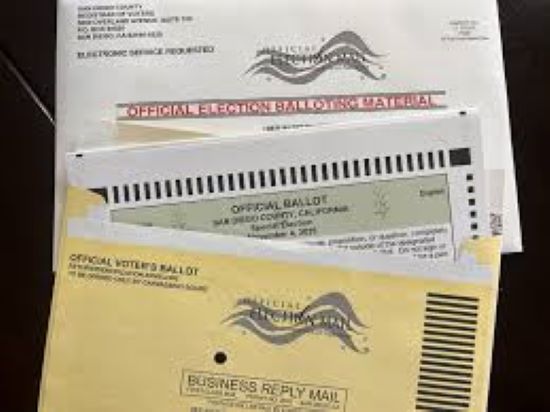 Proposition 50: Authorizes temporary changes to congressional district maps in response to Texas’ partisan redistricting. A YES vote on this measure means that the state would use new, legislatively drawn congressional district maps starting in 2026. California’s new maps would be used until the California Citizens Redistricting Commission draws new maps following the 2030 U.S. Census. A NO vote on this measure means that the current congressional district maps drawn by the California Citizens Redistricting Commission would continue to be used in California until the Commission draws new maps following the 2030 U.S. Census. Proposition 50 is in Direct Response to Texas Gerrymandering: In a democracy voters are supposed to choose politicians, the politicians are not supposed to choose the voters. Gerrymandering is the partisan effort to draw districts to favor one party and is a fact of life in America. Congress can end the practice, but there doesn’t seem to be the political will to do so. Trump ignited the latest fire storm with a call to Texas Governor Abbott demanding that he find five more Republican congressional districts. The compliant governor and Texas legislature forced through newly drawn districts. Left unchallenged the Republicans would have the upper hand in the 2026 mid-term elections. Governor Newsom spearheaded a redistricting effort in California to neutralize the Republican advantage in Texas. A new congressional map was drawn with the potential of giving the Democrats five more congressional seats. But the power to redraw congressional maps in California lies with an independent commission, not with the governor or state legislature. To get around this hurdle Governor Newsom declared a special election for November 4 to ask the voters to approve the newly drawn congressional districts. Naturally Republicans have cried foul on California’s move to go around the independent commission to gerrymander its congressional districts. But Republicans had the opportunity to support a Democratic piece of legislation during the last session of Congress which would have eliminated gerrymandering nationwide. But it wasn’t supported by a single Republican and failed.
Mail in Your Ballot Today: Once you complete and sign your ballot you can simply mail it in the postpaid envelope. You also have the option to place your completed ballot in an official ballot drop box by 8 pm on November 4, 2025, or you can drop it off at any voting center in your county by the time the polls close. If you don’t have a vote by mail ballot or prefer to vote in person, voting centers open starting October 25, and election day is November 4. For more information on Proposition 50, follow this link to the analysis by The California Legislature’s Nonpartisan Fiscal and Policy Advisor.  Gerrymandering is undemocratic and partisan politics at its worst. But in this case, I agree with Governor Newsom that “fighting fire with fire” is the only way to negate Texas’ blatant attempt to rig congressional elections. This is no time to take the high road and watch the Trump Party further erode our democracy. I will vote yes on Proposition 50.
If you enjoy reading this type of commentary, please subscribe to my blog and tell a friend. You will receive an email notification when new blogs are posted. The email will come from the site’s email: armchairamerican1776 @gmail.com. Thanks, Armchair American  August is quickly coming to an end, kids are heading back to school, and family vacations are becoming a distant memory. Congress still hasn’t returned from an extended recess, but the Trump Administration has been busy, and the news pouring out of Washington D.C. and beyond has been hard to ignore, despite my best efforts. Here are some of my quick takes on some of the newsworthy events that have taken place over the past several weeks which have caught my attention. This is not an exhaustive list, and it is not in any particular order.  One Big Beautiful Bill Act: The bill was passed by Congress and signed into law by Trump on July 4, 2025. This 870-page monstrosity of a bill should have been named “Give Trump Everything He Wants; Consequences Be Damned Bill”. The impacts of this bill are wide-ranging, so I will devote much more attention to it in a later blog. This will be Trump’s signature piece of legislation and delivers on most of his campaign promises including making his beloved 2017 tax cuts permanent. These tax cuts mostly benefit high income earners at the expense of those who rely on Medicaid, food stamps (SNAP) and other government programs. The bill will add between $3-$4 trillion to the federal debt and has the potential to add much more if the bill’s new tax cuts get extended beyond their expiration date in 2028.  The Epstein Files: Trump came into office promising the MAGA faithful that he would root out the “Deep State” and bring transparency to government, including the release of all the Epstein files. Jeffrey Epstein and Donald Trump had been close friends for many years before they had a falling out in the mid 2000’s. Epstein was arrested in 2019 on sex-trafficking charges involving under-age girls. He committed suicide in jail while awaiting trial in New York. Many people in MAGA world, including Trump’s FBI Director Kash Patel, believe that Epstein was murdered to coverup incriminating evidence against prominent people like Bill Clinton, Prince Andrew and other “Deep State” insiders. The FBI is in possession of a vast trove of documents accumulated during the criminal investigations into Epstein. Some of these documents were released to the public in January and February after Trump took office. But most of the information had been heavily redacted and much of it was already in the public domain. According to the top Democrat on the Senate Judiciary Committee the FBI was pressured by Attorney General Pam Bondi to put over 1,000 personnel, including many field agents, on 24-hour shifts to review over 100,000 Epstein related files to flag any references to Donald Trump. Was Bondi trying to get to the truth or to protect the boss? We may never know. In July the Department of Justice and FBI released a statement concluding there was no evidence that Epstein had blackmailed any powerful people, kept a client list, or was murdered. The Trump Administration had hoped that this would put an end to it, but many fringe elements within MAGA world were not satisfied, and the Democrats want to keep the issue alive. Why should we even care about the Epstein files? This may be the first chink in Trump’s seemingly impenetrable armor. I’m not so naive as to believe that Congress or the Department of Justice will use the Epstein files against Trump, but it could be the beginning of a break between Trump and the extreme elements within MAGA.  Congress Recesses Early: House Speaker Mike Johnson put the House in recess earlier in July than usual amid pressure from Democrats and some Republicans to vote on motions related to the Epstein files. Democrats added amendments to many House bills requiring the federal government to release all the Epstein files in its possession. Rather than face votes that could anger the MAGA base and pressure the White House, Johnson put the House in recess with hopes that the issue would go away by September. Despite the White House’s best efforts to change the narrative, Democrats and conspiracy minded Republicans won’t let the issue die.  Ghislaine Maxwell: In 2022 Maxwell was sentenced to 20 years in prison for conspiring with Jeffrey Epstein to sexually abuse minors. In an unusual move Deputy Attorney General Todd Blanche interviewed Maxwell in July from the prison in Florida where she was being held. Was this a diversionary tactic by the Trump Administration against the backlash of its handling of the Epstein files? If so, it backfired. What we do know is that Maxwell is seeking a pardon from Trump, and from the recently released transcripts of the interview it is obvious that she will say anything to paint Trump in a favorable light. Just days after the interview with Blanche, Maxwell was moved from Florida to a new minimum-security prison in Bryan, Texas. The new prison has been described as one of the cushiest federal detention facilities in the country. This is a highly suspicious move and an outrage to the many victims of Maxwell and Epstein.  Red Carpet for Putin in Anchorage: Earlier this month Donald Trump and Vladimir Putin met in Anchorage, Alaska to discuss ending the war in Ukraine. Putin is a murderer and war criminal, but Trump literally rolled out the red carpet for him. Trump and Putin greeted each other like old pals with warm smiles and handshakes. From the tarmac they traveled to the meeting in the back of Trump’s presidential limousine. Before the meeting Trump said that he would demand a ceasefire in Ukraine and promised harsh new economic sanctions on Russia if they refused. Trump left the meeting with his tail between his legs, without a ceasefire deal, and more hardline demands from Russia for Ukraine to capitulate. Putin returned to Moscow as a conquering hero having played Trump for a fool. I agree with Senator Chuck Shumer’s assessment, “it appears Trump handed Putin legitimacy, a global stage, zero accountability, and got nothing in return”. A newly emboldened Russia has intensified its attacks on Ukraine, including civilian targets, with drones and missiles.  Trump’s Private Police Force: Trump’s One Big Beautiful Bill Act provides $170 billion through fiscal year 2029 for border and immigration enforcement. This is a massive increase in current spending levels and will allow the administration to meet its pledge of hiring 10,000 new Immigration and Customs Enforcement (ICE) agents. When fully staffed ICE will become the country’s highest funded federal law enforcement agency. ICE’s funding will be greater than that of the FBI and DEA with little oversight outside of Trump’s Department of Homeland Security. ICE has ramped up its recruitment efforts with a lucrative package of incentives, including signing bonuses of up to $50,000, student loan forgiveness and enhanced retirement benefits. More ICE raids are coming to a city near you.  ICE Detention Centers: If ICE is meet its mass deportation goals it needs to quickly bring online new immigrant detention centers. With billions of dollars now available for that purpose Republican governors are scrambling to accommodate the Trump Administration. Alligator Alcatraz, deep in the marshy wetlands of the Florida Everglades, was the first detention center to be built. Alligator Alcatraz and other camps are coming under fire for hasty construction practices that lack typical environmental reviews, building standards or humanitarian considerations. These camps are merely holding cells with little regard for the due process rights or well-being of those being held. This is a betrayal of the basic human rights and dignity of these people, not to mention their civil liberties, that heretofore were the bedrock of this country. The treatment of the people being held is cruel and the antithesis of the Christian values that many in MAGA world espouse. But I think cruelty is the point. If the conditions in the United Sates become bad enough for immigrants, they will self-deport and lessen the burden on ICE. This will be looked back upon as a low point in American history. New detention camps are being constructed in Florida, Texas, Indiana, Nebraska and other red states. To add to the indignity of this whole enterprise, names such as “Deportation Depot”, “Lonestar Lockup”, “Speedway Slammer”, and “Cornhusker Clink” have been adopted for some of these camps. France should demand the return of the Statue of Liberty.  National Guard in D.C.: Earlier this month Trump deployed National Guard troops to the streets of Washington D.C. after declaring a “crime emergency” in the nation’s capital. The federal government also took control of the city’s Metropolitan Police Department and hundreds of officers from the FBI, DEA and other agencies were reassigned to patrol duty in the capital. Even though Trump has the legal authority to make these moves, they came over the objections of the city’s mayor, police chief and other city leaders. There are currently over 2,200 National Guard troops from several states in Washington D.C. and the Defense Secretary has given permission for them to carry weapons. If the Trump Administration was so concerned with crime and homelessness in D.C., why was the mayor’s previous request for 500 additional police officers declined, and why was the city’s budget cut by over $1 billion earlier this year by Congress? This could be another tactic by Trump to divert the country’s attention away from the Epstein files controversy, or it could be a blatant power grab. Whatever the reason Trump is further militarizing the streets of the nation’s capital and threatening to do the same in other cities. In recent days Trump has threatened to deploy National Guard troops to Chicago, Baltimore, New York and several California cities. What do all these cities have in common? They are Democratic strongholds in states whose governors are critics of the president. Every American should be outraged if Trump follows through on his authoritarian threats.  Gerrymandering of Congressional Districts: Redistricting and redrawing congressional maps in Texas and California have dominated the news cycle in August. It all began with a phone call from Trump to Texas Governor Abbott demanding that he find at least five more Republican leaning congressional districts in Texas. Governor Abbott was previously reluctant to redraw Texas’ congressional maps through a rare mid-decade redistricting plan. But after the phone call with Trump the governor placed the redistricting plan on the agenda of a special session of the legislature that he called. Texas Republicans redrew the congressional maps which boosted its party’s chances of flipping five congressional seats from Democratic to Republican and holding on to the House majority in the 2026mid-term elections. After several weeks of protests by Democratic lawmakers, including a time when several left the state to holdup a vote on the new maps, the Republican-controlled Texas state Senate passed the party’s new congressional districts. Trump’s response was that Republicans were “entitled to five more seats” in Texas.  California Responds to Texas Redistricting: Democratic led states were not about to let Republicans “cheat” their way to victory in the 2026 mid-term elections and took action to neutralize the Republican advantage in Texas. California Governor Gavin Newsom took the lead by spearheading a redistricting effort in California more favorable to Democrats. A new congressional map was drawn with the potential of giving the Democrats five more congressional seats. But the power to redraw congressional maps in California lies with an independent commission, not with the governor or state legislature. To get around this hurdle Governor Newsom declared a special election for November 4 to ask the voters to approve the newly drawn congressional districts. If approved by the voters the new congressional districts will be in effect for 2026 - 2030, after which the independent redistricting commission will regain authority to redraw the maps. Naturally Republicans have cried foul on California’s move to go around the independent commission to gerrymander its congressional districts. But Republicans had the opportunity to support a Democratic piece of legislation during the last session of Congress which would have eliminated gerrymandering nationwide. But it wasn’t supported by a single Republican and failed. I feel that gerrymandering congressional districts is undemocratic and partisan politics at its worse. But in this case, I agree with Governor Newsom that “fighting fire with fire” is the only way to negate Texas’ blatant attempt to rig the 2026 mid-term elections. I will vote in favor of the redistricting ballot measure in November.  So much for the “dog days of summer” when not much happens! I could have written about a dozen other important events that have occurred over the past several weeks of the summer. Trump is ramping up his revenge campaign on his critics, the government is taking equity stakes in U.S. companies, and the wars in Gaza and Ukraine are intensifying. But I am ever the optimist, and as long as we all stay vigilant and stay true to American ideals, we will live to see better days ahead.  If you enjoy reading this type of commentary, please subscribe to my blog and tell a friend. You will receive an email notification when new blogs are posted. The email will come from the site’s email: armchairamerican1776@gmail.com.
Thanks, Armchair American |
AuthorThe Armchair American. 
Archives
April 2026
Categories
All
|


 RSS Feed