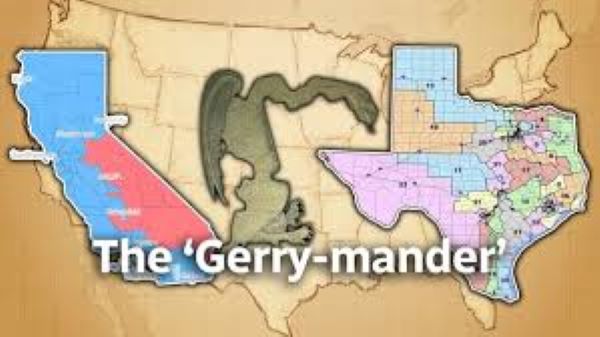
 I will soon be voting in the California primary election from a newly formed congressional district which is unrecognizable to me. The new district was established for the express purpose of gaining Democrats another seat in Congress by diluting the voices of some of the most conservative voters in the state. That doesn’t sound very democratic, and it’s not. Last November California voters approved Proposition 50 during a special election authorizing temporary changes to California’s congressional maps. In a previous blog post I explained that I am generally not in favor of redrawing congressional maps for the sole purpose of partisan advantage. But I voted for California’s new congressional maps to counter Texas’ blatant attempt to rig the mid-term elections. With negotiations to end the war in Iran going nowhere and prices on fuel and everyday necessities continuing to decimate household budgets, you would think that the needs of the American people would be top of mind for our elected leaders. Instead, many of our elected representatives are engaged in an intense race to redraw district maps for partisan advantage in advance of the mid-term elections.  Some Background: Article 1, Section 2 of the Constitution of the United States provides the basis for determining the number of representatives each state has in the House of Representatives. The apportionment, or distribution, of the 435 seats in the House among the 50 states is based on population as determined by a national census conducted every ten years. Once apportionment is completed, each state goes through a process of drawing new electoral district maps to coincide with census data in a process called redistricting. Redistricting assures that every district within a state has an equal number of people in order to adhere to the “equality standard”, or “one person, one vote principle”. Rules for redistricting are determined by each state, and until recently, must comply with the provisions of the Voting Rights Act of 1965, which protects the voting rights of racial minorities. Gerrymander: The manipulation of voting and congressional districts for partisan gain is as old as the republic. Massachusetts Governor Elbridge Gerry and his political allies redrew state districts to favor their party in 1812. The map of one of the redrawn districts resembled a mythological salamander. A political cartoon in a Boston newspaper labeled the map a “Gerry-mander”, and the name stuck.  Recent Developments: Traditionally states redraw their congressional districts every ten years after the completion of the census. Between 1973-2024, only two states had conducted voluntary mid-decade redistricting. But traditions and norms are quaint notions of a bygone era. 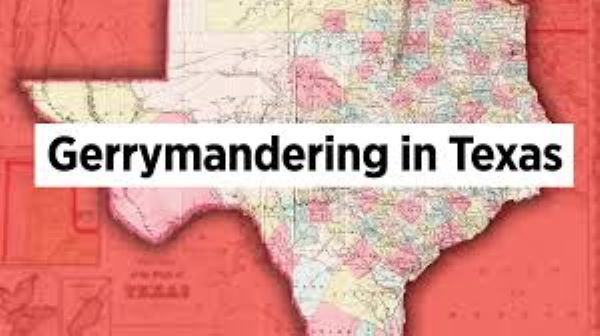 Texas: In the summer of 2025, at the behest of Donald Trump, the Governor of Texas called a special session of the state legislature with the stated goal of finding five more Republican congressional districts. Despite the best efforts of Texas Democrats, the governor and Texas legislature approved newly drawn districts favorable to Republicans. This set in motion the current redistricting race in states across the country. Missouri, North Carolina and Florida followed Texas in approving new congressional maps favorable to the Republican Party. 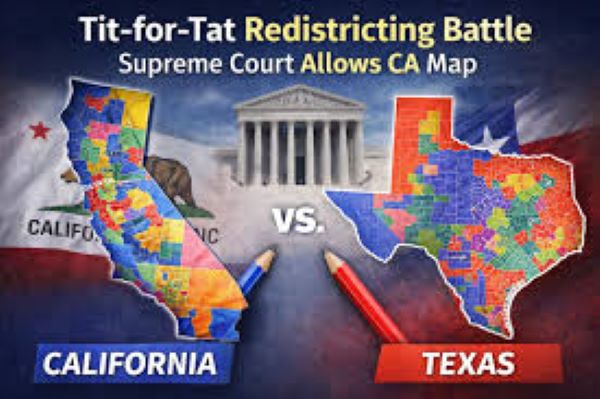 California: To neutralize the Republican advantage in Texas and to fight “fire with fire”, Governor Newsom spearheaded a redistricting effort in California. New congressional maps were drawn with the potential of giving California five more Democratic House seats. But the power to redraw congressional maps in California lies with an independent commission, not with the governor or state legislature. To get around this hurdle Governor Newsom called a special election in November for the people of California to vote on Proposition 50, which if passed would authorize temporary changes to California’s congressional maps. Voters overwhelming passed Proposition 50, and the new maps went into took effect.  Virginia: Last month the voters of Virginia approved a constitutional amendment to permit mid-decade redistricting and approved new maps with the potential of adding four Democratic districts. A few weeks later the Virginia Supreme Court blocked the redistricting plan approved by voters on procedural grounds. Then on May 15 the U.S. Supreme Court denied a request by Virginia Democrats to overturn the Virginia Supreme Court ruling, blocking the newly drawn congressional maps from going into effect.  Louisiana: A federal district court in Louisiana found that the 2022 congressional maps containing one majority-Black congressional district, was a violation of Section 2 of the Voting Rights Act. The state remedied this in 2024 by approving newly drawn maps which included two majority-Black districts. A group of Louisiana voters filed a lawsuit, calling the new congressional maps an unconstitutional racial gerrymander. The case made its way to the U.S. Supreme Court (Louisiana v. Callais) which made its ruling on April 29, 2026. The court’s majority ruled in favor of the plaintiffs, calling Louisiana’s congressional maps unconstitutional because race was used as a consideration in drawing congressional maps. The court deemed this to be a violation of Section 2 of the Voting Rights Act. Critics of the Supreme Court ruling view it as a gutting of Section 2 of the Voting Rights Act which was designed to protect the ability of minority groups to have political power and fair political representation. In a dissenting opinion Justice Elena Kagan wrote, “Under the court’s new view of Section 2, a state can, without legal consequences, systematically dilute minority citizens’ voting power.” In the aftermath of the Supreme Court ruling, Louisiana suspended its primary election for U.S. House seats in order to draw new congressional maps more favorable to Republicans. Other Southern states have already begun to use the Louisiana ruling to justify the redrawing of their own district maps, supercharging the redistricting race. Tennessee passed new district maps this month, and South Carolina, Mississippi and Georgia will most likely redraw their maps before the 2028 elections, eliminating even more majority-Black (Democratic) districts. 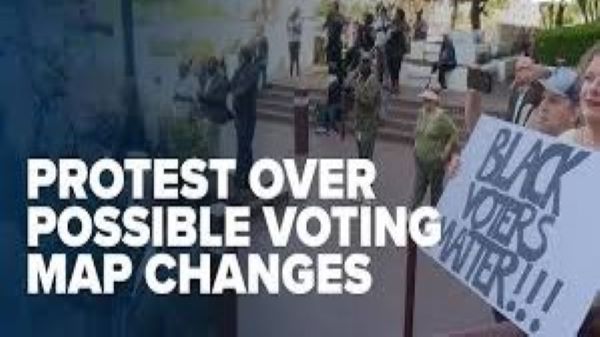 Alabama: In 2023 the U.S. Supreme Court ruled that Alabama’s congressional redistricting plan violated the Voting Rights Act, requiring the state to redraw its maps with a second majority-Black district. New maps were drawn to comply with the court’s decision and a new district comprised of 48.7% Black voters was created. The U.S. Supreme Court reversed this decision on May 11, 2026, in the aftermath of Louisiana v. Callais. The Governor of Alabama called a special session of the legislature to reschedule the state’s May primary election and to reinstate the congressional maps that had previously been declared in violation of the Voting Rights Act. The most likely outcome of this ongoing drama will be the elimination of one of Alabama’s two majority-Black districts, handing another seat to the Republicans.  Impact on Democracy: The U.S. has entered a new era where mid-decade redistricting is no longer rare and gerrymandering for partisan advantage is a legitimate reason to redraw district maps. It will now become more difficult to challenge congressional maps as racially discriminatory since it is now a legitimate defense to claim that the maps were drawn for partisan and not racial reasons. I have seen estimates that as many as 50% of seats currently held by Black representatives in Congress will be lost over the next two election cycles. Before Donald Trump ignited the redistricting race last summer in Texas, it was reasonable to assume that his party would lose enough House seats to hand the majority to Democrats. With historically low approval ratings Trump is desperately attempting to hold on to power, and his redistricting efforts are beginning to bear fruit. With recent Supreme Court rulings going in Republicans’ favor, the loss of Republican House seats to Democrats will be somewhat blunted.  Courts and politicians are supposed to serve the people, but the will of the people is being ill served because their voices are being diminished. Representative democracy erodes when people lose faith in the fairness of elections, undermining the legitimacy of the government. If people feel that their votes no longer matter, they will stay home and not participate in the democratic process. The redistricting efforts currently taking place create even more political polarization. Gaining and holding onto power has taken priority over doing what’s best for the country. When elected representatives are protected in “safe” districts they are no longer accountable to the people. Safe districts are recreated and controlled by a political party, making candidates beholden to the party and not the people within the district. If a candidate is not loyal to the party or doesn’t adhere to party orthodoxy, the party and its financial backers can find a more compliant candidate to replace them. Just ask Senator Bill Cassidy of Louisiana who lost his primary election last Saturday to a Trump backed candidate. Senator Cassidy committed the unforgiveable sin of voting to remove President Trump from office in the aftermath of the January 6, 2021 riot at the U.S. Capitol. 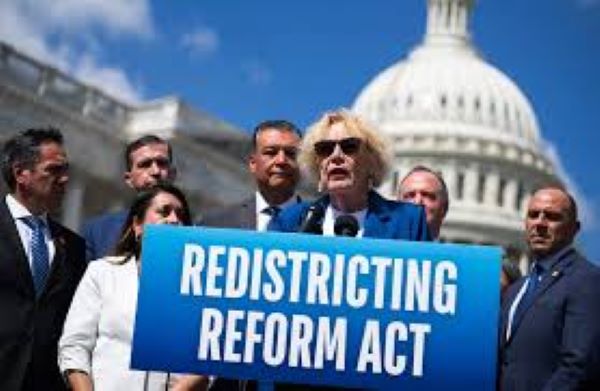 What’s to be Done? In the short term the race to the bottom will continue in the redistricting fight between blue and red states. In the long term only Congress can put an end to the madness. Seven states currently use Independent Redistricting Commissions (IRC) to draw congressional and state legislative district maps. These are fully independent, citizen-led commissions set up to draw district maps without any political or outside interference. They operate according to a prescribed set of rules. But for real reform to take place Congress needs to pass legislation to ban gerrymandering nationwide. Various efforts have been made over the years by Democrats to pass anti-gerrymandering legislation in Congress, only to be stymied by Republicans. The latest legislation to be introduced into both Houses of Congress by Democrats is the “Redistricting Reform Act of 2025”. This bill would require every state to establish an independent state commission to administer redistricting in the state. The bill would also ban most mid-decade redistricting by any state.  Other bills, such as the “For the People Act” and “Freedom to Vote Act”, have garnered little support. They are both much more comprehensive than the “Redistricting Reform Act of 2025” and don’t have much of a chance of getting through Congress. With the redistricting race currently tilting in Republicans’ favor, efforts by Congress to pass gerrymandering reform is doubtful. But it is up to us to make sure that this subject is not forgotten and continue to push our elected representatives until reform is accomplished.  As the United States closes in on its 250th anniversary, the democratic principles underpinning its founding are under threat. Free and fair elections are being undermined by gerrymandering and mid-decade redistricting. Minority voters are being disenfranchised by lack of representation, and many voters don’t even know their representatives. But this is no time to throw up our hands and disengage. A disaffected electorate will only fuel discontent and erode our democracy further. It is critical for voters to make their voices heard, and the best way is at the ballot box. Citizens need to vote in huge numbers in order to blunt the impacts of gerrymandering and other election shenanigans which are sure to materialize. Democracy is not guaranteed; it needs to be nurtured and protected. The voice of the people, particularly at the ballot box, is the best way to assure that elected officials stay accountable to those they profess to represent. 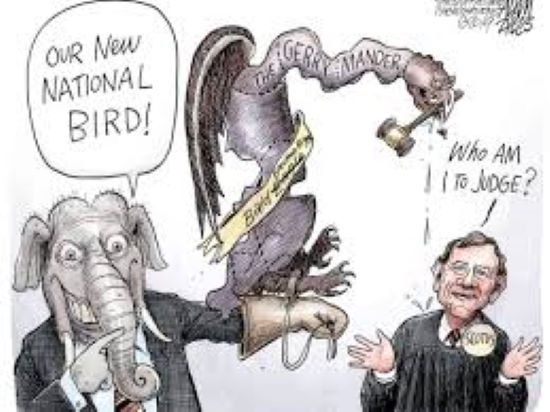 If you enjoy reading this type of commentary, please subscribe to my blog and tell a friend. You will receive an email notification when new blogs are posted. The email will come from the site’s email: [email protected]. Thanks, Armchair American Update: May 27, 2026: A step in the right direction from Congress OR IMMEDIATE RELEASE
May 27, 2026 Contact: Kevin W. Sayegh Problem Solvers Caucus Announces New Gerrymandering Working Group WASHINGTON, D.C. – Today, the Problem Solvers Caucus Co-Chairs Brian Fitzpatrick (R-PA) and Tom Suozzi (D-NY) announced the formation of a bipartisan working group focused on reforming the process that has led to extreme partisan gerrymandering across the country. The creation of this working group comes at a time when Americans across the political spectrum are increasingly frustrated with a system in which politicians often choose their voters instead of voters choosing their representatives. Politically motivated redistricting has led to greater political polarization and fewer competitive districts by rewarding ideological extremes over practical problem-solving. The Problem Solvers Caucus believes restoring confidence in democratic institutions requires bipartisan reforms that encourage accountability and fair representation for voters of all political backgrounds — Democrats, Republicans, and Independents alike. “Redistricting is a constitutional responsibility, and it should be approached with transparency, consistency, and respect for the rule of law,” said Gerrymandering Working Group Co-Chair Congressman Jeff Hurd (CO-03). “Congressional representation should reflect the people and communities being served, not the political interests of whoever happens to be in power. Americans deserve confidence that districts are drawn through a fair and transparent process, that communities of interest and rural voices are meaningfully represented, and that public trust remains at the center of these decisions. Colorado’s independent redistricting model has demonstrated that citizen-led, bipartisan approaches can help strengthen confidence in the process while remaining grounded in constitutional principles. Neither party should be able to manipulate district lines to guarantee outcomes or insulate politicians from accountability. The goal should be durable, commonsense standards that people trust regardless of which party benefits in any given cycle. Competitive and fairly drawn districts help ensure elected officials remain responsive to the people they serve and focused on solving problems rather than deepening partisan division. I am proud to co-chair this bipartisan working group because Americans deserve a process grounded in fairness, transparency, and public trust that strengthens confidence in our institutions.” “Voters should choose their representatives, not the other way around,” said Gerrymandering Working Group Co-Chair Congressman Ed Case (HI-01). “These hyperpartisan gerrymandering wars are destructive to democracy because they effectively disenfranchise large segments of our electorate and balkanize our nation into a state of perpetual partisan warfare. We need a Washington that truly represents the American people and works together to solve tough issues, not politicians endlessly pulled and beholden to irreconcilable extremes. I am proud to Co-Chair this bipartisan Problem Solvers working group that is committed to solutions that facilitate fair inclusion of all viewpoints, democratic debate and representative solutions.” “Coming from New York, where Republicans won 43% of the vote in 2024 but hold just 27% of the state’s congressional seats, while Democrat Governor Kathy Hochul has promised to go even further in 2028, and looking across New England, where Republicans routinely earn around 40% of the vote yet hold none of the region’s 21 congressional seats, I’ve seen firsthand the partisan consequences of gerrymandering,” said Gerrymandering Working Group Vice-Chair Congressman Nick LaLota (NY-01). “Now, as a member of the bipartisan Problem Solvers Caucus Working Group on Gerrymandering, I’ll work with colleagues on both sides of the aisle to identify reforms that better protect voters, strengthen public trust in our elections, and advance the constitutional principles of fairness and equal protection embodied in our founding documents.” “After the next census in 2030, we must restore redistricting to what it was always meant to be: a process for the people and by the people — not a political weapon used to rig outcomes before a single vote is cast. Michigan has shown that independent citizen-led redistricting can put fairness, transparency, and voters ahead of politicians. This cycle has shown how easily redistricting can be manipulated for partisan gain when politicians put power ahead of the public’s trust. In a democracy, voters should choose their representatives — representatives should never choose their voters,” said Gerrymandering Working Group Vice-Chair Congresswoman Debbie Dingell (MI-06). “Gerrymandering turns the system upside down. It lets politicians choose their voters, divides communities for political advantage, and makes too many elections less competitive before a single ballot is cast. Election reform has been a cornerstone of my work since entering Congress, and I am proud to now help lead this effort through the Problem Solvers Caucus,” said Problem Solvers Caucus Co-Chair Congressman Brian Fitzpatrick (PA-01). “We are bringing both parties together to end the race to the bottom, restore accountability, and put power back where it belongs—with the voters.” “Gerrymandering is dividing our country. It promotes safe seats that encourage politicians to pander to their bases that vote in low turnout primary elections. Gerrymandering rigs general elections, dilutes the will of the voters, carves up communities with shared interests, and incentivizes polarization instead of collaboration,” said Problem Solvers Caucus Co-Chair Congressman Tom Suozzi (NY-03). “The Problem Solvers Caucus exists to take on complex, structural problems dividing our country, and I’m proud our Caucus is launching this working group to fight for a fairer, more representative system.” "Gerrymandering, whether done by Democrats or Republicans, erodes public trust, weakens accountability, and undermines fair representation. That’s why I introduced the FAIR MAP Act to establish common-sense national standards and ensure voters choose their representatives, not the other way around. Every voter deserves confidence that the system is fair and that their vote counts equally. I’m proud to join the Problem Solvers Caucus Working Group focused on addressing gerrymandering and look forward to strengthening the integrity of our democratic process,” said Congressman Mike Lawler (NY-17). "For too long, partisan gerrymandering has allowed political parties to draw district lines that serve their own interests rather than the American people's," said Congressman Salud Carbajal (CA-24). "This kind of political brinkmanship is unsustainable and damaging to our democracy. That is why I am helping launch the Problem Solvers Caucus Gerrymandering Working Group to reform the redistricting process and restore trust in our elections." As of now, 10 members of the bipartisan Problem Solvers Caucus have volunteered to serve on the Working Group focused on addressing partisan gerrymandering. The working group is evenly divided along partisan lines, with five Democrats and five Republicans, and includes Reps. Jeff Hurd (CO-03), Ed Case (HI-01), Nick LaLota (NY-01), Debbie Dingell (MI-06), Mike Lawler (NY-17), Salud Carbajal (CA-24), Darren Soto (FL-09), Ryan Mackenzie (PA-07), Donald Norcross (NJ-01), and Chuck Edwards (NC-11). The Problem Solvers Caucus is a group of Members of Congress — split evenly between Republicans and Democrats — committed to advancing common-sense solutions to key issues facing our nation.
1 Comment
Joan Nibert
5/19/2026 11:06:26 pm
Between watching the SF Giants implode and all the thefts and gerrymandering of this administration with the help of the Trump Supreme Court, it is hard for me to maintain hope. To counteract this, I am reading David McCullough's book, "John Adams." Learning how our forefathers created our The Declaration of Independence and our Constitution, does give me some hope. They would be aghast at what is happening within the rule of law, or lack there of, today. Leave a Reply. |
AuthorThe Armchair American. 
Archives
April 2026
Categories
All
|
 RSS Feed